
RFU Leading Charge for Gender Equality in Coaching
 Inspiring Story
 by Blake Richardson
This UK Coaching Week, we dedicate a day to ‘Women into Coaching,’ celebrating the journeys, invaluable advice, and leadership of inspiring female coaches. We spoke to three female rugby coaches to explore the efforts being made by the Rugby Football Union (RFU) to advance gender equality, highlighting the support mechanisms it has put in place to drive this agenda forward ahead of the 2025 Rugby World Cup, and beyond.

In November 2022, on the eve of the Women’s Rugby World Cup final between England and New Zealand, the RFU partnered with the International Working Group on Women and Sport (IWG) to sign a declaration aimed at creating a fairer and more equitable system of sport and physical activity that is inclusive of women and girls.
RFU CEO Bill Sweeney said: “Commitment to growing and developing the women’s game has been a huge priority in rugby union for some time,” adding that the IWG would, “through our collective voice and action, accelerate the development of the sport for women and girls as we look towards the 2025 Rugby World Cup in England.”
The RFU’s aim to accelerate the pace of change for women’s rugby is supported by its ‘Every Rose’ Strategy, which runs from 2021 to 2027.
Well, here we are, just months away from the tournament – which kicks off in Sunderland on 22 August. The obvious question, then, is: what support mechanisms and development initiatives has the RFU put in place in the intervening years to encourage and develop female coaches?
Before we delve into this (we can let you into a secret... the answer is lots!), it’s important to address the elephant in the room and acknowledge that there is still significant under-representation of women coaches at all levels in sport. It’s true also that the wheels of progress have been slow to turn in enhancing the three Rs: recruitment, retention, and recognition of female coaches.
Yet while all sports face similar challenges in advancing gender equality, and while the pace of change may never seem fast enough, it’s crucial we recognise that organisational support IS growing, and efforts ARE being made to address barriers, so that:
- Women feel a greater sense of belonging and value, and do not feel invisible.
- Women’s voices are listened to and acted upon.
- There is increased visibility of female coaches at every level, helping to highlight that a career in coaching is achievable.
- Coaches are recruited based on their attributes, knowledge, and behaviours, rather than their gender.
- More women are recruited into senior roles, meaning more senior decision-makers inside clubs and organisations.
- There is more understanding and flexibility for work, family, and parenting commitments to aid the recruitment and retention of female coaches.

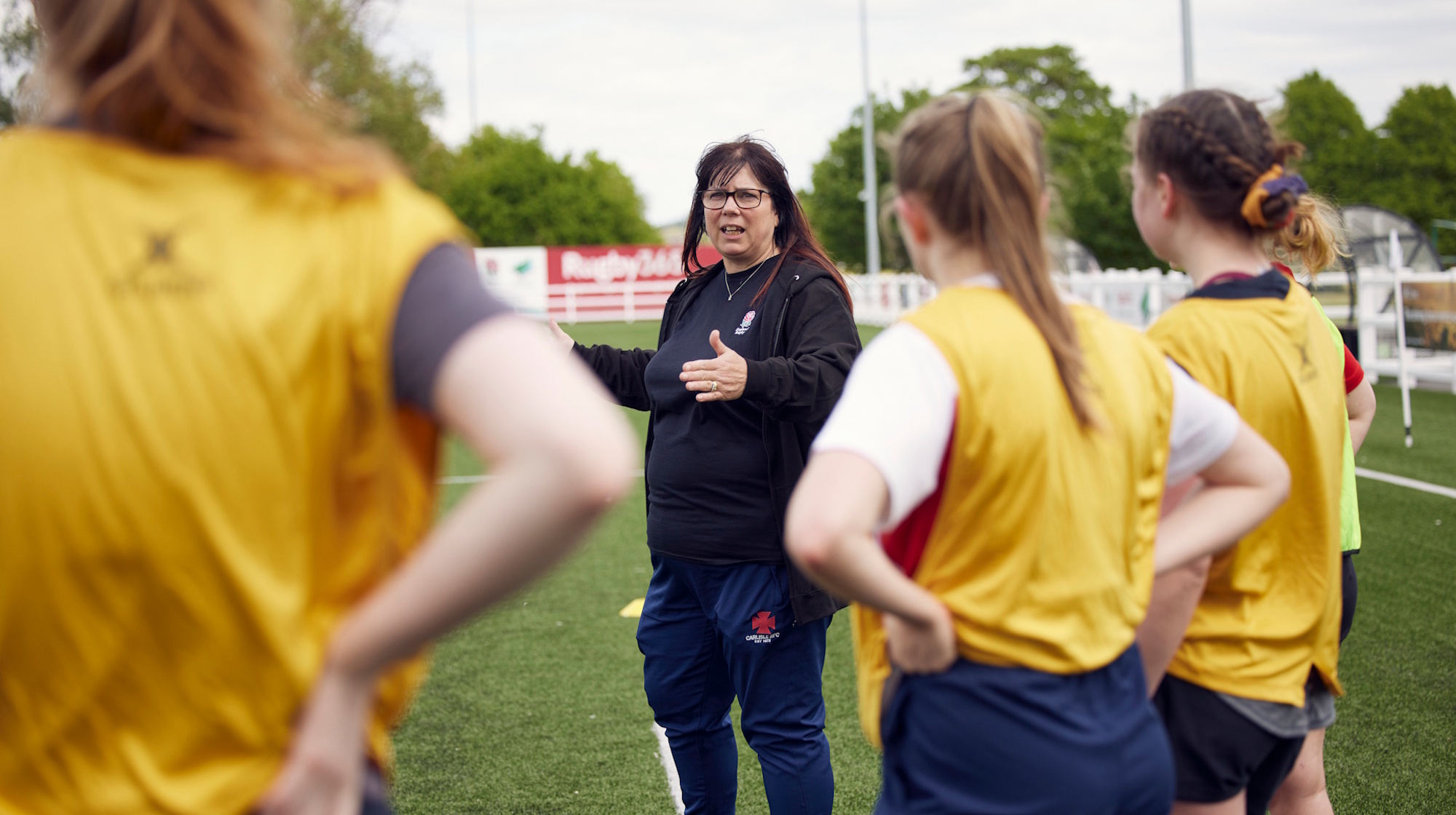
Comprehensive Support Package for Female Coaches
Kat Cook, Coach and Match Official Project Officer at England Rugby and a coach at Sheffield Hallam RUFC, tackles the question of what support mechanisms have been put in place to encourage and develop female coaches. She highlights a voucher scheme and female mentoring support attached to RFU coaching courses that have proved to be popular initiatives.
“We have a range of strategic initiatives dedicated to supporting the development of female coaches,” she says. “Our primary focus is to facilitate their access to an England Rugby coaching course, where we provide vouchers to encourage participation.
Throughout the course, we also offer ongoing support by connecting participants with experienced female coaches to enhance their skills and knowledge. This support also includes access to online webinars and networking opportunities, allowing coaches to engage with their peers, share insights, and seek advice in a safe, supportive environment, particularly if they encounter challenges with course content.”
In addition to the coaching courses, the RFU have hosted six Women in Rugby conferences over the past three years. These events provide female coaches with opportunities to enhance their coaching skills alongside the NGB’s National Programmes team and network with other coaches.
“The conferences provide a platform for inspiration and offer attendees the opportunity to ask questions of those who have achieved excellence in the sport,” says Kat.
“We have also launched the Impact Champion Programme, collaborating with various departments to offer a series of webinars. These webinars are designed to provide volunteers with essential information, helping clubs to better support coach development within their communities.”
Kat emphasises the importance of actively highlighting the achievements of those who have participated in various elements of their programmes, providing them with a platform to share their experiences.
By showcasing these role models, we not only encourage other women to pursue coaching but also work to increase the visibility of female coaches within the wider rugby community.”


Legacy in Action: Impact 25 Project Already Bearing Fruit
A common plea from female coaches is for more opportunities to attend personalised development programmes. The ‘Every Rose’ Strategy recognises this barrier and has tackled it through the Impact Beyond 2025 programme – a collaboration between England Rugby, the Government, UK Sport, Sport England, and World Rugby – designed to accelerate the accessibility of rugby for women and girls and foster female leadership and coaching development.
The legacy programme for the Women’s Rugby World Cup 2025 has received an investment of £12.13 million in Government funding.
“The Impact 25 programme has been brilliant,” says Michelle Adam, a coach at Sandal Under-16 girls and a member of the coaching team for Jamaica Rugby League.
I never would have had the courage or confidence to coach without knowing that I had so much support behind me. I have access to chat groups, workshops, courses, training, coaching materials, and fellow coaches to sound out ideas or issues with. This programme has opened the door to all of this. It's a fantastic programme and I would recommend it to anyone."
Impact 25 may be a legacy project, but it is already delivering results. To date, more than 1,400 female coaches and match officials have completed their training and certification, while girls’ participation is up 9.3% year-on-year.
England Rugby coach developer Valentina Bianchetto agrees that Impact 25 has been a fantastic initiative to not only drive the recruitment and retention of female players, coaches, referees and volunteers, but help develop their identity and craft.
A qualified referee, and member of the Impact 25 female mentor workforce, Valentina says: “Personally, the project supported me in taking the Advanced Coaching course by giving me the opportunity to share this experience with other female coaches. It also gave me financial support to book my place on the Director of Rugby course, which I look forward to starting in June.
“As a mentor, I had the opportunity to support other coaches going through their coaching and refereeing courses. It was great to work with other female candidates to create an environment where they could develop and flourish.”
Individualised coach development programmes like this allow female coaches to learn in environments where they can show vulnerability without fear and drive the development of female leaders by offering access to resources, training and opportunities that are on a par with those available to their male counterparts.
Women’s Leadership Collective
Headed by the Volunteering Team, this is a community of practice made up of women’s club and Constituent Bodies' chairs and vice chairs. This group is a collective that specifically supports existing leaders. Alumni from the Women’s Leadership Development Programme are invited to join the collective.
Inspire Leadership Programme
The aim of the programme is to inspire women (aged 20 to 25 years old) to develop their strengths, build resilience and confidence to take on leadership roles in rugby. It also focuses on identifying talent for volunteer roles in rugby and future candidates on the Women’s Leadership Development Programme.
Women’s Leadership Development Programme
This programme aims to develop women leaders in rugby clubs, Constituent Bodies, and referee societies, with a focus on current and aspiring committee/board leaders. Women leaders on the programme nominate two women from their organisation to join online speaker sessions with them, expanding the reach and identifying potential future candidates.
The Inclusive Leadership Delivery Group
Works across the Community Game and Council to ensure inclusive leadership and diverse pathways of talent into leadership positions within the game’s governance structures. The group, which formed in April 2024, focuses on three key areas: sustainability, representation and game support.
The 'See It, Be It' Philosophy and ‘Dreaming Big’
Research indicates that seeing ‘someone like me’ serves as both motivation and inspiration. The visibility of female coaches, referees, assistant referees, and television match officials (TMOs) at major events like the Women’s Rugby World Cup can significantly change perceptions, demonstrating that women can excel at the highest levels of the game.
Valentina says: “It shows that it is possible, that things can change.”
The realm of top-level coaching has always been dominated by men, creating a perception that coaching is inherently a ‘man’s job’. However, this outdated mentality is now being challenged, says Valentina.
“Women can do it too, and do it well. Seeing women succeeding will, hopefully, support a shift in people’s perception. From supporters to players and decision makers, more people now understand and respect their expertise, and we are beginning see more investment in developing and hiring female coaches across the board.”
The ‘see it, be it’ philosophy underscores the importance of role models. When young female athletes and aspiring coaches see women in leadership roles, it creates a perception that these achievements are attainable, inspiring the next generation to pursue their dreams. A view echoed by Valentina:
Inspiration is important. We need to highlight and celebrate the achievements of women in coaching as other women and girls can actually see that it is possible and aspire to be in sports.”
Michelle agrees that people are more likely to engage with sport and physical activity when they see themselves reflected in their role models:
“I know all of my sporting heroes growing up were female. I had amazing PE teachers who had reached great standards in their own sport, and I aspired to be like them. They gave me support, advice, and, back in the day, lifts to enable me to participate.
Having people like that in my life allowed me to dream big and to chase my dreams.”

Valentina adds: “We need to change stereotypes about gender and leadership. The more we see female coaches covering high-end professional roles, the more we start believing that it is possible and normal for women to cover those roles.
“I believe that having more female coaches can positively influence self-perception in female athletes too – in relation to self-esteem and body image in particular – and make them feel more comfortable to share some of their challenges.
They can also offer a diverse perspective, with different insight and advice specific to their athletes, which can support the growth of the team and other staff members.
“This will inspire the next generation of female coaches to stay in the game, but also more athletes can aspire for a career in sports.”
‘Change Cannot Come Soon Enough’
Every sport faces similar challenges in advancing gender equality by erasing stubborn inequalities, and organisations must not shy away from how much work there is still to do.
Women are often ignored or treated like ‘the help’ when it comes to coaching or roles of responsibility,” says Michelle.
“Historically, rugby in particular has not been great at promoting women, and women in rugby clubs are often at the bottom of the pecking order.
“What you put in, you get out. If clubs supported the females within their clubs, more would stay around and want to step into other roles within the club set-up.”
Change cannot come soon enough, says Valentina, who says male-heavy leadership leads to a repetitive pattern of the same types of decisions being made by the same types of people:
We have a tendency to hire those that look and act like us. If we don’t think outside the box, we’re going to bring onboard the same kind of person that will recycle what we’re already doing.”
The ramifications of not adapting are severe. To name but two:
- Continued gaps in the coaching community that fails to meet the demands of the sporting landscape and wants and needs of participants.
- The wider problem of inactivity levels among women and girls remains an issue.

Role of Male Allies in Fostering a More Inclusive Environment
Valentina says prejudice causes a lack of self-confidence in women. And in a male-dominated sport culture, this can create a hostile environment where it is difficult for diversity to thrive.
“It can be addressed with the support of male allies. This can be very effective in some environments to break barriers and change the narrative, alongside training and policies.
“By interacting more with women, men can start questioning their behaviours and promote more inclusive practices. This will also help mitigate the risk of any inappropriate behaviour that might arise far down the line.
In fact, gender equality is a continuum, and we need to keep nurturing it to make sure people are supported to stay in their roles, not just to be appointed.”
While men in leadership positions can play a significant role by advocating for and supporting female coaches, Michelle says: “I think it starts with us.
“We need to want to step out of the shadows and do the hard work in terms of learning and stepping out of our comfort zones. However, it is always good to have allies, especially where they can make a difference and get our voice heard.
Allies make it easier for those taking the hard yards to make it, paving the way for others to step more easily into similar shoes.”
Creating a Level Playing Field
It goes without saying that everyone should have an equal opportunity to achieve their full potential by making the most of their knowledge, ambitions, and talents, unhampered by artificial barriers or prejudices that block career prospects and self-development journeys.
It is refreshing to hear of the RFU’s commitment to addressing areas of imbalance, inequality, and lack of inclusion. Its efforts will go a long way in creating a land of opportunity for all and aim to usher in a culture where women are regarded simply as excellent coaches, without needing to prefix it with the label ‘female’.
Women Who Coach
Our digital guide features stories from more empowering female role models and advice from leading experts on how to get into coaching and develop your career.
200,000+ Coaches, One Community
Join UK Coaching Club today for free, and gain free access to expert coaching guides, insightful videos, practical tools, and resources like Coaching Conversations and Duty to Care. Everything you need to grow and thrive as a coach all in one place.
Join the Club