

First Aid
Clear pathways. Proportionate learning. Safer environments.
Discover a flexible, sports-specific First Aid learning pathway that helps your organisation select the right level of learning for different roles and levels of risk. The pathway brings clarity and consistency to First Aid across the sector, reducing confusion and duplication while supporting volunteers and time-poor organisations.

Why a First Aid Pathway Is Needed
First Aid expectations vary widely depending on the setting, activity, participants, and level of risk. However, many organisations face the same challenges:
- Inconsistent First Aid requirements across sports and systems
- Training that is not contextualised to real sport and physical activity scenarios
- Volunteers and staff with limited time and resources
- Uncertainty about what level of First Aid provision is “reasonable”
The First Aid pathway provides a clear, nationally consistent structure that you can adopt with confidence, supporting safer delivery without creating unnecessary burden.
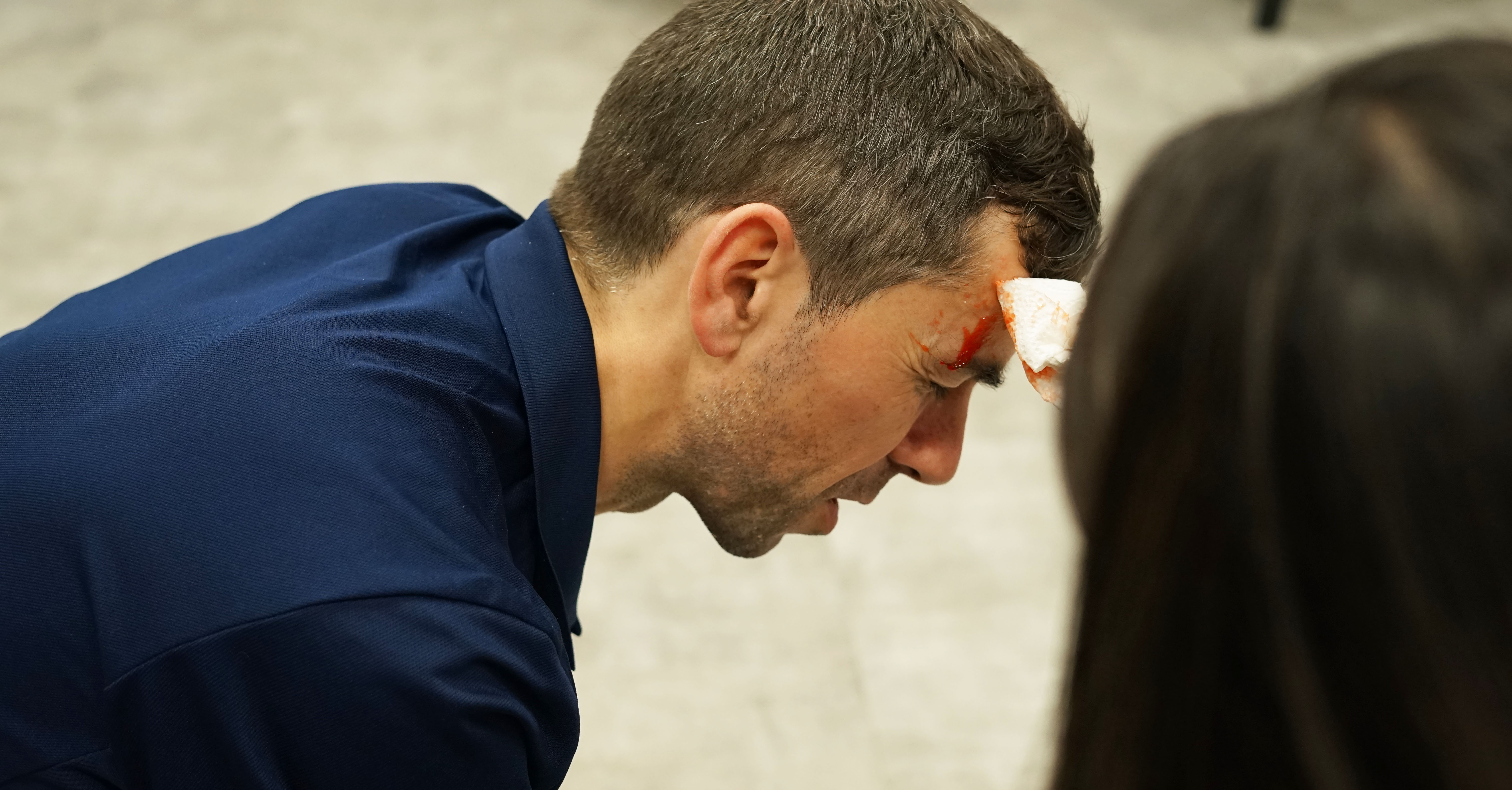
The First Aid Pathway
1. Introduction to First Aid in Sport and Physical Activity
Free eLearning
An accessible entry point combining:
- A reflection toolkit
- A one-hour eLearning course
Learners gain essential awareness to spot, assess, and respond to common First Aid situations in sport and physical activity.
UK Coaching has funded access to this course to help remove barriers and ensure a strong baseline of First Aid awareness across the sector.
2. First Aid: Ready to Respond
eLearning
A condition-specific course covering:
- Causes
- Signs and symptoms
- Appropriate treatment and response
This stage builds confidence and understanding for those operating in environments with increased responsibility or risk.
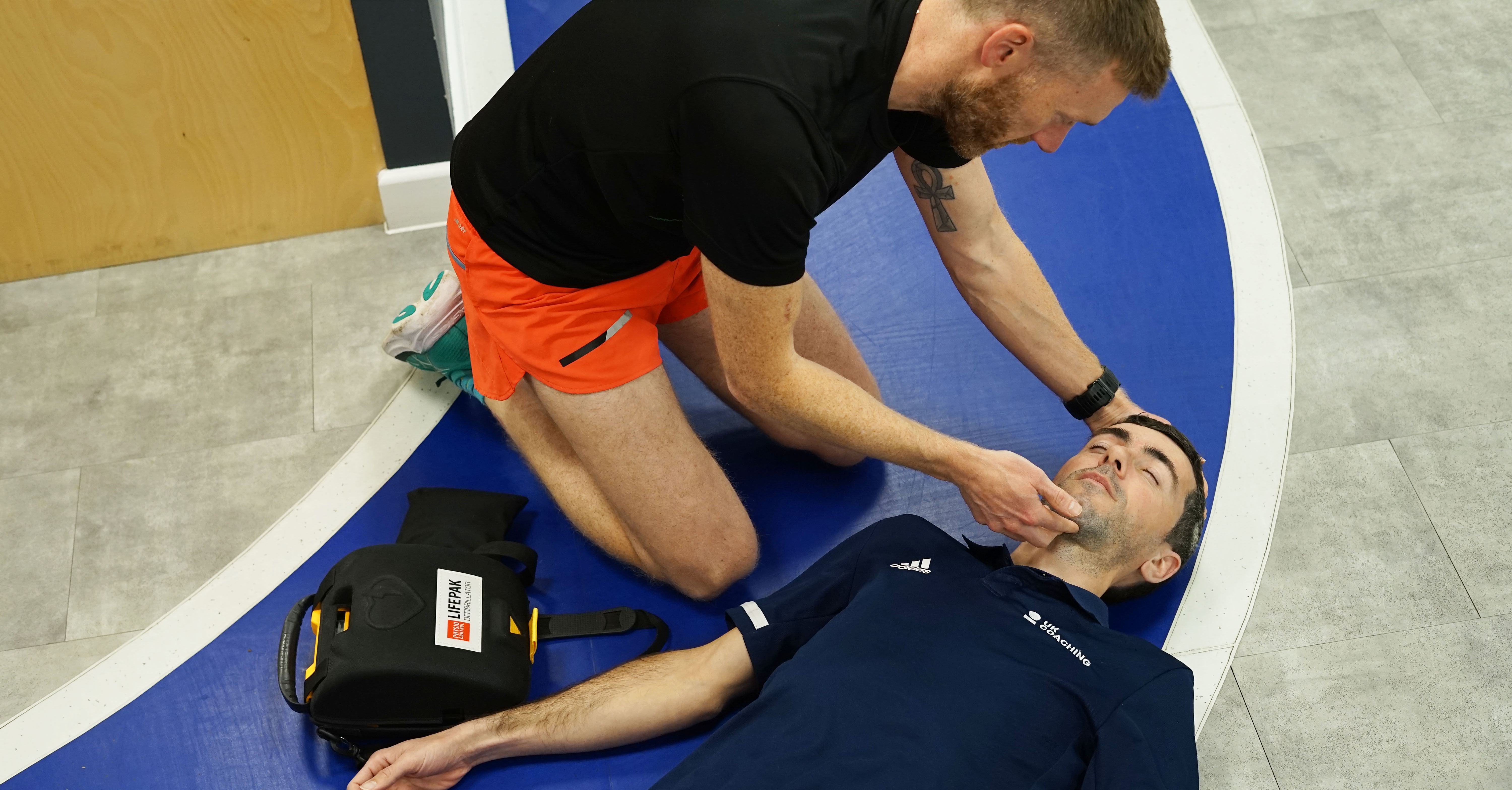

Free eLearning
A focused, scenario-based course designed to support:
- Rapid recognition
- Clear decision-making
- Confident, timely response
Critical for environments where immediate action can save lives.
4. First Aid in Sport and Physical Activity
Face-to-face workshop
This practical workshop builds on the earlier stages, covering:
- Rapid recognition
- Clear decision-making
- Confident, timely response
The workshop supports confident real-world application and is delivered by UK Coaching tutors or licensed partners.
Completion of stages 1-4 leads to a 1st4sport Endorsed Certificate.
5. Qualification
For organisations that require a formal qualification, the earlier pathway stages are mapped against the:
1st4sport Level 3 Award in Emergency First Aid at Work
This provides flexibility to incorporate qualification routes where required, without making them mandatory for all roles.
Why We Created the First Aid Pathway
Insight gathered from organisations and coaches highlighted that:
- First Aid training provision across sport is highly inconsistent
- Coaches often receive training that is not relevant to their environment or participants
- Cost and time are significant barriers, particularly for volunteers
- Since 2015, community sport has relied on local decision-making rather than national legislation
Insurance providers typically expect a reasonable, risk-based approach to First Aid provision. The UK Coaching pathway helps organisations meet this expectation with clarity and confidence.
Who Are These First Aid Resources For?
The First Aid pathway supports organisations that deploy, support, and develop coaches and activity leaders, including:
- National Governing Bodies of Sport
- Active Partnerships
- Colleges, universities, and education providers
- Training providers
- Clubs and community organisations
- Leisure and fitness facilities
- Social impact organisations and charities
- Schools and private coaching businesses
- Anyone involved in sport or physical activity
Let’s Plan the Right First Aid Approach For Your Organisation
The UK Coaching First Aid pathway is ideal if your organisation needs a workforce that is confident and ready to act when needed.
Share your details with us and we'll arrange a chat to explore how we can support your organisation with First Aid solutions.
A traditional First Aid qualification is usually a single, fixed course that covers a broad range of general workplace scenarios. Everyone completes the same content, regardless of their role, setting or level of risk.
The UK Coaching First Aid pathway takes a different approach. It provides organisations with a clear structure that helps them match learning to real roles and real levels of risk, starting with basic awareness and progressing only where it is needed. For organisations that require a formal qualification, the pathway aligns with the 1st4sport Level 3 Award in Emergency First Aid at Work. This helps organisations meet duty‑of‑care expectations without over‑training volunteers or creating unnecessary cost and time pressure.
The pathway is designed to support decision‑making, not replace it. Organisations can use it to match First Aid learning to different roles and responsibilities, take account of the environment, participants and level of risk, and apply the same decision‑making logic consistently across the organisation.
Some people may only need introductory awareness, while others working in higher‑risk or more demanding settings may benefit from condition‑specific learning or the practical workshop. UK Coaching provides clear guidance to help organisations make informed choices, while still allowing flexibility to reflect local context.
No. The First Aid in Sport and Physical Activity workshop is an important progression point in the pathway, but it is not mandatory for all roles. It is most valuable for people working in environments where incidents are more likely and where quick, confident decision‑making may be required.
Organisations can choose to deploy the workshop where it adds the most value rather than treating it as a blanket requirement. It can be delivered by UK Coaching tutors or licensed partners to support flexible delivery.
Insurers generally expect organisations to take a reasonable and proportionate approach to First Aid provision. The First Aid pathway helps organisations demonstrate that their decisions are informed and structured, that learning is relevant to the coaching environment, and that higher‑risk roles are appropriately supported.
Because the pathway is designed specifically for sport and physical activity, it provides a credible framework for conversations with insurers, partners and governing bodies. While organisations still need to carry out their own risk assessments and seek insurance advice where required, the pathway reduces uncertainty about what “reasonable” First Aid provision looks like in practice.