
Why do Coaches Stop Coaching?
 Article
 by UK Coaching
Coaches are central to positive experiences in sport and physical activity. Yet many are reducing their involvement or leaving coaching altogether. This research explores why coaches stop coaching, drawing on survey responses from almost 1000 coaches alongside in-depth interviews and organisational insight.

The impact of coaches leaving the profession goes beyond workforce numbers. Communities lose relationships, local knowledge, and safe environments for sport and activity. Coach dropout reflects how coaching is experienced across the system.
This project was developed in partnership with Leeds Beckett University and brings together survey data, qualitative insights from coaches, organisational perspectives, and a full synthesis report.
Who took part?
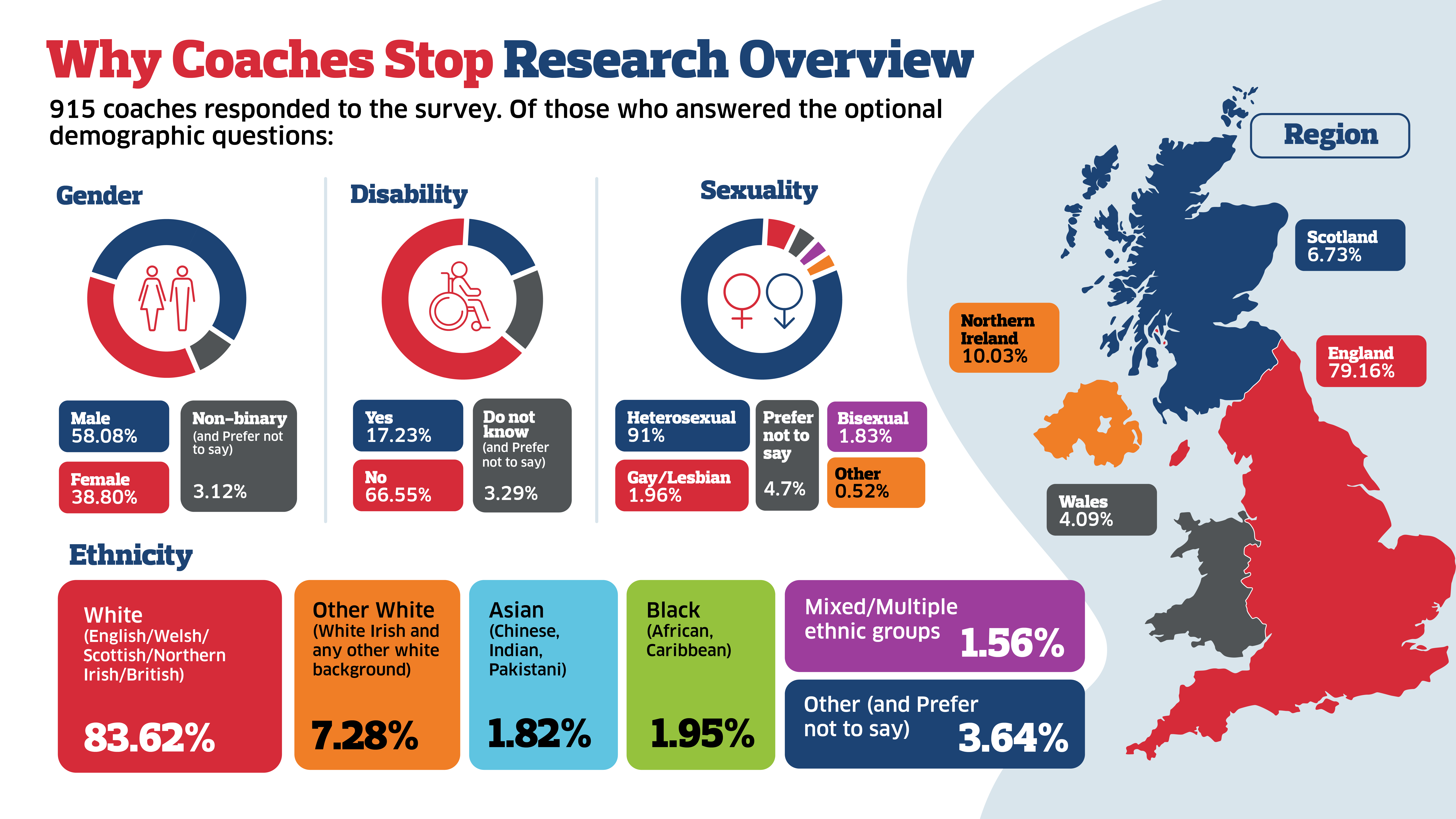
The research reflects the views of a broad coaching population. This image provides a demographic breakdown of those surveyed including gender, disability, sexuality, ethnicity, and UK geography.
What the research shows
Coaches consistently describe their role as purposeful and rewarding. However, the conditions surrounding coaching can make this work difficult to sustain over time.
Coaches rarely leave because of a single event. Instead, decisions to step away are typically the result of accumulated pressures over time.
A consistent finding across the research is that coaches value coaching itself, but find the surrounding demands unsustainable.
- What’s driving coaches to step away: Key factors include workload and burnout, financial pressure, administrative burden, limited progression opportunities, and culture and support issues.
- Not all dropout is the same: Some coaches leave due to life changes or positive transitions, while others step away due to avoidable pressures. Understanding this distinction is critical.
- What needs to change: The findings point to a need to shift focus from recruitment to retention, improving the conditions in which coaching takes place and strengthening support for coaches.
Read the reports
Why do coaches stop coaching?
This report brings all the research together to explain coach dropout as a system-wide issue, shaped by cumulative pressure and imbalance between expectations, support, and reward.
REPORT
Coaches’ Report
Read coaches’ lived experiences, highlighting what makes coaching meaningful, the challenges they face, and how pressures beyond delivery shape decisions to step away.
REPORTOrganisational Report
Examine how governing bodies and sport councils understand coach dropout, highlighting gaps in data, role design, and support that influence retention.
REPORTOverview Report
Explore key drivers of dropout, including burnout, financial pressure, workload, and system challenges. See how these factors are connected across coaching roles and environments.
REPORTRelated Resources

Our Research
SEE THE RESEARCH
Coaching in the UK
READ THE REPORTS