
Leading by Example: Coaching Respect for Match Officials
 Article
 by UK Coaching
Imagine the scene, the match official blows the whistle and makes a decision, and your entire team, maybe even you too, disagrees. Emotions may be running high, the stakes could be big, and suddenly, it’s tempting to make your thoughts and feelings known. However, is venting at the match official worth the potential consequences?

The Growing Focus on Respect for Match Officials
There are limited, if any, social situations where abuse and disrespect are permitted, yet in the area of sports, it is often considered a normal or acceptable aspect of the game.
Unfortunately, the evidence is clear. A study reported 60% of match officials had experienced verbal abuse at least every couple of matches, and 19% reported they faced physical aggression.
Abuse towards match officials has gained increased attention, with sports governing bodies taking the initiative to tackle the situation. Programmes such as the FA’s Respect campaign, the RFL’s Tackle It! policy, and innovative approaches like the use of bodycams, reporting apps, and armbands for U18 officials, are just some of the measures aimed at reducing and stamping out abusive behaviour.
For youth sports, especially, where values like teamwork, respect, and discipline are central, poor behaviour towards officials can impact the very foundation of the game. This increase in abuse towards officials threatens not only the integrity of the game but also the retention of officials, an essential role of the sporting landscape.

You’re coaching your team in a cup final, and the game is level late on. The match official awards a foul against your team, giving the opposing team a good chance to take the lead. You are sure the decision was wrong. Your team looks to you for a reaction. What do you do?
Aggressive Confrontation
Calm Discussion
Move on and Focus on Coaching
The Vital Role of Coaches
Coaches set the standard. You’re not just a coach; as an adult, in a position of influence and power, you’re also a role model. Participants, parents, carers and spectators look to you to see how to act, behave and respond based on your actions and language. Showing and modelling respect for match officials encourages the same behaviour from others. Remaining calm, managing your emotions and remaining in control as a coach signals to participants that the match official’s decisions, even if controversial, are part of the game.
One study found that a coach’s positive demeanour fosters a good attitude in their participants.
For example, Marcus Rashford, professional footballer, claims his “... coach didn’t only build me as a player, but he built me as a person.” Coaches who prioritise positive and respectful behaviour see better results, on and off the field.
The reverse is also true. When coaches question, challenge decisions or complain, participants, supporters, parents and carers copy those actions and the situation can escalate resulting in verbal and physical abuse directed toward match officials.
Sport and physical activity have traditionally been associated as the bastion for and development of personal and social values and behaviours such as respect, fair play, friendship, honesty and teamwork. The erosion of these through touchline behaviour could result in core life skills being eroded away and lost.
As a coach you cannot control every moment and individual person during the competition, but you can set a positive and respectful tone before, during and after games, practices, and interactions. Simple steps to promote these actions allow competitions to run more smoothly and show appreciation for the essential role of match officials.
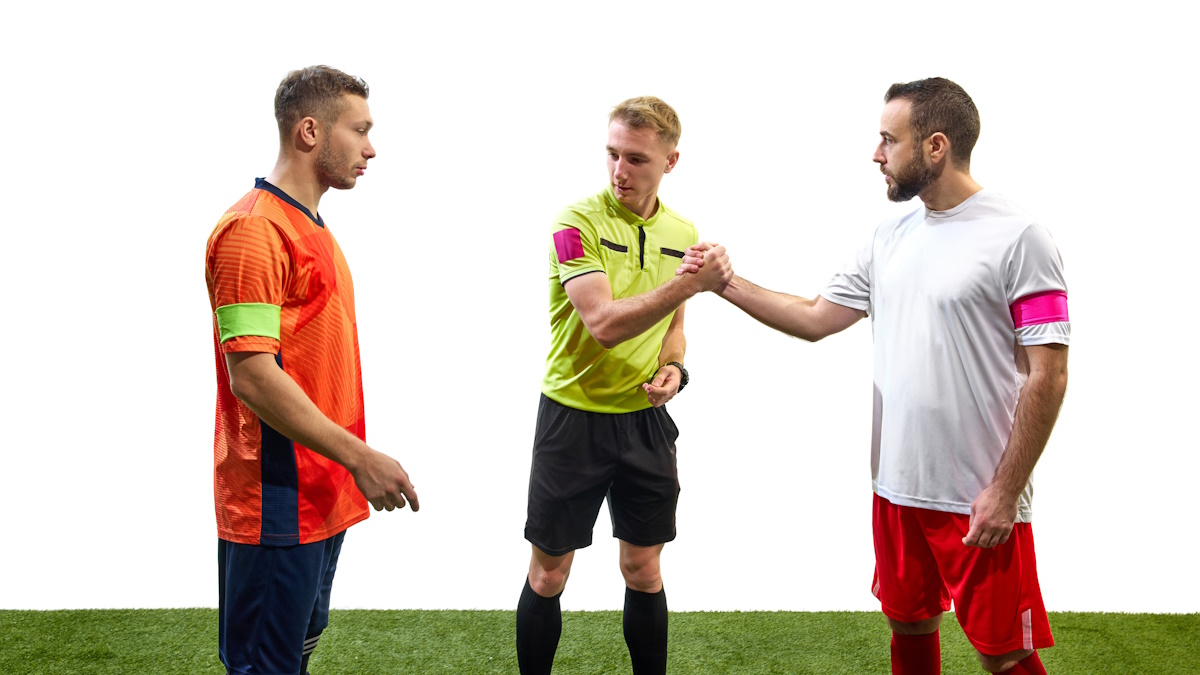
Match Officials Are Human
They love sport as much as you and your participants do and devote their time to ensuring a smooth-running game, yet they continue to face various levels of abuse in matches. There is no game without officials, and acknowledging this can put things into perspective.
It is important to acknowledge that when abuse is visible to young people, it is unlikely they will want to volunteer and officiate in the future, ultimately putting the growth and retention of match officials at risk.
Finally, remember that match officials may make judgements, decisions and sometimes make mistakes, but that is not an excuse to express your thoughts and feelings inappropriately. Even a light-hearted comment can challenge and question the integrity and impartiality of the match official; once this occurs, escalation usually follows.
Managing emotions and acting with composure not only sets an example but can also avoid serious consequences for you as a coach. A calm, focused response keeps the game enjoyable for everyone, ensuring your participants can concentrate on what matters, enjoying themselves and maximising their potential.
1. Manage Your Emotions
- Take a deep breath before reacting to help recognise your emotions; a moment of reflection can save you and your team unnecessary conflict.
2. Communicate Positively
- Lead by example. Even in disagreement, be polite and professional.
- Use a neutral and polite tone when discussing with the match officials.
3. Focus on the Bigger Picture
- Consciously shift your focus and remind yourself and your team why you’re there, to enjoy the sport and help participants grow on and off the field.
- Acknowledge that some things are out of your control.
4. Educate Your Team
- Regularly remind your participants, parents and carers about the importance of respecting referees, and make it a team value.
5. Show Gratitude
- Thank referees after the game; even a small gesture can have a big impact.
If you genuinely believe that a match official has acted in a way that is inappropriate or inconsistent with the standards of their role and the integrity of the game, consider reporting a formal complaint through your sport association’s reporting process. Many organisations and leagues have systems in place to review officiating concerns in a fair and constructive manner.
Before taking this step, take a moment to reflect, consider your reason for making the report and make sure you understand the reporting guidelines. Remember to report your concerns in a clear and objective way, using observations rather than opinions and frustrations from the competition.
The Consequences of a Moment of Madness
It’s an important competition, a referee makes a big decision against your team, and the clock is ticking. You lose your temper, shout, point, become aggressive or worse, become physical. Suddenly, you’re not only affecting the game and your team's morale but could also be facing disciplinary actions.
It’s important to recognise that inappropriate behaviour doesn’t just impact the game, it can lead to serious consequences. Coaches who lose their temper or engage in abusive behaviour may face disciplinary actions, fines, suspensions, or even legal action. These events can damage not only your reputation but also the team’s reputation and overall integrity of the sport.
Fines, Suspensions, and legal implications
Implications for coaches who lose their cool on match officials vary in seriousness and sanction across sports. Some of these implications come from the sporting organisation of which you are coaching. Recently, there have been more than 380 bans following grassroots match official attacks in 2021.
Physical and verbal abuse towards match officials continues to be highly sanctioned in lower-level sports and less so in high-level matches. Some organisations have tried to combat this issue by raising sanctions on coaches, holding them to a higher standard. Sanctions range from a touchline ban, unable to coach for a set period of time through to a lifetime ban.
The more serious the offence is, the more likely the police will be involved, and charges may also be brought against the individual.
If a complaint has been made against you, it is important to understand your rights and the steps you should take in response. Many sports organisations have formal processes for managing complaints and knowing how to navigate each stage is important. For further guidance on what to do in this situation read ‘What happens when a complaint is made against you’.
In addition to internal sanctions from sports organisations there can be more dire legal implications that result in civil or even criminal charges. Many of these offences can carry hefty fines, and in some cases, a prison sentence. A criminal assault is similar to a civil assault except for how it is prosecuted.
Reflect and Respond
Answer: As a coach my behaviour sets the tone for how others may respond to situations during the game. By reacting calmly and respectfully, participants, parents and carers are more likely to follow your lead, whereas negative reactions can escalate tension and cause disrespectful and disruptive behaviour from others.
Answer: I can model calm and respectful behaviour in order to show participants how to handle disagreements constructively. I can address the team afterward and emphasise the importance of remaining calm, maintaining focus, and ensuring respect on and off the field.
Answer: I can establish clear expectations, initiate discussions, and lead by example.
Answer: Stay calm, use positive language, and address concerns in a composed and respectful manner. Take a deep breath and reflect on my feelings in order to regain composure. I can also focus on the bigger picture and remind myself that the outcome of the game is not determined by one decision.
Answer: By not keeping my emotions in check and acting out, I am putting themselves at risk, suspension, fines and sanctions from the team and organisation.
Summary
Next time you’re tempted to react to a match officials’ decision, remember how you react and behave sets the tone for your participants, parents, carers and the entire sideline. Respect isn’t just about the whistle; it’s about the future of sport.