
Unseen and Unheard: A Muslim Woman’s Fight for Inclusion in Coaching
 Article
 by Blake Richardson
Asma Ajaz-Ali, Head of Participation and Community at the Muslim Sports Foundation (MSF), shares her lived experiences and insights on the urgent need for greater diversity in the coaching workforce.
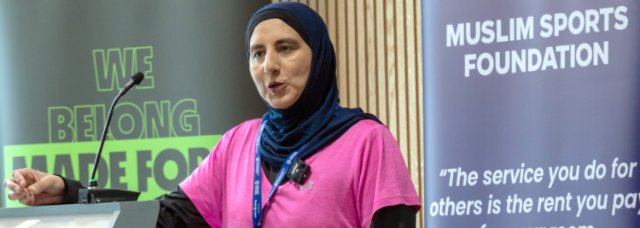
I met somebody recently who said, ‘I saw you on a poster, and that's why I became a coach’. And I was like, ‘I don't even know who you are’, but it was that inspiration that they felt that actually, if she's in that space, I can be in that space.”
Asma Ajaz-Ali
Structured around six short video episodes, this feature follows Asma Ajaz-Ali as she dissects the multifaceted challenges Muslim women face in coaching.
Through each episode, Asma confronts themes of fear, racism, systemic exclusion, and the emotional and psychological toll of feeling undervalued and unseen.
Her powerful personal reflections lay these issues bare with honesty and clarity. Asma outlines the urgent changes needed, and why we can no longer look away from the realities faced by underrepresented voices in the sector.
Yet the series also carries a hopeful, forward-looking tone. Asma highlights the transformative power of diversity and the importance of creating space for different religions, ethnicities, genders and perspectives to be seen, heard, and valued.
Her strength, resilience, and impact shine through in six personal and purpose-driven conversations that challenge and inspire in equal measure.
Breaking Barriers in Coaching
Episode 1: Growing Up Looking Like Me
In this powerful opening episode, Asma shares a deeply personal story about growing up as a Muslim woman and the historical challenges she has faced in the world of sports coaching.
Through honest reflection and lived experience, this episode explores:
- The barriers she encountered from a young age.
- Lack of accountability and action from those in leadership to address systemic exclusion.
Episode 2: Fear, Racism and The Cost of Exclusion
In Episode 2, Asma confronts the uncomfortable truths about fear, racism, and Islamophobia that she says she has experienced as a coach.
She shares a raw and honest account of being excluded, silenced, and judged – not for her actions, but for how she looks. This episode explores:
- How fear of change fuels exclusion.
- The impact of racism and Islamophobia in coaching environments.
- The failure of leadership to embed inclusion as a foundational value.
Asma calls for systemic reform and highlights the responsibility of organisations like UK Coaching to lead the way in creating truly inclusive spaces.
While it can be unsettling to hear racism and Islamophobia attributed to coaching environments, these issues often stem from a lack of understanding and awareness – not malice. At UK Coaching, we’re here to support coaches with the knowledge and tools they need to foster inclusion, through resources like our Duty to Care Hub pillars on Diversity and Inclusion, and our workshops, online classrooms, and eLearning courses.
Episode 3: No Place for Me – Belonging, Value and Visibility
In Episode 3, Asma discusses the emotional weight of feeling invisible and undervalued in the coaching system.
She reflects on the deep impact of not belonging – how the system often feels like it wasn’t built for people like her, and how that internalised exclusion can lead to imposter syndrome and self-doubt.
This episode explores:
- The emotional cost of being excluded from coaching spaces.
- How behaviours – tone, body language, and eye contact – communicate who is (and isn’t) welcome.
- The urgent need to create environments where everyone feels seen, valued, and included.
Episode 4: Why Diversity Matters – New Voices, New Perspectives
Asma talks about the powerful benefits of diversity in coaching and leadership.
She makes the case for why inclusion isn’t just the right thing to do – it’s essential for innovation, learning, and growth. Drawing on examples from neurodiversity and lived experience, she explains how different perspectives can enrich the coaching environment and challenge the status quo.
This episode explores:
- Why diversity brings fresh thinking and new ways of learning.
- The importance of taking risks to include underrepresented voices.
- The need to listen when people say the system isn’t working for them.
Episode 5: Sticking With It – Coaching Changes Lives
In this episode, we hear Asma’s empowering story of perseverance and purpose.
Despite the barriers, Asma has stayed the course – driven by the knowledge that her work is making a real difference in the lives of women and girls. From helping young athletes reach county level to creating safe spaces for those struggling with their mental health, her coaching goes far beyond sport.
This episode explores:
- The personal motivation behind Asma’s coaching journey.
- The transformative impact of inclusive coaching on mental health and confidence.
- Why representation and safe spaces matter for young women and girls.
Episode 6: Change Takes Time – Keep Asking, Keep Learning
In the final episode, Asma shares why one-off training sessions aren’t enough to shift deep-rooted habits – and why creating safe spaces for honest, sometimes uncomfortable conversations is essential. Her message is simple but powerful: ask questions, stay curious, and treat each other with humanity.
This episode explores:
- Why change is a continuous process, not a one-time fix.
- The importance of safe spaces for learning and dialogue.
- How empathy and openness can drive long-term inclusion.
The Muslim Sports Foundation is a national charity which aims to create equal opportunities for Muslim communities across the nation to thrive in sport and physical activity.
“Every girl deserves to feel included, supported, and celebrated in sport. Together, we can break down the barriers and open up a world of opportunity.”
Learn more about the societal issues facing Muslim communities nationally and how the charity empowers, promotes, and advocates for grassroots British Muslim communities on their website.
Women Who Coach Hub
Our digital guide features stories from more empowering female role models and advice from leading experts on how to get into coaching and develop your career.
“I was the only one who looked like me back in the day. I was the only person who stood out like a sore thumb in the room, and I was the one who was told, ‘well, this space isn't for you’, or, ‘we don't need people like you here’. And it was a constant battle to try and showcase my skills rather than visibly what I looked like. And, yeah, I'm not going to lie and say it was easy. It was really, really tough.
“A lot of the system that I was involved in was white male, and that's where a lot of the kind of comments were coming from. And the hardest thing for me was when you went to leadership to try and address this, and it wasn't addressed and it was ignored, that you realised that actually it was time to go.”
“Change is always really difficult. And fear of change is even bigger. And when you look like this, you're going to fear me because… sometimes it is racism, sometimes it is Islamophobia. I'm not generalising that. But if I come to no other conclusion of why I am being excluded or why I've been told that actually, ‘you need to tell her to go because she's bringing too many brown people into the club’, by the Chair, that is a concern because inclusion should be the foundation of something. It shouldn't be an afterthought. And I think that is a big issue and I think that the system within itself needs to be redressed.
“There's organisations such as UK Coaching, who have that duty and responsibility to be able to frame the system so that everybody is included.”
“The most important thing for me was I felt as though the system wasn't built for me. I didn't feel valued. I didn't feel as though I was part of it. And that feeling is what can cause so many issues because it's not seen, and it's internalised. And then you start to do imposter syndrome and all the general things that you do when you don't look the same as anybody else. And I mean, I've got really thick skin and I've been able to take comments that just, you know, when I'm a coach developer, I'm never given the opportunity because, ‘oh no, we've got this. We don't need you in it’. And it's the tone, the body language, the visible, you know, eye contact to you about looking at you like this. Because that's why you're not wanted in this space.”
"We need a seat at the table. Just for the fact that diversity brings so much. You know, they talk about neurodiverse people and the way their mind works and how it can enrich the environment by having people of neurodiversity in there. And we've seen great leaders who talk about their neurodiversity, but actually diversity in terms of people as well, brings so much enrichment that maybe you don't think about, because your track is this, their track might be a different lens of learning that they're bringing. They're bringing a different perspective to the table. And actually, it might work. It might not. But you've got to take the risk to have them there, to be able to allow them to display their ideas, their concerns, their knowledge. Because if they're saying that the system isn't working for them, we have to listen."
"My coaching journey has been continuous because I've not let them stop me because I know that I'm making a massive difference to women and girls who are taking part. And I feel as though a lot of those girls have got into county who are doing great things have only got there because I've been involved. Not only from kind of like going to sport or movement or physical activity, but actually girls who have had insecurities, mental health conditions, have used this space that I have given them and been able to understand the person that's sitting in front of me, to be able to give them that space in a coaching environment, to be able to address their mental health issues, is more than any words can say. So even if I've done nothing in all of my career and I've been able to help and support young girls with their mental health issues, that’s enough for me."
"Doing non-bias training for example once for coaches isn't enough because it doesn't change the habit. I mean you ask me to change from my Heinz baked beans. It's going to be a no. It's going to take me a while to do that change. It's not going to happen overnight. And same with people. Things don't happen overnight. It has to be a continuous process of learning, of understanding and maybe difficult conversations which have to take place. And you need to have that space in a safe environment where those things can be asked. Maybe I'm misunderstood. Maybe they don't know, they fear asking me, but I'm here for you to ask the questions. Any question is not a stupid question. Ask me and I'm here to help you. I'm no different. I am a human being. And please treat me like one."
"My name is Asma Ajaz-Ali and I currently work for Muslim Sports Foundation who are, last year, a new system partner to Sport England tackling inequalities in areas of deprivation.
"I'm heading Participation and Communities. So, we're really looking at the opportunities that are missed within the grassroots in particularly. I'm working with national governing bodies of sport, and system partners, and Active Partnerships to address kind of bridging that gap with the inequalities faced by predominantly British Muslim communities due to lack of access or opportunity, or from the environment that they're living in. And looking at how we can work to support them to be active because some of these areas are very dense in ethnicity, but also, the inactivity levels are the highest.
“We've done a lot of research, and data insight, in particularly British Muslims, and a key thing that keeps coming up is that sense of belonging and being part of a system which actually primarily they don't fit into, and through my personal experiences as a coach, as a coach developer, and having worked in sport for over two decades, I have begun to realise that no matter how hard you try to stay and be resilient, there comes a point where resistance wears you down and you can't be there anymore.
“Growing up, I was the only one who looked like me back in the day. I was the only person who stood out like a sore thumb in the room, and I was the one who was told, ‘well, this space isn't for you’, or, ‘we don't need people like you here’. And it was a constant battle to try and showcase my skills rather than visibly what I looked like. And, yeah, I'm not going to lie and say it was easy. It was really, really tough.
“A lot of the system that I was involved in was white male, and that's where a lot of the kind of comments were coming from. And the hardest thing for me was when you went to leadership to try and address this, and it wasn't addressed and it was ignored, that you realised that actually it was time to go.
“Change is always really difficult. And fear of change is even bigger. And when you look like this, you're going to fear me because… sometimes it is racism, sometimes it is Islamophobia. I'm not generalising that. But if I come to no other conclusion of why I am being excluded or why I've been told that actually, ‘you need to tell her to go because she's bringing too many brown people into the club’, by the Chair, that is a concern because inclusion should be the foundation of something. It shouldn't be an afterthought. And I think that is a big issue and I think that the system within itself needs to be redressed.
“There's organisations such as UK Coaching, who have that duty and responsibility to be able to frame the system so that everybody is included.
“The most important thing for me was I felt as though the system wasn't built for me. I didn't feel valued. I didn't feel as though I was part of it. And that feeling is what can cause so many issues because it's not seen, and it's internalised. And then you start to do imposter syndrome and all the general things that you do when you don't look the same as anybody else. And I mean, I've got really thick skin and I've been able to take comments that just, you know, when I'm a coach developer, I'm never given the opportunity because, ‘oh no, we've got this. We don't need you in it’. And it's the tone, the body language, the visible, you know, eye contact to you about looking at you like this. Because that's why you're not wanted in this space.
"We need a seat at the table. Just for the fact that diversity brings so much. You know, they talk about neurodiverse people and the way their mind works and how it can enrich the environment by having people of neurodiversity in there. And we've seen great leaders who talk about their neurodiversity, but actually diversity in terms of people as well, brings so much enrichment that maybe you don't think about, because your track is this, their track might be a different lens of learning that they're bringing. They're bringing a different perspective to the table. And actually, it might work. It might not. But you've got to take the risk to have them there, to be able to allow them to display their ideas, their concerns, their knowledge. Because if they're saying that the system isn't working for them, we have to listen.
"My coaching journey has been continuous because I've not let them stop me because I know that I'm making a massive difference to women and girls who are taking part. And I feel as though a lot of those girls have got into county who are doing great things have only got there because I've been involved. Not only from kind of like going to sport or movement or physical activity, but actually girls who have had insecurities, mental health conditions, have used this space that I have given them and been able to understand the person that's sitting in front of me, to be able to give them that space in a coaching environment, to be able to address their mental health issues, is more than any words can say. So even if I've done nothing in all of my career and I've been able to help and support young girls with their mental health issues, that’s enough for me.
"Doing non-bias training for example once for coaches isn't enough because it doesn't change the habit. I mean you ask me to change from my Heinz baked beans. It's going to be a no. It's going to take me a while to do that change. It's not going to happen overnight. And same with people. Things don't happen overnight. It has to be a continuous process of learning, of understanding and maybe difficult conversations which have to take place. And you need to have that space in a safe environment where those things can be asked. Maybe I'm misunderstood. Maybe they don't know, they fear asking me, but I'm here for you to ask the questions. Any question is not a stupid question. Ask me and I'm here to help you. I'm no different. I am a human being. And please treat me like one."