
The Big Interview: How Laura Weightman Turned Olympic Experience into Coaching Excellence
 Inspiring Story
 by Blake Richardson
Two-time Olympian and double European and Commonwealth Games medallist Laura Weightman discusses her journey from international athlete to coach. She reflects on which coaches influenced her along the way, her transition into coaching, and how her experiences as an athlete have guided her approach to working with athletes. Laura also considers how UK Coaching’s Women in High Performance Programme is currently helping her shape her coaching philosophy.
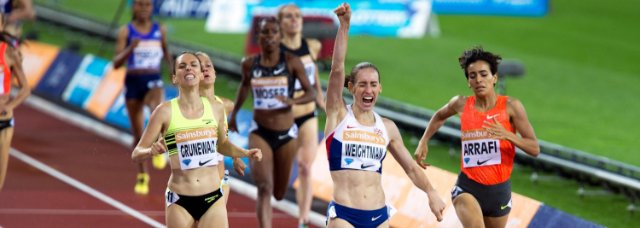
As sure as night follows day, there was a sense of inevitability about Laura Weightman’s path into athletics. First, that she would follow in the footsteps of her long-time coach Steve Cram and become an elite athlete. And later, when the time came to hang up her spikes, that she would step into the role of coach herself.
From the moment her PE teacher suggested she join a running club at 12, Laura says, “I’ve always been known as a runner.
“Doing cross-country at school, I discovered I was oddly good at it, and I just absolutely loved it.”
Growing up with four siblings (three brothers and a sister), the race wasn’t just on the track – it was for everything, even Monopoly money. Competition was the family currency.
And then there were the sprints home from the park, “gasping for air sat on the front step”, so desperate was she to beat them all.
“It’s where I learned the ability to lose and go again, because you can’t win at everything all the time.
“Being fit and active was ingrained in me because it was a way of life for my family. So was having that healthy competition. It felt like a natural path to fall into athletics.”
Which explains why, as soon as our Teams call ended, Bruce Springsteen’s ‘Born to Run’ started playing in my head.

The Club Years: Laying the Foundations
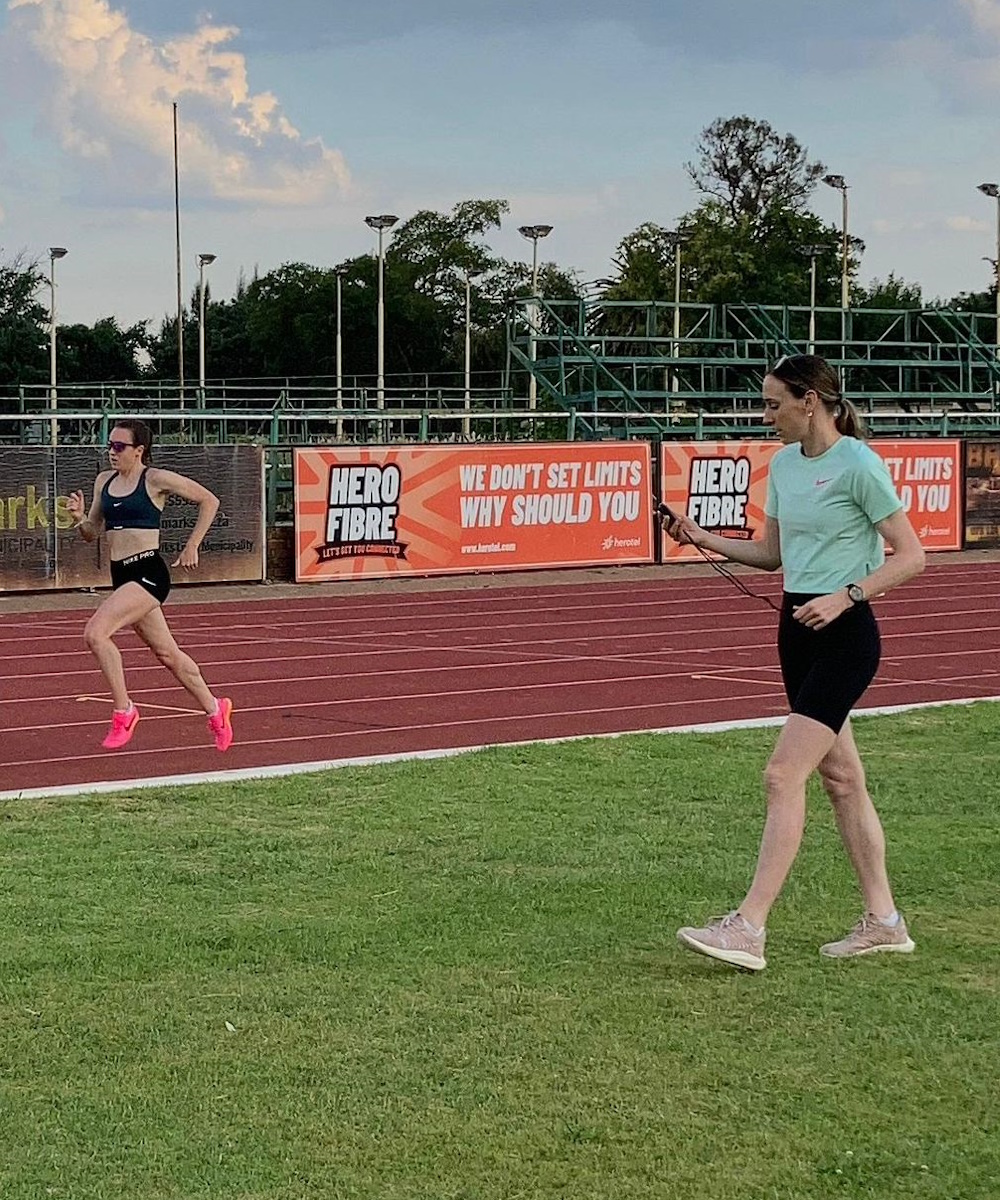
Today, Laura coaches a World Class Programme athlete, Laura Muir, supports British Athletics training camps, and works at Leeds Beckett University with the Athletics Talent Hub, as well as England Athletics’ Youth Talent environment.
But how did she get here? To understand that we need to rewind – past the Olympic finals, past the overflowing cabinet of club medals, back to the child racing home from the park.
Originally from the small village of Alnmouth, Northumberland, Laura did indeed follow the advice of her PE teacher and joined Morpeth Harriers & Athletic Club.
She credits her first coach, Mike Bateman, as pivotal to her future success.
I only ever had two coaches my whole career. Mike coached me from the age of 12 when I joined Morpeth Harriers, right through until I was just about to turn 18.”
Mike’s influence runs deep, and his legacy at Morpeth Harriers is rich. He has coached some of Britain’s brightest talents, including Rory Leonard (European U23 10,000m champion and two-time European Cross-Country champion) and Scott Beattie (2023 British 5km road title winner and fourth in the 5,000m at the 2024 UK Athletics Championships).
“I just really enjoyed that competitive environment, but also the team environment – spending days with my friends at track leagues or cross-country races. I value the friendships that running for the club gave me.”
The University Years: When Dreams Became Reality
In 2010, with her reputation growing and an international future beckoning, Laura reached out to Steve Cram to take over the coaching baton.
Being from the Northeast, she was well aware of Cram’s legendary status and was fortunate to have a connection through his son, who also ran for Morpeth Harriers.
“By then, I’d won a couple of national junior titles and started to think, ‘This is possible. I might go on to have a senior career.’ I felt like I needed extra support, and that’s when I approached Steve.
“I’d seen him at several Northeast events and had the odd conversation. So, at 18, I just reached out and said, ‘I need a little bit of help and support – what would you suggest?’ I feel lucky that I sent that email and he agreed to come on board. He took me right through my senior career.”
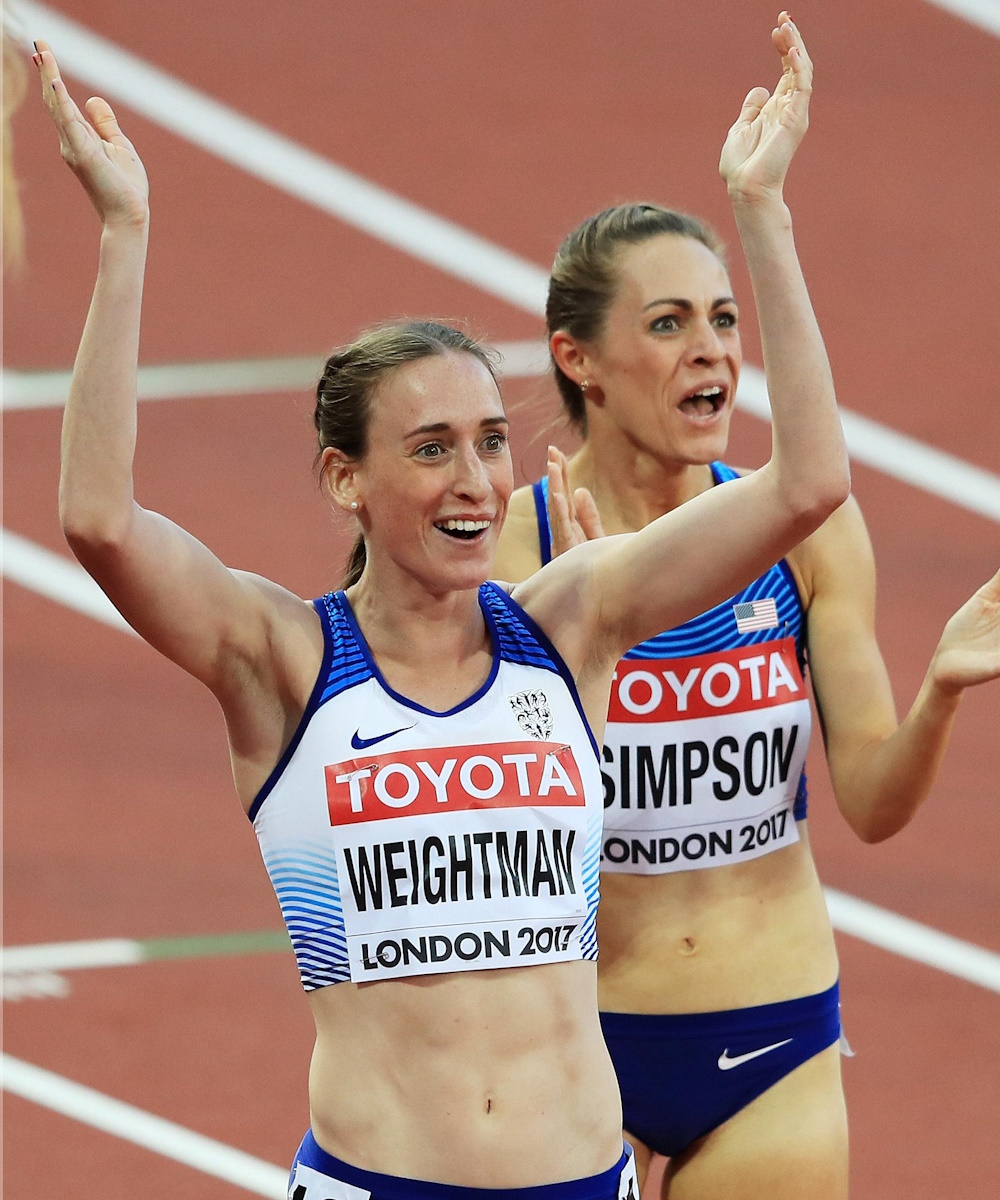
Her progression was rapid, from the World Junior Championships in Moncton, Canada in 2010 (where she finished 6th) to competing in the London 2012 Olympic Games. Aged just 21, she made the final of the 1500 metres, where she again finished sixth.
Laura says she will be forever grateful to Cram, telling the Bible of British athletics, Athletics Weekly:
He’s been such an incredible coach, and he’s felt like family. He’s known me better than I’ve known myself. He’s thoughtful, caring and got the absolute best out of me.
“It blows my mind to think about the achievements I’ve had throughout my career and I have no doubt that none of that would’ve happened without Steve.”
Combining Studying with Life as an Elite Athlete
The transition to international athlete was a “whirlwind”, says Laura. Not just because of the pressure and expectations that came with competing at the highest level, but because she was also juggling a degree in Sports and Exercise Science at Leeds Beckett University.
She says Cram was pivotal in that decision too: “When I was choosing where to go to university, Steve gave me advice I’ll never forget: ‘go somewhere that has a team that’s right for you. Don’t rely on a system or funding – build a team around you that will be there throughout your career’. That’s what Leeds gave me.
The people and environment I worked with from day one were the same when I retired. Leeds became home, and that decision – guided by Steve – was key to the success I went on to have.”
But Steve wasn’t the only influence during those years. Laura credits a number of role models who helped set the gold standard she aspired to.
Head of Athletics at Leeds Beckett, Andy Henderson, was one of her mentors.
“He was an assistant coach, if you like, the eyes on the ground, the person who supported me on a day-to-day basis to manage my training, with Steve setting the overall programme. I’ve worked closely with others over the years – my physio, strength and conditioning coaches – to build a trusted team around me.”
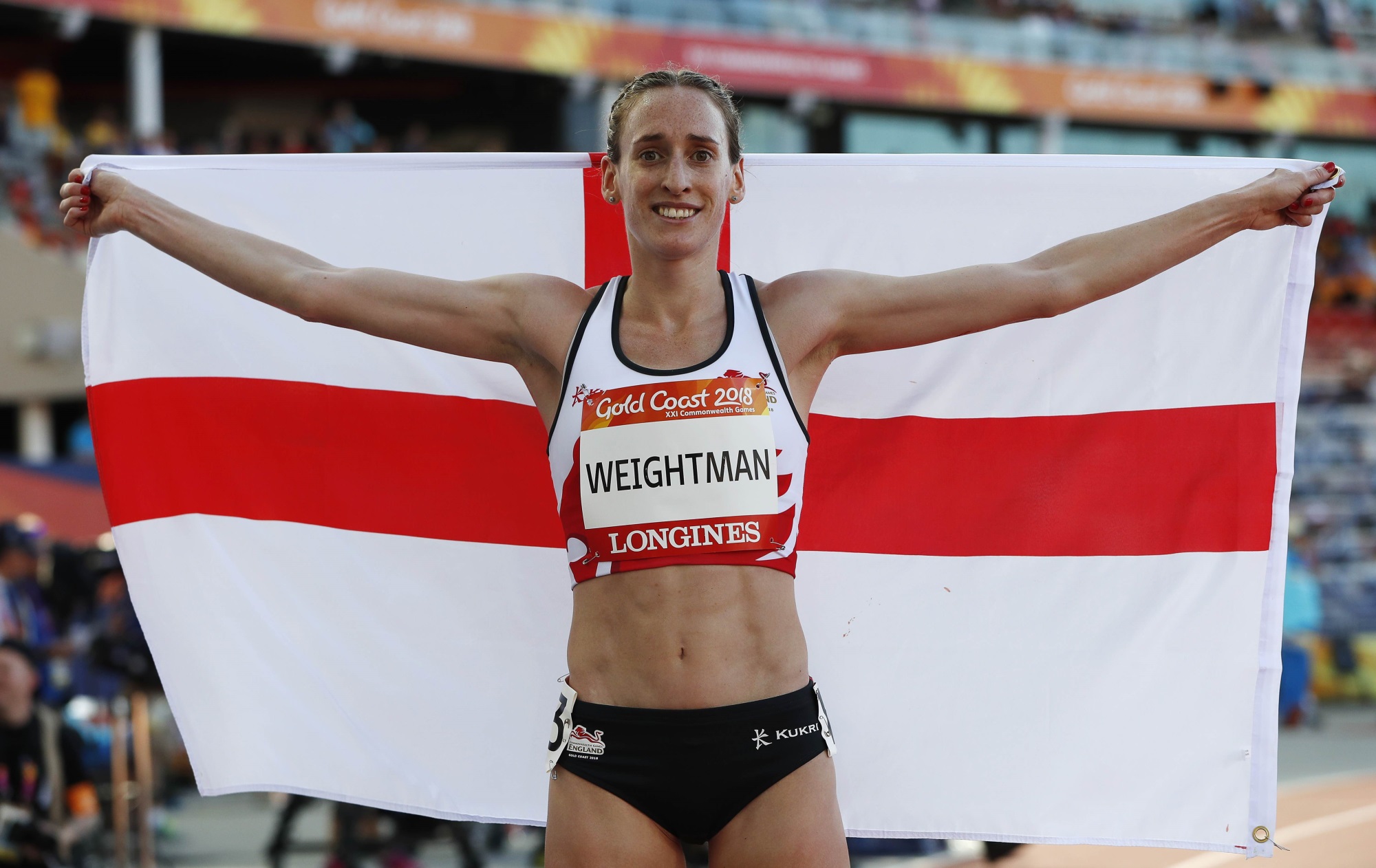
Laura considers London 2012 as her most cherished sporting moment. At the time, she was still a second-year university student, balancing lectures with Olympic dreams.
It will always be one of the most surreal experiences of my life. At 21, to experience a home Olympic Games. It’s one thing to be an Olympian but to experience a Home Olympics, that’s so special. I was a university student on my summer holidays at the Olympic Games!
“I feel really lucky to have had that experience in London, and a real sense of pride when I look back upon that performance.”
Psychological Support and Athlete Wellbeing
In elite sport, the margins are razor thin. One small detail can throw everything off course, and when the stakes are highest, everything must come together perfectly on the day.
For Laura, that realisation hit hard after the Rio 2016 Olympics. Despite reaching the final once again (she finished 11th), the experience was vastly different.
“I didn’t enjoy it. To be at an Olympic Games and not enjoy it after having the absolute time of my life in 2012 – I knew something wasn’t right.”
That moment sparked a turning point. Laura recognised that the psychology of sport was something she needed to work on if she was to continue enjoying her career.
She turned to someone she trusted from her university days, her former lecturer Dr Andrew Manley, who is a Principal Lecturer in Sport and Exercise Psychology at Leeds Beckett.
The value of having someone invested in her as a person had the desired impact. The second half of her career, she says, “were some of the best years of my life.
“I felt Andrew was the right person for me for so many reasons and I’ll be forever grateful he said yes.”
Nine months after Rio, Laura was in the 2017 World Championship final in London in a completely different mindset. She finished sixth in a race featuring some of the greatest women’s middle-distance runners the world has seen.
Andrew’s advice and support saved my career. It helped me recapture the joy I’d lost.
“It was the first championships where I really felt a sense of belonging. I felt this was my gold medal performance over the 1500 metres.
“I walked away from those championships feeling fulfilled, and I don’t think I can say that about every other championships I went to, when maybe I didn’t believe in myself enough. I felt it really challenging psychologically more than physically, and Andrew gave me the tools to thrive rather than just compete.”
Even in retirement, Laura continues to work with him, with their focus evolving to new challenges. For her, the message is clear: deep, trusted relationships matter above all else.
“Andrew’s support looks different now that I’m a coach, but ultimately, he’s there to support ‘Laura,’ and it means so much that he’s invested in me as a person, not just one version of me.”
The Coaching Years: The Natural Next Step
Laura’s transition into coaching was gradual.
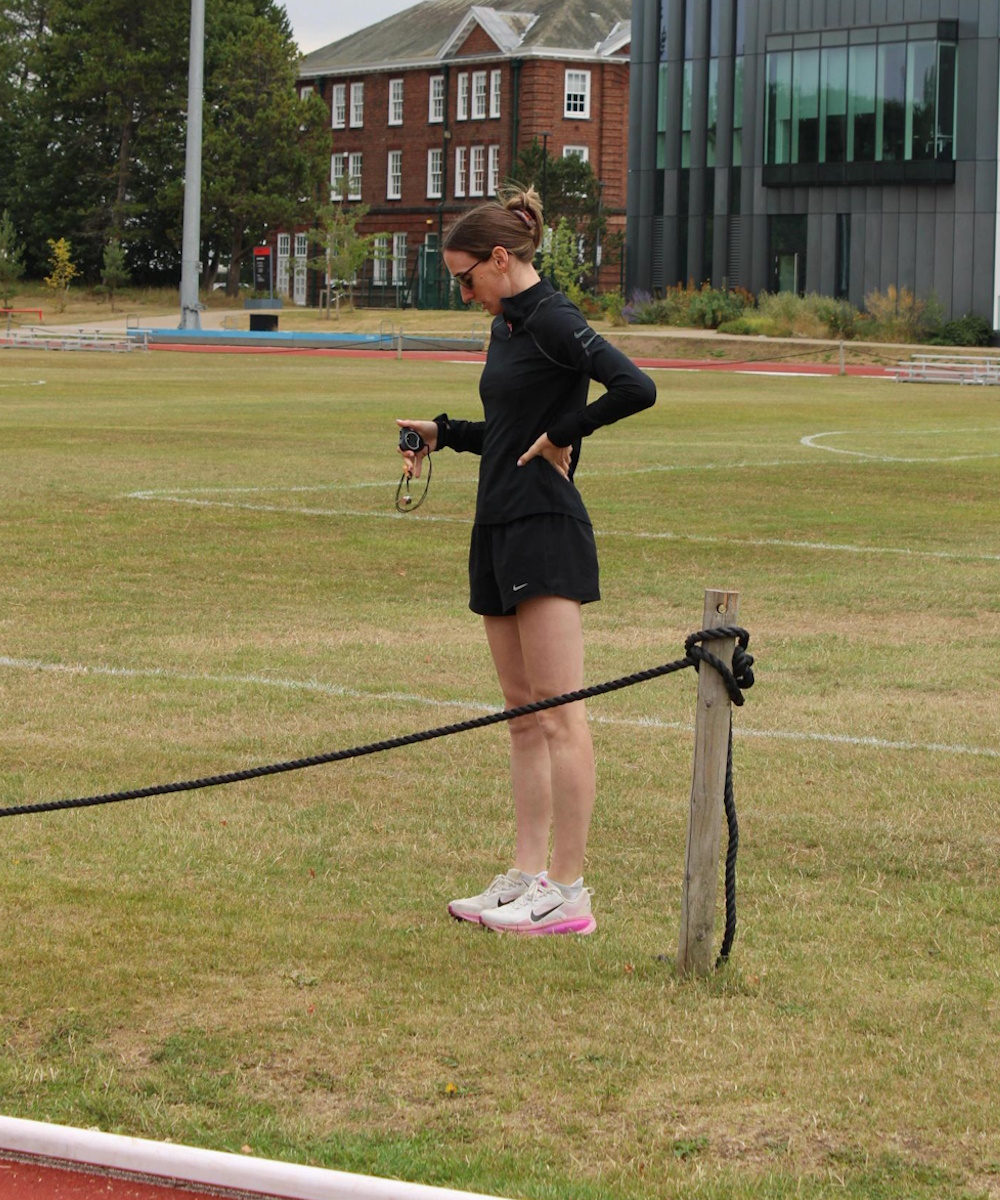
She has coached at club level throughout her career – helping friends who wanted extra support – and began her coaching qualifications during her university years.
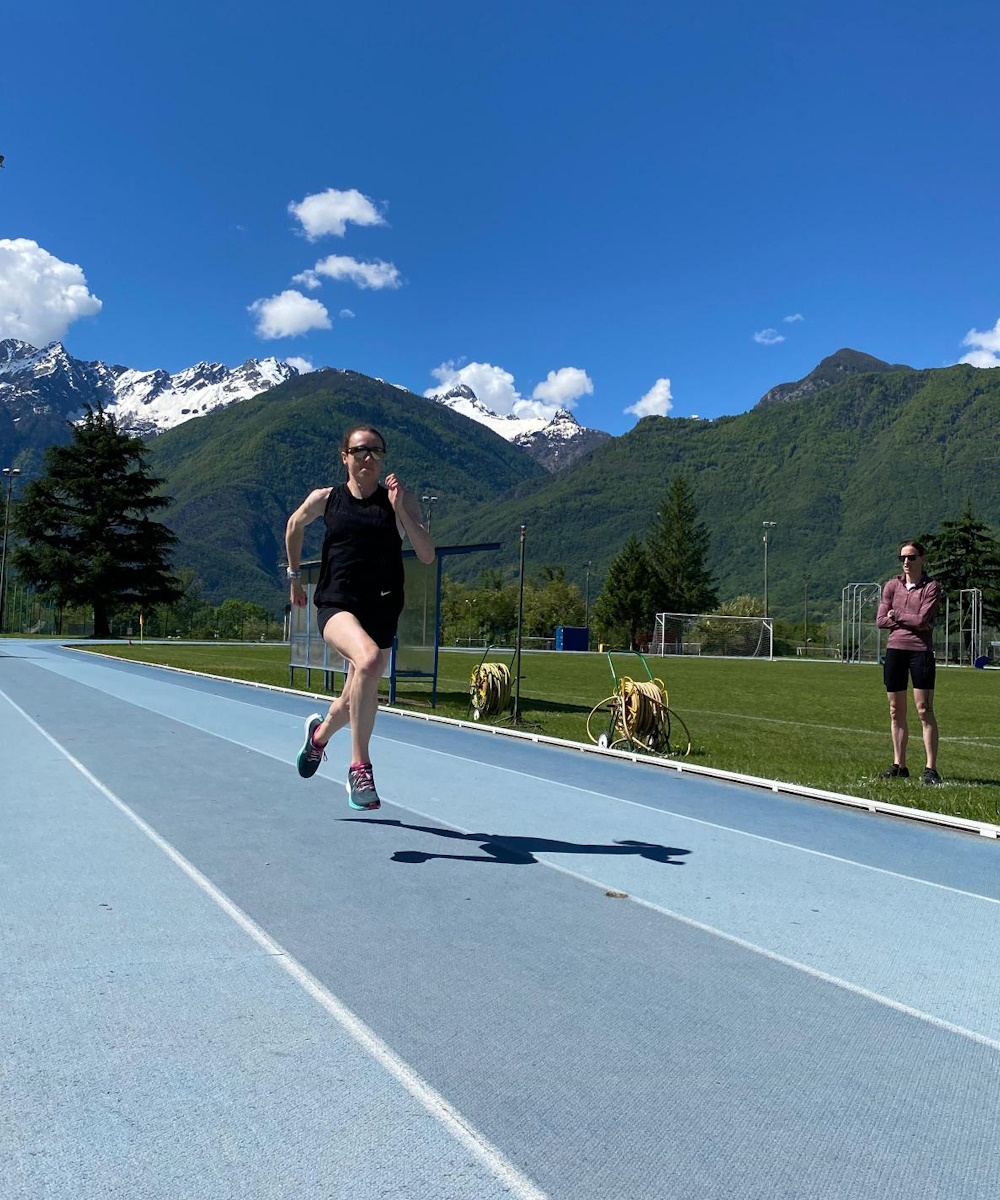
Her coaching career began in earnest working on the England Athletics’ Youth Talent Programme upon retiring, a role she still holds today: “I love working with that 16 to 18 age group. It’s an amazing age to help and support.”
Laura expanded her involvement, supporting British Athletics at training camps and the Under-18 Championships, before working with the Athletics Talent Hub at Leeds Beckett.
She says: “I’ve always been seen as someone eager to share advice and knowledge and help others. It’s so rewarding to be part of someone else’s journey. It’s a privilege.”
Her own experiences as an athlete have shaped her coaching philosophy.
For me, the big one is remembering there’s so much more to the athlete than the person you see on the track. They’re a person first. Getting to know them beyond sport is the key to unlocking their potential.”
Today, Laura is part of Laura Muir’s coaching team, which is a role that feels both surreal and special: “Me and Laura have been friends for years. We first competed together around 2013, 2014. I never imagined I’d end up being one of her coaches, but to be in a position now where she’s asked for mine and Steve’s support is wonderful. Helping a friend – and someone I’ve looked up to my whole career – is an incredible privilege.”
From Pain to Purpose: How Injuries Shaped Laura’s Coaching
Like every elite athlete, Laura faced her share of injuries, which would ultimately signal the end of her career.
But those challenging experiences have helped shape her approach with her athletes.
Laura’s setbacks, by her own admission, were brutal. A frustrating sequence of injuries saw her miss a third Olympic Games in Tokyo and the entire 2022 season. In November 2020, she tore her soleus central tendon and didn’t run again until January 2021. Then came a torn hamstring ahead of the Olympic trials, followed by a lateral Achilles issue in August 2021.
For someone who grew up racing her siblings in Alnmouth and thrived on competition, the enforced hiatus was tough. But it gave her perspective, and a deeper understanding of what athletes need when things go wrong.
A lot of the challenges my athletes go through, I’ve been there. That lived experience gives me compassion and empathy. I can’t always know exactly how they feel, but I understand the journey and what support they might need in that moment.
“I want my athletes to know they’re not alone.”
Coaching Evolution: Learning, Listening, and Looking to the Future
Having charted Laura’s rise from the track to the coaching arena, we arrive at the present day, with Laura having recently enrolled onto UK Coaching’s Women into High Performance Programme.
She was encouraged to apply by UK Athletics Head Coach Paula Dunn, and just a few months into the programme, she is delighted she did.
“I’m still very early on my coaching transition, so I would like to just keep absorbing knowledge. This a real opportunity to connect with other women in high performance across different sports and backgrounds and widen my coaching network.
“I want to learn from athletes and coaches I don’t know and explore new philosophies, new approaches to data collection, and how different sports apply that data, and just push myself out of my comfort zone.
“I’m also looking forward to working with my coach developer, Matthew Eggleton-Wood, to further develop my coaching experience.”
With UK Coaching’s Women into High Performance Programme providing structured development and fresh perspectives, Laura is embracing this new chapter with the same determination that defined her career.
Her goal is to keep learning and keep leading, because for Laura, the finish line was never the end, just the start of something bigger.
200,000+ Coaches, One Community
Join UK Coaching Club today for free, and gain free access to expert coaching guides, insightful videos, practical tools, and resources like Coaching Conversations and Duty to Care. Everything you need to grow and thrive as a coach all in one place.
Join the Club