
The Benefits of an Accessible Facility: Supporting People With a Visual Impairment

It's simple stuff, it's not complicated, but it does make a big difference."
Visually impaired user
The benefits of having a more accessible facility can be experienced by all. People with a visual impairment can also benefit from:
- increased confidence
- a sense of achievement
- better physical and mental well-being
- feeling more connected with communities.
By being as inclusive as possible, you can also enjoy the benefits of increasing footfall into the venue, as well as improving staff skills, awareness and confidence.
Watch the video below to hear from facility staff and people with a visual impairment and the benefits they have experienced.
This video from the Thomas Pocklington Trust provides an overview of a series of videos and resources that have been designed to support those working within leisure, sports and physical activity environments to provide more inclusive facilities. The audio in this video is from two leisure centre staff members, Kelly and Lucy, and four visually impaired users of leisure facilities, Sidney, Scott, Rick and Simon.
Kelly: I feel that it's important that leisure centres are trained in supporting people who are visually impaired.
Lucy: Having good training means that they can make the customer feel inclusive and just feel comfortable when they're coming into the centre and not nervous.
Sidney: I think really if a venue is accessible, it really can boost a visually impaired person's self-confidence.
Scott: We can get so much more from the sports facility than just the physical reward, so it needs to be inclusive and accessible.
Rick: I mean, it is simple stuff. It's not complicated, but it does make a big difference. We've got open spaces and plenty of room. It's not cluttered, so you're not walking into things, colour coding around the building. That's really what most people with a visual impairment need.
Kelly: Prior to having the training that I have had now, a visually impaired person coming into the centre probably would have been a little bit nervous about asking how they wanted to be supported.
Lucy: It's definitely made me feel more confident with dealing with the situation, so as long as I'm showing that I'm confident and then asking the right questions, it will put the customer at ease and make them feel more confident.
Scott: The more kind of training that staff can have, it's definitely going to be better for the punters using the facility and it's going to be better for staff going forward.
Simon: It certainly would make me less stressful, I'd feel a lot more comfortable and I would have the confidence to go to that member of staff and ask them a question.
Kelly: Because fitness should be inclusive, we should be welcoming everybody, regardless of their ability.
Lucy: If we've got staff that are trained up, it's going to make the customer feel at ease straight away and confident and they'll feel secure and safe whilst using the facility.
Rick: It's quite simple things that we can do to make the world, the environment as a whole, accessible to visually impaired people.
Purple Pound
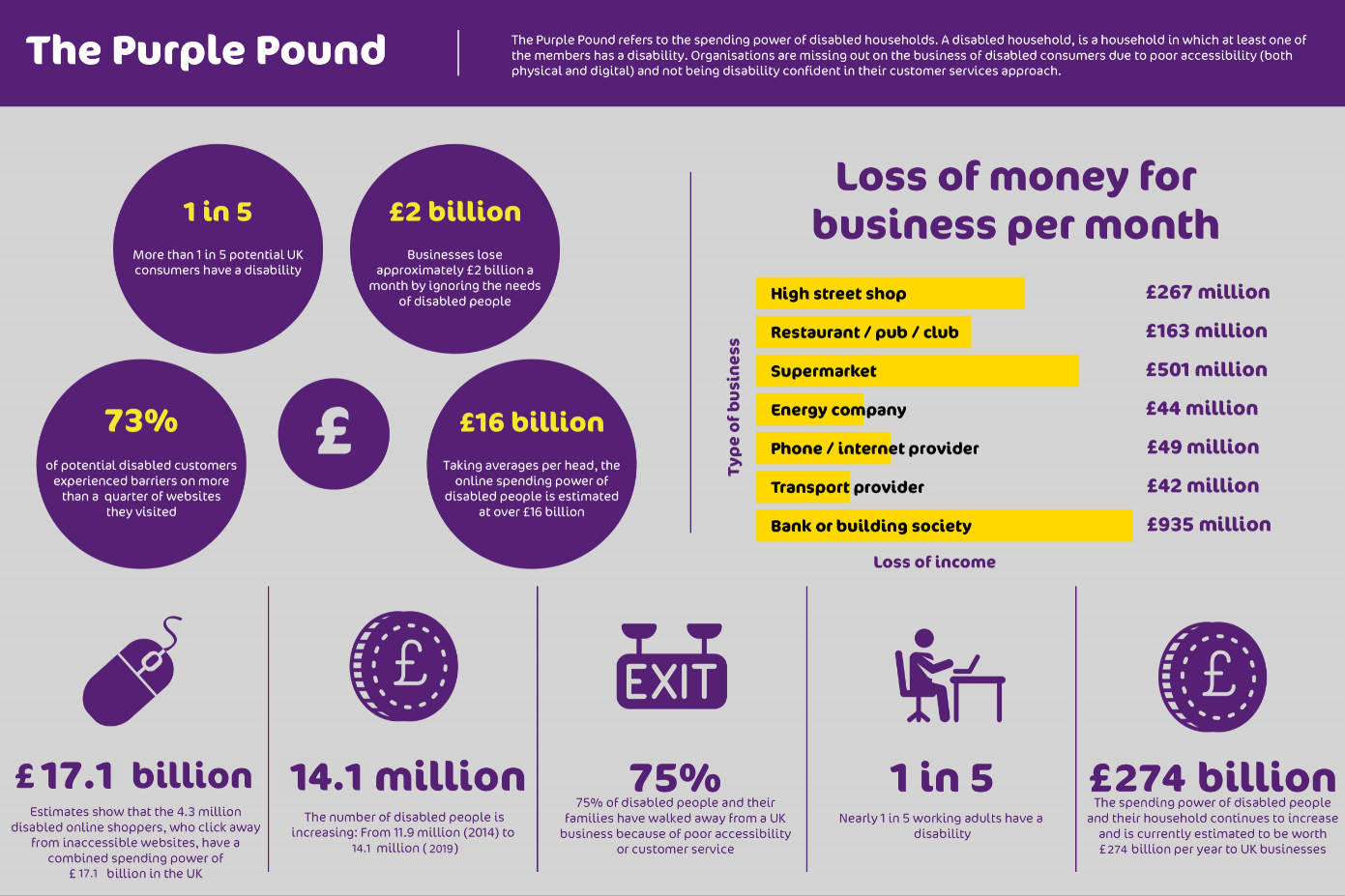
Accessibility matters because it opens up shops, businesses and sport and leisure facilities to more people and makes the customer experience inclusive to everyone. But it also makes business sense! The purple pound (the spending power of disabled people of which there are around 10.1M in the UK) and their families is worth a staggering £274 billion. The more accessible your facility is for people with a visual impairment, the more likely they may be to choose to spend their purple pound on a positive experience with you.
The infographic below, from Purple, helps to explain how it works. You can find out more on Purple's website.
Related Courses

Coaching Blind and Partially Sighted People (eLearning)
Gain the confidence to include blind and partially sighted people in your sessions and develop your understanding of the challenges and barriers they face when trying to take part in sport and physical activity.
LEARN MORE
Inclusive Activity Programme (eLearning)
UK Coaching, in partnership with Activity Alliance, have developed an eLearning module that is a great starting point for anyone wanting to learn more about the key principles of inclusion in sport and physical activity.
LEARN MOREBack to the Toolkit
Navigate back to the main toolkit page for Inclusive Facilities: Supporting People With a Visual Impairment