
Health and Lifestyle Guide
 Article
 by UK Coaching
With this comprehensive guide, you'll gain key knowledge to help you support the people you coach to build active and empowering lifestyles and to take steps to improve their health and well-being.

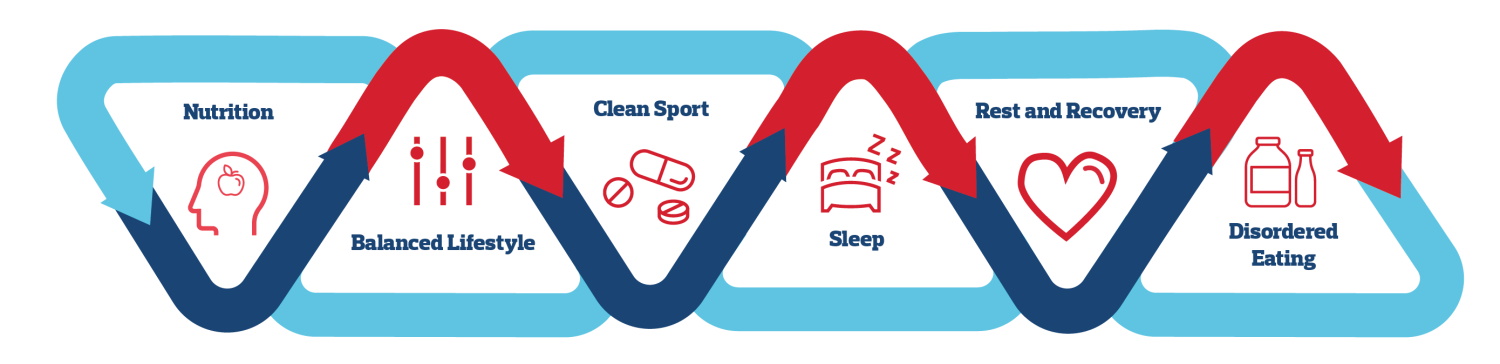
Topics covered in this guide:
Coaches wear many hats, and the role of a coach goes far beyond the technical and tactical aspects of sport and physical activity. Coaching holistically involves supporting your participants to develop as people through sport and physical activity, and to manage their lifestyles to improve their health and well-being.
We all have complex universal needs; we do not prioritise them in the same way. Depending on factors such as age, sporting commitments, education and family priorities, our focus on specific aspects of our lives can change over time, and our needs can vary greatly from one person to another.
When considering your role in developing participants holistically, it’s important to recognise that the people you coach must have a basic level of need fulfilment, as unfulfilled needs drive motivation. For example, it’s essential to fulfil basic physiological needs, as individuals must fuel, hydrate their bodies and sleep to perform at their best and function effectively.
Fulfilling basic physiological needs may not be the only driver of motivation for participants. There are other factors such as feeling safe and belonging that could be equally or more important in driving motivation for the individual’s you coach.
Throughout life, we strive for personal growth, happiness, a healthy body and mind, pursuit of life goals, a sense of purpose and achieving our full potential. These combined factors help to create our sense of well-being. Achieving a strong sense of well-being can help us assess and overcome challenges and difficulties in our lives to become the best versions of ourselves.
A sound understanding of health and well-being and a strong personal connection with the people you coach are necessary to empower them to make good lifestyle choices throughout their lives. But to support them effectively, you must also focus on your health and lifestyle. Role modelling is an important aspect of building confidence and positive habits in the people you coach.
Nutrition
Food is fuel. Just as a car engine can’t run on an empty tank, neither can your participants.
To develop and progress, it is crucial that individuals fuel and hydrate their bodies appropriately. Eating a balanced diet and hydrating their bodies ensures that they have the energy levels required to grow, train, recover and perform effectively whilst maintaining good health.
As a coach, you hold a position of trust and influence and have an essential role in supporting the people you coach to understand nutrition and why it’s important, supporting and role-modelling participants to make good choices.
Nutritional literacy and food literacy are often used synonymously and accepted as food-related skills and knowledge for healthy behaviours. Like other factors in achieving a balanced lifestyle, regular sessions and conversations should be taking place during practice to educate and empower your participants to make informed choices regarding nutrition and hydration.
What is healthy eating?
It’s widely recognised that a well-balanced diet including eating a variety of food groups provides the energy and nutrients your body needs to function effectively and help protect against poor physical and mental health.
Eating healthily involves more than just eating certain foods. There are several factors you should be aware of that contribute to healthy eating and nutritional literacy.
Whether your participants are making poor food choices, not planning and bringing adequate training or competition snacks, or you are concerned about disordered eating, it’s important to act to support your participants and work with them to address the issues together.
How can you help?
- Be a role model in what you eat and drink when with your participants.
- Be supportive, and not judgmental of participants and their families.
- Champion and emphasise the importance of healthy eating and its benefits.
- Develop a culture of nutritional literacy.
- Encourage and support participants and their families to make informed choices.
- Look out for signs of disordered eating.
- Provide sound nutritional information and be able to signpost to expert advice and support.
- Develop yourself to understand the nutritional considerations that influence wider health and well-being to better support your participants.
Promoting and encouraging healthy choices
If you don’t have one already, consider developing a policy on nutrition and hydration and making it available to members when they join your organisation. Alongside a nutrition and hydration policy, consider providing regular opportunities to promote, educate, encourage and support positive and healthy choices for participants, parents and carers, and coaches.
Balanced Lifestyle
Maintaining a healthy and balanced lifestyle is key to achieving overall wellness. This can be achieved by making conscious choices about what we eat, how we hydrate ourselves, avoiding smoking and limiting alcohol intake, engaging in activities that bring joy and happiness, and making time for rest and relaxation. Importantly, maintaining a well-rounded lifestyle can be challenging, given the many competing demands on our time and energy.
Promoting balance
In supporting the people that you coach to develop holistically, it’s important to put your words into action. Show that you mean what you say by actively doing it yourself and leading by example to promote positive lifestyle choices during your sessions.
You can role model healthy habits by:
- drinking water during sessions
- scheduling breaks for rest and stretching
- emphasising the importance of recovery post-practice and competition
- including mindfulness within your sessions
- advocating for regular exercise and a balanced diet.
Providing sound advice and guidance on how to achieve a balanced lifestyle is also important. You can encourage participants to monitor their food intake and set achievable goals for increasing their water consumption, reducing alcohol intake, and quitting smoking. Additionally, incorporating stress-reducing techniques such as meditation, yoga, or breathing exercises can help participants achieve a more balanced lifestyle.
Top Tip
If a participant has a water bottle and the size is 500ml add a number of elastic bands to the outside as they aim to achieve their water consumption. Each time they finish the bottle and refill it, they remove a band.
Did you know that we are recommended to drink 1.2 litres of water every day to maintain our natural balance, and this is before we factor in practice, competition and exercise?
Energy drinks
Whilst not illegal, most supermarkets in the UK introduced a voluntary ban on the sale of energy drinks to Under 16s. Energy drinks contain high levels of sugar and caffeine in addition to additional components for which different health claims are made.
The British Soft Drinks Association advises labelling energy drinks as unsuitable for youngsters or pregnant women, while the EU mandates that drinks containing more than 150 mg of caffeine per litre be marked as having a "high caffeine content." They are becoming an increasing problem in the UK with almost a quarter of children aged 6-10 having drank one in the last year, rising to 70% for the 10-18 age group.
The impact of energy and caffeine drinks include:
- sleep disruption
- a negative impact on concentration
- restlessness
- tiredness (after drinking a caffeine drink the next day)
- whilst the quantity required varies for individuals, caffeine consumption can cause twitching muscles, anxiety, stomach complaints and hyperactivity.
Including regular opportunities in your coaching sessions and encouraging conversations about the benefits of a balanced lifestyle and how it supports performance and progress is a great way of empowering your participants to help them make informed decisions about their lifestyles, highlighting how a balanced lifestyle can lead to:
- improved mental and physical health
- increased productivity
- increased performance gains
- better overall well-being.
Achieving balance
As well as positive lifestyle choices, another crucial element for participants is balancing their level of participation in sport or physical activity.
To support your participants in achieving balance, you can highlight the importance of:
Remind participants that they should enjoy sport and physical activity and that participation at any level should be fun!
Encourage individuals to regularly reflect on their enjoyment levels in their sport or activity, and to become aware of the individual signs indicating a decline in enjoyment and actively address the causes.
Focusing on intrinsic motivation and process goals over performance and outcome goals is important. Encourage the ability and opportunity for participants to establish and set self-referenced goals within sessions. Celebrate small steps and improvements linked back to their reason for participating and enjoyment.
Encourage participants to engage in a variety of sports and physical activities to prevent boredom and overuse injuries. Mixing activities can provide a well-rounded approach to fitness and enhance overall athletic development
Encouraging participants to try other sports during seasonal breaks, actively have time ‘off’ from the sport or physical activity and even try other sports and activities within your practice sessions.
Encourage participants to prioritise their commitments and manage their time effectively to ensure they can balance their sporting activities with other aspects of their lives, such as work, school, family, and social activities.
Help them to create schedules or use planners to organise their time and ensure they allocate enough time for both their sporting activities and other important aspects of their lives.
Ensure that your coaching environment puts the person before the participant and that individuals feel that can discuss conflicting events, ‘hot spots’ and other commitments with you. Work collaboratively to find a solution. Nothing endorses ‘variety’ more than a coach encouraging an individual to try a new sport and rotate training sessions during the week so that they can attend both.
How you act and react as a coach when participant have time away will have the biggest influence on whether they return.
Help participants set realistic and achievable goals which can help to prevent feelings of frustration and disappointment, and to identify their priorities and make informed decisions about how to allocate their time and energy.
Encourage them to set specific, achievable goals both in their sport or physical activity and in other areas of their life and support them to develop action plans to work towards these goals.
Remind participants that while their sport or physical activity may be important to them, it's essential to maintain perspective and recognise that there are other important aspects of their lives, such as relationships, family, education, career, and personal development.
Encourage them to find and maintain a healthy balance between their sporting activities and other aspects of their life. Remind them that it's okay to take breaks or to step back when necessary to focus on other priorities.
It's crucial to help participants be aware of the signs and symptoms of burnout and overtraining.
These may include:
- loss of ‘love’ or disinterest in the sport or activity
- persistent fatigue
- decreased performance
- loss of motivation
- mood swings
- anxiety or depression
- irritability
- injuries.
Rest and time away from sport or physical activity are often the best ways to achieve balance and prevent burnout. Encourage participants to listen to their bodies, take rest days when needed, and seek support from coaches or members of their wider coaching team, teammates, and other professionals if they're feeling overwhelmed or burned out.
Maximum return, minimum dose.
Emphasise the importance of moderation and quality training over quantity and help participants focus on making each training session count. Consider how you can maximise sessions whilst factoring in the physical and psychological load.
Prioritise rest and recovery strategies such as good nutrition, hydration, and sleep, to maximise the effectiveness of their training and prevent injuries.
Clean Sport
The coach's role
Update from WADA on the Prohibited List 2026
WADA has released the 2026 prohibited list. The full details of the changes and modifications can be found on the UKAD website.
Importantly for sports coaches is the modified use of inhaled salmeterol, commonly used to treat asthma (and Chronic Obstructive Pulmonary Disease, COPD). The total permitted daily dose of 200 micrograms over 24 hours remains unchanged. However athletes will only be able to therapeutically inhale up to 100 micrograms of salmeterol over an 8-hour period (and not exceed 200 micrograms over 24 hours).
A TUE will be required to cover therapeutic use that exceeds these permitted limits.
We all have a responsibility to protect clean sport.
As a coach, you can:
- Understand the rules: Be aware of anti-doping rule violations, rules or processes specific to your physical activity or sport.
- Be a role model: Coaches hold influence with their participants so you must set the right standards. Be aware of the language you use and the behaviour you display about clean sport and anti-doping.
- Have honest conversations: Help participants to make informed choices about their actions in a supportive way. Be prepared for these potentially challenging conversations by ensuring you know the rules, and what support is available. Using case studies or stories to discuss the causes of rule violations is a great way to start a conversation and understand your participants’ views and concerns.
- Promote the idea of ‘strict liability’: Remind participants that this means they are responsible for anything they have in their body so they should carefully consider what they consume, such as food or drink, supplement products or medications.
- Collaborate: Involve others that may influence participants such as the wider coaching team and parents or carers in supporting clean sport and anti-doping messaging.
- Re>ACT: Recognise when something might not be right, that you’re worried about, or that might require your intervention such as supplement use through to intentional doping and take the appropriate Action by thinking about what your role is in that situation, and how you can tackle the situation effectively.
- Seek support: It’s important to seek support from those that can help you and your participants. Communities of Practice, mentors, NGBs, and sporting organisations are great places to seek support. You can also contact UKAD for advice and confidential support.
Helping coaches understand anti-doping
Anti-doping expert Laurie Patterson explains the 11 Anti-Doping Rule Violations (ADRVs) that affect athletes, coaches and support staff.
From 1 January 2024, Tramadol will be added to the Prohibited List for use in competition. WADA have delayed the implementation until 2024 to give athletes and athlete support personnel (ASP) time to prepare for the change.
To make sure that everyone can take part in sport in a safe, healthy and honest way, the World Anti-Doping Agency (WADA) established the World Anti-Doping Code. This creates a clean, fair and open environment for athletes, coaches and support staff.
There are several acts that are considered ‘doping’ and these are captured in the 11 anti-doping rule violations (ADRVs).
Of these, you may be familiar with:
1. Presence of a banned substance in a sample (which is essentially a positive test).
2. Use of a banned substance or method (which is when there is evidence someone used something banned, without testing positive).
Beyond this, we have some procedural issues focussed on drug testing – which is typically referred to as ‘doping control’. They are:
3. Refusal to give a sample (for example, not answering the door when the Doping Control Officers visit).
4. Failure to give accurate whereabouts on time (‘whereabouts’ relates to an athlete reporting their location for one hour per day for every day of the year, which they have to do quarterly if they are entered into a ‘Registered Testing Pool’).
5. Tampering with any part of doping control (for example, trying to pass off someone else’s urine as their own or using ‘doppelgangers’).
The next set of violations involves handling banned substances and methods in some way. They are hopefully somewhat self-explanatory based on their use of the terms.
6. ‘Possession’
7. ‘Trafficking’
8. ‘Administration’. But, in simple terms, you should not have, move or use (on others) doping substances or methods.
Lastly, we have a group of violations that are about your interactions with others.
9. Complicity is equivalent to aiding, abetting, or covering up an anti-doping rule violation.
10. Prohibited Association makes it an anti-doping rule violation for an athlete or other person to associate in a professional or sport-related capacity with athlete support personnel (ASP) who are currently ineligible (i.e., serving some form of ban or sanction or who have been convicted in a criminal, disciplinary or professional way). Importantly, an athlete must be aware of the sanction though, in order to be in trouble themselves. And the violation doesn’t apply in circumstances where the relationship is unavoidable – such as when the ASP is their parent or partner.
11. Any action by an athlete or other person to discourage or retaliate against anyone reporting to the authorities (Governing Body or UKAD). For instance, if an athlete or athlete support personnel were to go to the authorities with information about suspected wrongdoing, and somebody then ‘acted out’ against them, the person committing the act would be reprimanded.
Did you know...
That an ADRV can be established without an anti-doping organisation or sporting body having to demonstrate intent, fault or negligence. Many ADRVs do not involve individuals who are deliberately trying to gain an unfair advantage over others; some involve the use of recreational drugs or mistakenly ingesting a prohibited substance via medication or nutritional supplements.
Violating the anti-doping rules can have many and varied consequences. From a legal perspective, there are bans; these are four years as standard but can be longer if the offence committed is particularly serious or is recurring. Surprisingly, a ban from sport is unlikely to be the most severe consequence of doping!
It has been found that the financial consequences are significant, as doping can lead to fines, terminated contract/job loss, loss of sponsorship and prize money. This may mean that an individual loses their livelihood.
In addition, there are often devastating social consequences, as individuals who have been found to dope are regularly cast out of their sport and can experience a negative response from their family, friends and community.
Beyond all of this, doping can have an incredibly negative impact on an person’s mental health and well-being. They can be left with feelings of guilt, shame and even a significant sense of loss.
Let’s consider why it is important for you, as a coach, to be familiar with anti-doping rules.
The World Anti-Doping Code specifically identifies you as having a role to play in anti-doping efforts. You are one of several groups who are considered to be ‘athlete support personnel’. Athlete Support Personnel refers to any individuals working with, treating or assisting an athlete participating in or preparing for sport. So, along with coaches, it can include team managers, medical professionals and parents.
As a key member of athlete support personnel, the anti-doping rules apply to you, meaning you could be banned from sport (and unable to do your job!) if you engaged in behaviours that were considered a ‘violation’.
The 7 ADRVs that apply to coaches
- Tampering or attempted tampering with any part of doping control by an athlete or other person.
- Possession of a prohibited substance or a prohibited method by an athlete or athlete support person.
- Trafficking or attempted trafficking in any prohibited substance or prohibited method by an athlete or other person.
- Administration or attempted administration by an athlete or other person to any athlete in competition of any prohibited substance or prohibited method, or administration or attempted administration to any athlete out-of-competition of any prohibited substance or any prohibited method that is prohibited out of competition.
- Complicity or attempted complicity by an athlete or other person.
- Prohibited association by an athlete or other person.
- Acts by an athlete or other person to discourage or retaliate against reporting to authorities.
Article 21: roles and responsibilities
In addition to the violations and sanctions being relevant to ASP, the World Anti-Doping Code (Article 21) specifies that ASP have the following roles and responsibilities:
- To be knowledgeable of and comply with all anti-doping policies and rules within the Code.
- To cooperate with the Athlete Testing programme.
- To use their influence on athlete values and behaviour to foster anti-doping attitudes.
- To inform sporting and anti-doping organisations of any involvement in doping behaviours within sports that are not signatories of the Code.
- To co-operate with doping-related investigation.
- Not to engage in personal use of banned substances.
Collectively these responsibilities can be summarised as being supportive of anti-doping efforts. While many of the responsibilities might seem straightforward, for example, not using substances yourself and cooperating with processes, it can be harder to know what you need to know about anti-doping and how to make a difference in your athletes’ lives.
Understanding supplements: dangers and risks
Did you know that no supplement is 100% guaranteed to be free from the risk of contamination? Or that sometimes a supplement may contain a banned substance that is not on the ingredients list?
This is why UK Anti-Doping (UKAD) recommend all athletes assess the need, risk and consequences of taking supplements. If they still decide to take supplements, remind them to make sure they are batch-tested by Informed Sport and they should always record the batch number.
Watch this short video and visit the Supplements Hub on UKAD’s website to find out more.
Sleep
Sleep is the best meditation.
Dalai Lama
A vital element in creating balance in our lives is good quality sleep. We spend about one third of our lives sleeping which keeps us healthy and functioning well. It’s an essential function that allows your body and mind to rest and recharge itself.
Getting good quality sleep is essential for growth, recovery, and regeneration, and is especially important for young, developing participants. While some people need more, some less, most adults need around 8 hours of good quality sleep a night to function properly.
Children generally need more: children 7-12 years old usually need around 10-11 hours, and teenagers around 8-9 hours, although the quality of sleep should be prioritised over quantity.
Benefits of sleep:
- Boosts immunity.
- Boots mental well-being and lowers stress.
- Improves focus, productivity and memory.
- Improves cognitive function development.
- Helps maintain a healthy weight.
- Helps prevent heart disease.
- Support athletic and physical development.
About 1 in 3 people suffer from poor sleep. An occasional night without sleep can make you feel tired, short-tempered, and lacking in focus or motivation, but it won’t have any long-term lasting effects on your health.
However, regular and longer-term sleep deprivation can have profound consequences on your physical and mental health.
Poor sleep affects energy levels, motivation, concentration, and sporting performance.
Short-term effects also include problems with low mood, irritability, fatigue and anxiety, and an increased chance of being involved in an accident. These short-term effects vary from person to person, but the good news is they are reversible once good sleep is restored.
In the long term, the effects of lack of sleep are more alarming. Reduced sleep duration is linked to a number of serious health conditions including heart disease, obesity and type 2 diabetes.
In addition, chronic poor sleep is associated with mental health problems such as depression and anxiety, reduced quality of life, relationship problems and impaired occupational and social functioning.
Sleep therapist Christabel Majendie explains why sleep is important to overall health.
The functions of sleep are complex, and this is still an active area of research. Sleep may fulfil many roles including cellular restoration and repair, growth, energy conservation (beyond resting wakefulness), memory consolidation and information processing.
While we sleep, essential bodily housekeeping functions are performed, such as the removal of cellular waste products that build up during the day, the replenishment of essential cellular components needed for wakefulness, and the rebalancing of nerve cell synapses where electrical signals pass from one nerve cell to another.
Research found that when we sleep, channels in the brain that are involved in the removal of neuronal waste products widen to allow for this detoxification.
Sleep may not be just for the brain. Studies have shown that all cells in the body have a biological clock, synchronised by the ‘master circadian rhythm’ in the brain.
These individual cellular clocks have been found in essential organs such as the heart and liver, and they regulate the timing of biochemical processes to the day-night cycle. This may explain why a lack of sleep or sleeping at the wrong time is linked to serious health conditions.
The link between short sleep duration and increased risk of obesity is now well established. This relationship appears to be due to sleep’s effect on metabolic hormones that control appetite.
Short sleep is associated with increased levels of ghrelin, a hormone which stimulates hunger, and decreased levels of leptin, a hormone which suppresses hunger. It is also associated with increased subjective hunger ratings and an increase in appetite for foods with high carbohydrate content. These changes in metabolic hormones and appetite may then lead to weight gain and increase the chances of developing type 2 diabetes.
Less than six hours of sleep a night is linked to an increased chance of developing coronary heart disease or stroke. Interestingly, long sleepers (an average of more than nine hours) also show an increased risk of developing these conditions.
The reason behind this link is not yet completely understood; it may be that sleep duration is an indication of an underlying health problem or it may increase the risk factors for heart disease.
During deep sleep, our heart rate and blood pressure decrease, but this happens less with sleep-deprived individuals, and this may put a strain on the heart in the long term.
Sleep also influences how the immune system functions, with lack of sleep reducing your ability to fight infections.
During sleep, our fever response is heightened – a mechanism we use to fight infection. If we are sleeping less, this fever response is less effective In short, the better the quality of sleep we have, the healthier we can keep ourselves.
Getting to sleep
Preparing for bed and calming the mind is essential to giving you the best possible chance to gain some quality sleep, but for those who suffer from long-term sleep problems, establishing good sleep hygiene doesn’t always provide the solution.
While a cool, dark, and quiet room helps many people drift off to sleep with ease, for others it can make their mind run and encourage thinking and thoughts that keep them awake. When longer-term sleep problems such as insomnia occur, it’s important to seek advice and guidance from a healthcare professional to support and manage the appropriate treatment.
Alongside good sleep hygiene and getting into a good bedtime routine, here are a few additional techniques:
- Don’t think about sleep. The more you think about sleep, the less likely you are to sleep. Worrying about not sleeping creates stress and anxiety which prevents your mind and body from relaxing. Rather than lying in bed and worrying and becoming frustrated that you haven’t got to sleep, get up and read a book, listen to music or relax in another room. Try going to sleep later rather than battling your mind.
- Listening to music, audiobooks, or podcasts. This can help you to feel relaxed and stop your mind from racing. Try different songs and playlists to find out what works for you.
- Write a journal. Writing down your thoughts, worries of the day, or even what you need to do the next day, can help you to offload and not ruminate throughout the night. Studies on sleep suggest that journaling helps people fall asleep faster. Keeping a pen and pad next to your bed can be really helpful.
- Yoga and meditation. This helps your mind and body relax. Focusing on your breathing and letting all the tension out of your muscles triggers your brain to relax and helps the onset of sleep.
Sleep factors to build into a healthy plan for your participants
Sleep therapist Christabel Majendie shares six tips to make sure your participants are well-rested:
- Discuss sleep’s impact on health with your participants. Ensure they understand the link between reduced sleep length, increased risk of health conditions and potential impact on performance.
- Less than six hours a night is not enough. Although sleep needs vary between individuals, aiming for between 7–9 hours is recommended.
- Individuals who exercise tend to report better quality sleep. This may be because exercise increases the amount of ‘deep sleep’ we have in a night.
- The timing of exercise is important, as vigorous exercise close to bedtime can disrupt sleep as it stimulates the nervous system. Late afternoon or early evening is best to maximise the positive impact on sleep. If you must train later in the evening, finish the sessions with yoga, stretching or mindful activities to help your participants to relax and begin to wind down.
- Ideally, encourage exercising in natural daylight as this helps to regulate the body clock to the day-night cycle. Light is detected by cells behind the eye that send signals to the areas in the brain that control sleep. In this way, sleep is synchronised with light in the environment.
- Participants can use a sleep diary, which can be downloaded from the Internet, to monitor sleep and to calculate average sleep duration. Activity monitors and accelerometers that are strapped to the body give reliable measures of sleep in healthy individuals. Be wary of apps that claim to monitor sleep as these have not been properly tested and are unlikely to be accurate unless they are strapped to the body during sleep.
Sleep conversation starters
- Is sleeping late at the weekend a good way to catch up on sleep?
- Do energy drinks help our concentration?
- Does exercising an hour before bedtime help us to sleep?
For more on understanding sleep, read A Guide to Physical Well-being.
Rest and Recovery
Rest and recovery are essential components of any sport or physical activity training programme and are just as important as the training itself.
While training hard is important for improving performance, without adequate rest, the body becomes fatigued, increasing the risk of injury and decreasing performance.
Physical stress is caused by high training loads and when maintained over longer periods with insufficient recovery this is known as overtraining. Overtraining is often a precursor to burnout.
Emotional exhaustion is often referred to as the ‘drip, drip, drip effect’, which gradually adds stress through increased pressure, which can lead to anxiety, interrupted sleep patterns and chronic mental fatigue. The causes of this are varied and depend on the individual, they may include high levels of perfectionism, external pressure from others including the coaching team and parents/ carers, feelings of missing out on a wider social life or unrealistic goals.
When you rest, your body recovers, gets stronger, and helps improve performance.
The importance of rest and recovery
Recovery is not negotiable. You can either make time to rest and rejuvenate now or make time to be sick and injured later.
James Clear
During rest and recovery, several important physiological processes occur:
- The body repairs damaged muscle fibres, tendons, and ligaments that have been stressed during training.
- Energy stores, such as glycogen, are replenished, ensuring the body has the fuel it needs for future workouts.
- Hormone levels, including cortisol and testosterone, return to baseline levels, promoting muscle growth and recovery.
- The central nervous system, which can become fatigued from intense training, has time to recover, improving coordination and reaction times.
Short-term recovery takes place in the hours immediately after intense exercise and includes low-intensity exercise after working out and during the cool-down phase. This is aided by replenishing glycogen and protein stores.
Long-term recovery refers to recovery periods that are built into a seasonal training programme as well as rest days and recovery phases or weeks incorporated into an annual programme.
Rest days can be passive (taking the day entirely off from exercise) or active (engaging in low-intensity exercise such as walking, stretching, swimming, hydro sessions and yoga that places minimal stress on the body).
During active recovery, the body works to repair soft tissue (muscles, tendons, and ligaments), and improves blood circulation that helps with the flushing and removal of waste products that build up as a result of exercise.
Burnout
A consistent reduction in rest and recovery can lead to overtraining and physical exhaustion, which results in a reduction in performance due to exhaustion and can lead to injuries. A prolonged recovery time is required to reverse the effects physically.
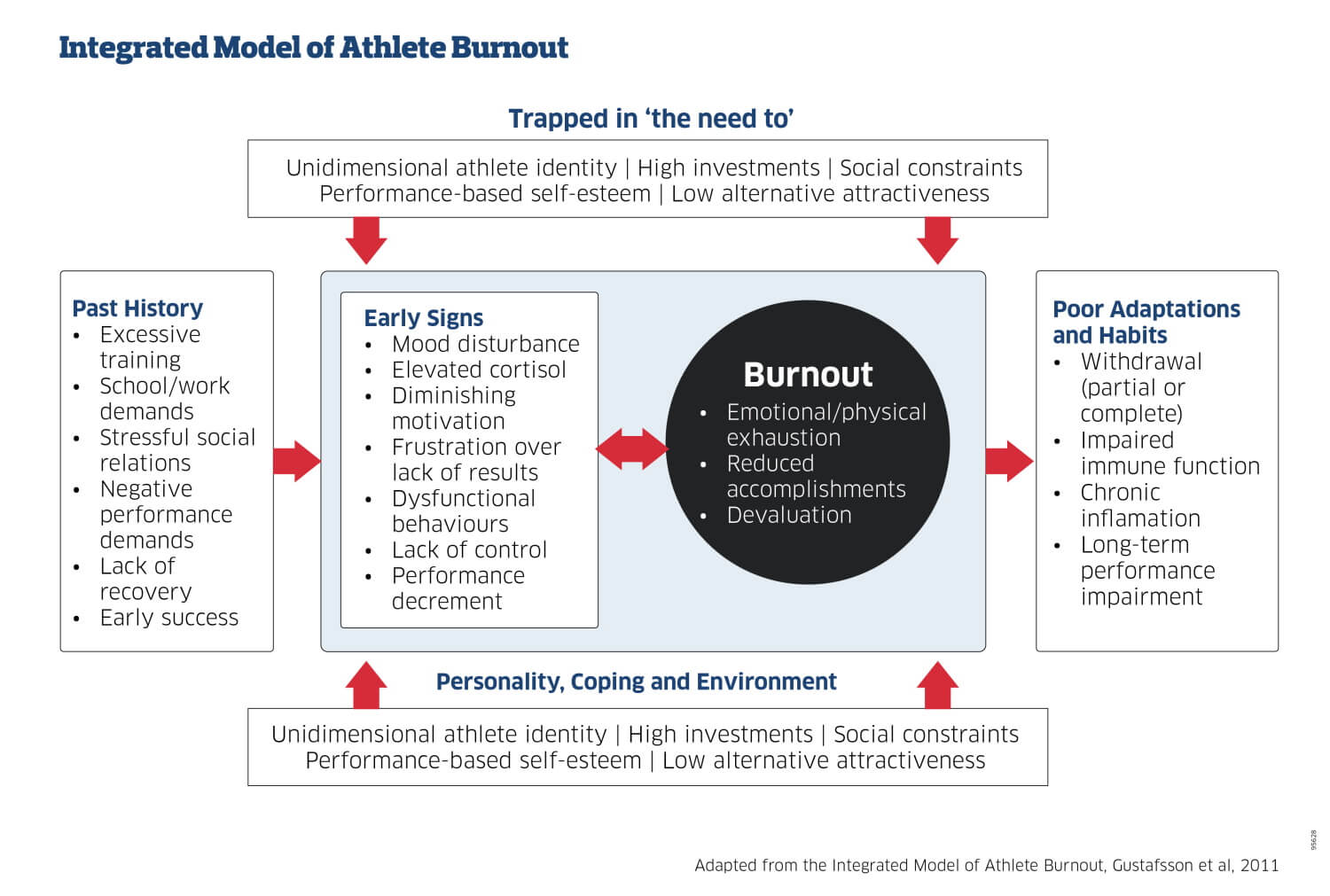
Burnout affects the mind and is psychological and emotional exhaustion. Whilst both negatively impact on a participant’s performance and well-being, burnout includes a loss of motivation and enjoyment of the sport or activity, increases mental stress and pressure and can lead to the individual quitting the sport or activity completely.
Causes can include excessive pressure from the individual themself, parents and coaches, a feeling of a lack of control over their sporting career and progression, unrealistic expectations, and a lack of variety in training programmes and environments, as well as an imbalance between sport and their life in general.
You can help reduce the risks of burnout through setting realistic goals and expectations, encouraging a healthy balance between sport and personal life, positively promoting breaks and holiday periods and providing variety within your programme.
Tips on improving participants rest and recovery
You have a crucial role in supporting participants to develop their full potential. Part of this duty of care is looking out for the mental and physical well-being of your participants.
Ensuring that your participants adequately rest and recover reduces the risk of overtraining, leading to overuse injuries, muscle strains, stress fractures, illness, burnout, decreased motivation, and performance.
Symptoms of overtraining may also include insomnia, anxiety, tension, weight loss, emotional exhaustion, reduced sense of achievement, loss of enjoyment in the chosen activity and infections. Individually it may be hard for an individual to self-diagnose and link the symptoms to overtraining. This is especially true for talented participants, individuals who have a strong athletic identity and those who train in a culture of anti-rest and ‘no pain, no gain’.
There are several approaches to monitoring training load and recovery, including the:
- external load from the programme and training (such as sets, reps, intensity, frequency and duration)
- internal load, which includes the individual's rate of perceived exertion (RPE, often recorded on a scale of 1-10 or 1-20), heart rate and heart rate variability)
- psychological load, which includes mood state, stress levels and sleep patterns (such as quality and quantity of sleep).
The recovery status provided by the participant is also a helpful measure of their ability to train. This can include muscle soreness, fatigue levels, and personal view of their ‘readiness to train’.
It can be monitored by the individual through:
- a training log
- recorded on programming apps
- a simple verbal conversation before training or recording their responses on a whiteboard or similar on arrival.
Initials next to smiley or unhappy faces, or next to a score between 1-10 can easily allow you to see how the individual and group are feeling before a session.
Creating these simple habits and routines encourages participants to take responsibility for their development and become aware of their bodies and how they respond to exercise and training.
What you can do:
- Include regular rest days into training programmes to allow for full recovery and prevent overtraining. Rest days are just as important as training days and should be scheduled strategically to maximise the benefits of training.
- Encourage participants to prioritise sleep and aim for 7-9 hours of quality sleep per night which is essential for physical and mental recovery and plays a crucial role in performance and overall health.
- Encourage a well-balanced diet that provides the nutrients necessary for recovery, protein (to help the muscles repair and grow) and carbohydrates (to restore the used glycogen).
- Encourage proper hydration before, during, and after training sessions. Dehydration can impair performance and delay recovery, so drinking plenty of fluids throughout the day is important.
- Include active recovery activities such as walking, light jogging, swimming, or yoga into training programmes to help promote blood flow, reduce muscle soreness, and speed up recovery.
- Educate participants about the importance of listening to their bodies and recognising the signs of overtraining or fatigue. Encourage them to adjust their training intensity or take rest days as needed to ensure that they are training smart and avoiding burnout.
- As the person responsible for your sessions and participant welfare there may be occasions when you need to manage the load of an individual, adjust the session or insist on the person missing the session. This is great coaching: caring for and developing the whole person.
Team GB, Paralympics GB and UKSI developed the Think Real Check Up, a simple checklist of questions you can use with your participants to help them recognise their recovery status.
- How do you feel?
- Why are you feeling like this?
- What do you need?
- How do you know what to choose?
Starting recovery habits is important for participants to take responsibility for their own development and performance, ensuring they feel good, can think clearly, are boosting their health and ensuring that they are maximising their potential.
Remember, it's not just about how hard you train, but how well you recover.
Recovery requires a combination of rest, sleep and nutrition. As you have learned, you can’t out-train a bad diet and perform when your energy level is in empty.

Why not create a Recovery Score Card or download the Total Quality Recovery (TQR) template?
Disordered Eating
The topic of disordered eating and eating disorders is highly relevant to coaches because every coach has a duty to care for the health and well-being of the people they engage and interact with. This extends beyond their physical health to include their emotional and mental health.
An understanding of mental health issues such as depression, anxiety and disordered eating should be embedded throughout sport and physical activity at all levels.
By having a deeper awareness of these issues, you can learn to become more alert to the subtle signs and symptoms.
Building a good rapport with the people you coach will also help you spot any red flags and will increase the likelihood of your participants confiding in you.
What is disordered eating?
Anyone can develop an eating disorder regardless of their age, gender, or background. Eating disorders or disordered eating include a range of conditions where individuals use the control of food to cope with mental health problems. They include, but are not limited to:
- restricting the amount of food eaten
- eating large quantities of food at once
- getting rid of food eaten through unhealthy means (making themselves sick, excessive exercise, fasting, misusing laxatives)
- a combination of these behaviours.
Using the term disordered eating allows coaches to discuss a much wider range of eating habits and has less harmful connotations than the term eating disorders. Think of an elite athlete and their intake of protein. This may require them to eat additional mini-meals and use supplementation, and this is disordered eating in order for the individual to achieve their goals.
Who’s at risk?
Sport participants of all levels are at an increased risk of eating problems compared to non-athletes.
About 40% of athletes show symptoms of disordered eating, and up to 1 in 5 female athletes and 1 in 12 male athletes may experience a clinical eating disorder during their career. This is much higher than the levels of disordered eating and eating disorders that we see in non-athletes.
There are lots of different causes of eating problems; they are usually caused by a combination of biological, psychological, social and environmental factors, including pressures around weight, body image and appearance.
Myths about disordered eating
Eating disorders are common and serious psychiatric disorders but are often poorly understood. Developed with Dr Carolyn Plateau, an expert in disordered eating, we have highlighted the common myths about disordered eating and eating disorders in participants involved in sport and physical activity.
Myth: If a participant is performing well in sport, they can’t have an eating disorder.
Sometimes participants may still be able to perform well, despite having an eating disorder. For others, their performance can quickly deteriorate, as they are more likely to experience injuries and illnesses due to under-fuelling.
It is important, however, not to assume good performance ‘equals’ good mental health. If you have concerns about someone then it is always a good idea to trust your instincts and explore further.
Myth: It is ok for participants in sport and physical activity to have an unhealthy relationship with food.
Participants may have to pay more attention to what, and when they eat to ensure they are appropriately fuelled for their training and competition and to ensure they can maximise their recovery. Disordered eating practices (such as restricting food intake, avoiding major food groups, fasting for long periods of time, bingeing or purging) are not just ‘part of being an athlete’ and may be indicative of a more serious underlying issue.
If you are concerned that one of your participants has an unhealthy relationship with food, it is always worth exploring further and encouraging them to seek support from a health care professional.
Myth: Athletes are less likely to suffer from an eating disorder than non-athletes.
Evidence suggests that athletes may be more likely than non-athletes to experience disordered eating or an eating disorder. For example, up to 20% of female athletes (compared to 10% of non-athlete females) and 8% of male athletes (compared to 0.5% of non-athlete males) may experience a clinical eating disorder.
It is thought that being involved in sport exposes individuals to additional risk factors and pressures to achieve a certain body size and shape, which can help to explain why the prevalence of eating disorders is higher in athletic populations.
Myth: Only participants competing in sports like gymnastics or diving are at risk of eating disorders.
Participants competing in all sports or physical activities are at risk of eating disorders. There is some evidence to suggest that this risk is highest in sports where there is a heightened emphasis on appearance, weight and shape.
For example, the highest levels of eating disorders occur among participants competing in aesthetic sports such as gymnastics, diving or figure skating (where there is a strong emphasis on appearance) and those such as distance running or triathlon, where being ‘lean’ may be considered advantageous.
Myth: Eating disorders are caused by being involved in sport or physical activity.
Physical activity and sport are hugely positive experiences for many people and can be very important in promoting positive health and well-being. Eating disorders are complex and caused by a combination of many factors.
The sporting environment may contribute towards an increased risk of eating disorders due to the heightened emphasis on weight and appearance. For example, participants may believe they need to be a certain weight or shape to be successful.
The requirement to wear revealing clothing for competition may promote body comparisons and dissatisfaction, and participants may also be subject to greater monitoring of their body (such as weight, body fat percentage and skinfolds) and critique than those outside of the sports context.
Myth: Coaches and the wider coaching team can’t do anything to support participants with eating problems.
Coaches and the wider coaching team have an important role in supporting participants who are struggling with their eating. Given their close relationship with participants, coaches can often be among the first to notice changes in their demeanour and well-being.
Signposting to support at an early stage is important to accelerate recovery from an eating problem. Coaches can also have a key role in continuing to provide support to participants experiencing an eating problem, such as helping them to navigate time away from training and competition and facilitating their return to sport following recovery.
Coaches are not required to diagnose or treat eating disorders, but it may be helpful for them to be involved in the treatment journey and liaise with professionals about the extent to which the individual can continue to participate in their specific physical activity or sport.
Myth: You have to look underweight to have an eating disorder.
Eating disorders can present in lots of different ways, and weight loss (sudden or gradual) is not necessarily a key feature of every eating disorder. There are lots of other ways in which eating disorders can show.
Myth: Only women and girls can get eating disorders.
Eating disorders can affect anyone, at any age, of any background. Eating disorders do not discriminate.
How many did you know were myths about eating disorders?
Consider sharing the myths and truths about eating disorders with other coaches, parents and carers, and the wider coaching team within your club or training environment to encourage understanding and awareness about eating disorders and disordered eating.
Signs and symptoms
You are well placed to notice when something isn’t right with your participants that could indicate an issue with nutrition or even an eating disorder.
To help you spot signs and symptoms and understand what you can do to help, it is important to know about:
- disordered eating and eating disorders
- the effects that they can have on your participants
- the factors that may influence a participant's disordered eating
- the importance of developing positive relationships with your participants.
Symptoms of eating disorders include:
- spending a lot of time worrying about body weight and body shape
- avoiding socialising when food is involved
- eating very little food
- deliberately being sick or taking laxatives after eating
- exercising too much
- having very strict habits or routines around food
- reluctance to eat with others
- changes in mood state.
The individual may also show physical signs, including:
- feeling cold, tired or dizzy
- problems with digestion
- body weight being very high or very low for someone of their age and height
- not getting their period for women and girls.
Find out more about mental health in A Guide to Mental Health and Well-being.
RED-S
Affecting both male and female participants at any age, Relative Energy Deficiency in Sport (RED-S) is caused by low energy availability when nutritional intake is insufficient to cover physical output.
It’s important to be aware of participants at risk of RED-S, particularly young participants going through puberty where there is already a high energy demand.
Although the list isn’t exhaustive, watch out for:
- disordered or restrictive eating behaviour
- increased mental and physical fatigue
- noticeable weight loss
- hormonal imbalances and menstrual disturbances
- decreased immunity
- recurrent injury (soft tissue or bone)
- changes in mood
- deterioration in performance.
Promoting positive messages around food, weight and shape in your training environment
Dr Carolyn Plateau and Dr Sebastian Sandgren highlight how coaches, and the wider coaching team, can promote positive messages about food, weight, and shape with their participants.
Good food and nutrition are essential to sporting success. However, sometimes coaches and sports professionals find these topics difficult to talk about.
Often coaches can be concerned about worsening any potential eating problems in their participants or feel that the topic is best left to nutrition and dietetics professionals. However, avoiding the topic altogether can make it difficult for participants to express any concerns they have about their eating habits, and may make identifying and supporting individuals with eating problems more challenging for coaches and the wider coaching team.
Indeed, creating a safe and positive training environment is important for helping to foster positive physical and psychological well-being in participants, and can help to prevent eating problems.
Whilst specific nutritional requirements and advice for participants should only come from qualified professionals, there are still practices that coaches and the wider coaching team can aim to instil in their coaching practice and training environments to promote positive relationships with food and fuelling among their participants.
Creating positive training environments about food, weight and shape:

Positive fuelling practices: Encourage participants to arrive at training well-fuelled, hydrated and rested, and likewise encourage them to bring a snack to eat after training. If participants regularly arrive at training hungry or poorly hydrated, then it may be worth exploring further to understand why this might be the case.

Positive language around weight and shape: Think carefully about the language that both you and your participants use, when talking about about weight and body shape. Are participants using self-deprecating language about their bodies, or comparing themselves to one another? Can you instead encourage a focus on fuelling for health and performance, and try to avoid endorsing certain ‘ideal’ or stereotypical body sizes or shapes?

Flexibility in clothing: Try to encourage flexibility towards training kits and clothing. Tight-fitting clothing requirements may encourage body comparisons between participants, heightening body dissatisfaction and potential disordered eating behaviours. Focus on practicality and encourage participants to make their own decisions about what they feel comfortable wearing.

Avoid monitoring of weight/body composition unless essential: Weight monitoring and body composition assessments may be used in elite environments to maximise performance at certain times of the year. These assessments have the potential to be distressing for some individuals and are not recommended for sub-elite and younger participants. If it is essential then think carefully about who is conducting those assessments, who has access to that information, and how these assessments can be conducted privately, sensitively and with full consent of participants.

Promote and be good role models: Consider seeking out good role models in the sports community that promote positive body image and fuelling. Bringing in an expert (such as a sport nutritionist or sport psychologist) to address your team or group may help promote a positive training environment about food, weight and shape.
If you have any concerns about a participant then seek advice from a club welfare officer, talk directly to the participant or parent or carer, and if appropriate, encourage them to seek support from their GP.
Related Resources

Health and Lifestyle
Learn about this theme of the Coach Learning Framework and discover its key pillars to develop your practice to support each person holistically
LEARN MORE
Coaching Conversations
Watch coaches share their lived experiences, offering real-life examples and strategies to help you immediately grasp the concept of ‘health and lifestyle’ and apply principles of rest and recovery
WATCH THE VIDEOS
Kickstarter
Download activities that invite you to reflect, consider, and try out new approaches to promoting wellness in your participants and enhancing nutrition for sport and life
DOWNLOAD THE ACTIVITIESUK Coaching Club Premium Membership


