
Relationships Guide
 Article
 by UK Coaching
With this comprehensive guide, you'll gain an understanding of the key concepts behind developing and maintaining great coaching relationships, key to success in coaching

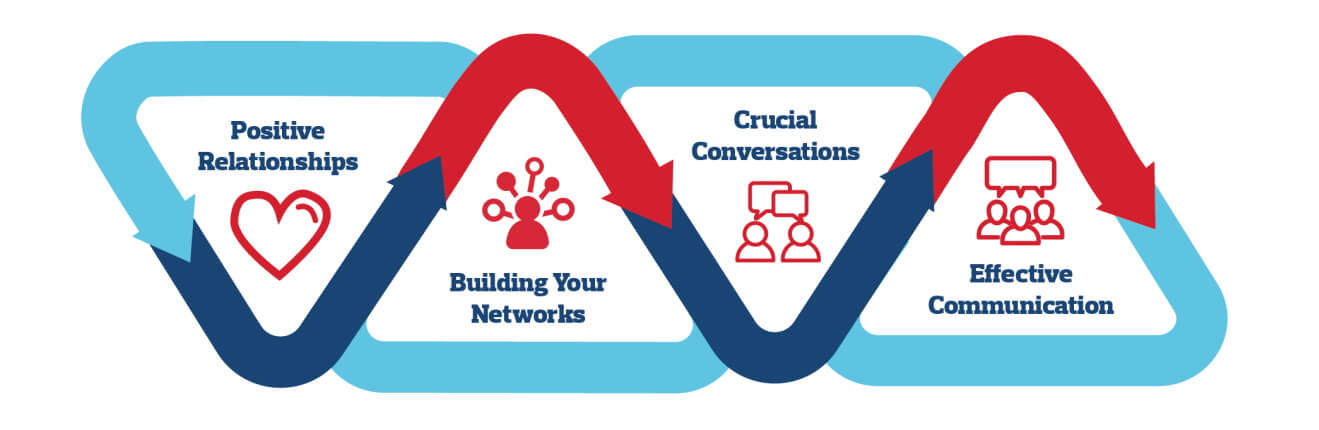
Topics covered in this guide:
Relationships are the very foundation of coaching and provide the framework for effective communication, trust, and mutual understanding. Developing and maintaining relationships is the key to success in coaching.
Positive relationships in sport and physical activity have a profound impact on both individuals and teams. They foster a sense of belonging and confidence, empowering participants to confront challenges with resilience and cultivate friendship, synergy, and a shared sense of purpose.
When people feel valued and supported, they are more likely to collaborate effectively, communicate openly, and strive towards collective goals, ultimately leading to enhanced development and success.
This guide will introduce you further to the key concepts of understanding, developing, and maintaining your coaching relationships.
The most important single ingredient in the formula of success is knowing how to get along with people.
Theodore Roosevelt
Positive Relationships
Coaching involves building positive relationships with a wide range of people who contribute to the success of your coaching practice.
While relationships are not a one-way street, it’s important to remember that coaches hold a position of great influence.
It is your responsibility to lead by example, reinforce good habits, and model positive behaviour.
Positive relationships combined with a holistic approach to coaching not only increase individual progress and development but also support the growth of participants as people.
Types of relationships
The coach-athlete relationship is at the heart of coaching, built on trust, respect, and effective communication. Coaches play a pivotal role in guiding participants' development, providing mentorship, and instilling confidence.
Importantly, the quality of the coach-athlete relationship can determine both the effectiveness and success of your coaching and participants' performances.
A conscious and deliberate effort to invest in building good quality relationships and communicating competently can have long-lasting and cumulative effects on coaches’ and athletes’ performance and well-being, including their growth and development, personal success and satisfaction, as well as mental and physical health.
Professor Sophia Jowett
A strong coach-athlete bond lays the groundwork for constructive feedback and personalised training plans, while positive team dynamics bolster morale and unity. These relationships enhance performance and contribute to mental resilience, creating an environment where participants feel supported and motivated to reach their full potential.
Parents or carers are a crucial participant support system, offering encouragement, motivation, and practical assistance. Maintaining boundaries and avoiding undue pressure are essential for fostering a healthy dynamic.
With a supportive and caring network, participants can navigate challenges with confidence.
The parent, coach and athlete triad is a delicate balance. This relationship forms the foundation for a successful journey, where each member contributes uniquely to the growth and development both in and outside of sport. Effective communication, clear boundaries, and a shared commitment to the long-term vision and athlete's well-being are essential for success.
In situations where parents or carers also act as coaches, striking a balance between parenting and coaching roles is paramount. Clear communication and mutual respect are key to navigating potential conflicts of interest.
The following tips can help you to build positive coach-athlete and coach-parent relationships:
- Communicate. Provide clear, concise, consistent, and regular communication about their child and what’s happening in the setting. There is little room for misunderstanding when communication is regular, clear and concise. Whilst we want to develop independent young people, it’s always useful to reinforce important and significant messages to parents and carers to ensure that the ‘message’ has been heard and understood as you intended. This can significantly reduce tension and also reduce the number of separate parent-coach conversations you are required to have!
- Provide feedback. Provide regular informal and formal feedback or updates on the progress and any other relevant information about their child. Ask participants to repeat your feedback as a summary to ensure that they have understood appropriately. Invite parents and carers for their feedback, as it’s a great way to create a conversation and find out what else is going on in your participant's lives.
- Be approachable. Parents and carers need to feel that coaches are approachable and willing to address their concerns. Make sure parents and carers know what the process is for communicating with you. Be clear on how and when they can contact you. Interrupting you as you are setting up the session or sending a text message at 10 p.m. on a Saturday may not be ideal for you.
- Set expectations. Ensure parents and carers are clear on what they can expect from you, and what you expect from them. Consider creating a charter or group rules, and encourage everyone to contribute and consider how each group's (coaches, participants and if appropriate parents and carers) expectations connect.
- Involve them. Parents and carers want to be included in their child’s lives and activities. Create opportunities for them to volunteer and involve them in decisions that will affect their child. Don’t assume that parental responsibility and involvement ends at 18 years of age, as for many participants their parents or carers are actively involved in their training, travel, and funding of their sport or physical activity.
Group and team relationships are characterised by camaraderie, trust, cohesion and collective responsibility. Effective teamwork hinges on open communication, shared goals, and a supportive environment where each member feels valued and respected.
Navigating any of these relationships comes with its fair share of challenges. Conflicts, competition, and ego clashes can arise, threatening the harmony and effectiveness of these relationships. Identifying and addressing these challenges proactively is crucial for maintaining a positive and productive environment.
Forming - Storming - Norming – Performing
It is important to consider each stage of development for a team or group:
- In the early stages, a team is forming.
- During the storming stage, individuals explore boundaries and determine their roles within the group.
- As the group settles, they enter the norming stage.
- Moving into the performing stage, the team begins to work together effectively.
- The adjourning stage was later added. How a team closes out should also be considered.
It’s important to remember that the process is not linear and any change in participants, coaching team or wider support staff, circumstances such as a new level of competition, or increased commitments in training and practice may move the group or team back into an early stage.
Taking time to reflect on the dynamics, culture and interactions between individuals at the end of a phase, season or year should become an important aspect of your coaching review.
Connecting with your participants
Connecting with your participants is the foundation of effective coaching. It's not just about teaching skills or tactics, it's about fostering a meaningful connection that goes beyond the sport or physical activity.
Connecting is the ability to identify with people and relate to them in a way that increases your influence with them.
John C. Maxwell
Regular and meaningful connection with your participants is vital for several reasons:
- It builds trust and rapport, creating an environment where participants feel comfortable expressing themselves and seeking guidance.
- It enhances motivation and commitment, as individuals are more likely to invest time and effort in activities where they feel valued and supported.
- It allows you to better understand your participants' needs, strengths, and areas for improvement, enabling you to tailor your approach appropriately.
- Both formal and informal types of connection are essential in building relationships with your participants.
- Formal interactions, such as training sessions, team meetings, and performance evaluations, provide structure and clarity, allowing you to convey important information and set expectations effectively.
- Informal connections, such as casual conversations before or after training, group outings, and one-on-one check-ins, foster a sense of camaraderie and trust. These informal moments are a valuable opportunity to connect on a more personal level, address individual concerns, and strengthen the coach-athlete relationship.
Both formal and informal types of connection are essential in building relationships with your participants.
- Formal interactions, such as training sessions, team meetings, and performance evaluations, provide structure and clarity, allowing you to convey important information and set expectations effectively.
- Informal connections, such as casual conversations before or after training, group outings, and one-on-one check-ins, foster a sense of camaraderie and trust. These informal moments are a valuable opportunity to connect on a more personal level, address individual concerns, and strengthen the coach-athlete relationship.
Building positive relationships requires several key ingredients:
- Empathy and Respect: Show you care and demonstrate that you seek to understand and respect by accepting and supporting. Cultivate an atmosphere of mutual respect, where the diverse perspectives and experiences within the team are valued.
- Listening: Focus on really listening by demonstrating active or reflective listening. Be genuinely interested in understanding what people have to say, and what they are thinking and feeling, and reflect your understanding. Listen to learn, rather than to respond.
- Time: Give people your time, but then it’s also important to be present in the time you give people. Being available and engaged provides the opportunity to positively influence and nurture stronger relationships.
- Boundaries: Establish clear boundaries to maintain professionalism and avoid conflicts of interest. Address conflicts and difficult conversations swiftly and constructively, seeking mutually beneficial resolutions.
- Communication: Focus on creating open and clear channels of communication. Effective communication helps to meet your own needs, understand the needs of others, and build stronger connections.
- Openness and Honesty: Provide and be open to constructive feedback. Effectively providing timely constructive feedback can support people in understanding their potential. Actively seek feedback from your participants, parents or carers, and other members of the wider coaching team, welcoming a different and diverse perspectives of your coaching style and your sessions.
- Connection: Invest in people, show an interest in them, and ask questions. Provide opportunities to connect outside of the sport such as at events, team outings, and fun activities. Recognise and celebrate achievements, both big and small, to foster a culture of positivity and motivation.
- Trust: Trust builds relationships and positive relationships generate greater trust. Trust is formed when coaches provide clear communication, deliver constructive feedback, and demonstrate a genuine interest in their participants. We see a positive intent in a person’s actions, behaviours, and language when there is a bond of trust.
- Lead by example: Serve as a role model for positive behaviour and teamwork.
Be the change you want to see in the world.
Gandhi
Building Your Networks
Developing your network is an important aspect of coaching. Creating a community of people that you can 'lean into' for advice and support is important for your development as a coach and for your well-being.
Additionally, better relationships lead to a better network. Whatever your sport or physical activity, experience, or level of coaching, networking can offer opportunities for development through:
- being part of a wider community
- chances to share your knowledge, best practices, and experiences
- gaining fresh ideas
- personal support
- technical and tactical support and knowledge.
A great source of support is other coaches. There will always be another coach willing to share their experiences, knowledge, and lessons learnt to support the development of your coaching and increase your confidence in handling new situations. You just have to reach out and ask.
Different types of network
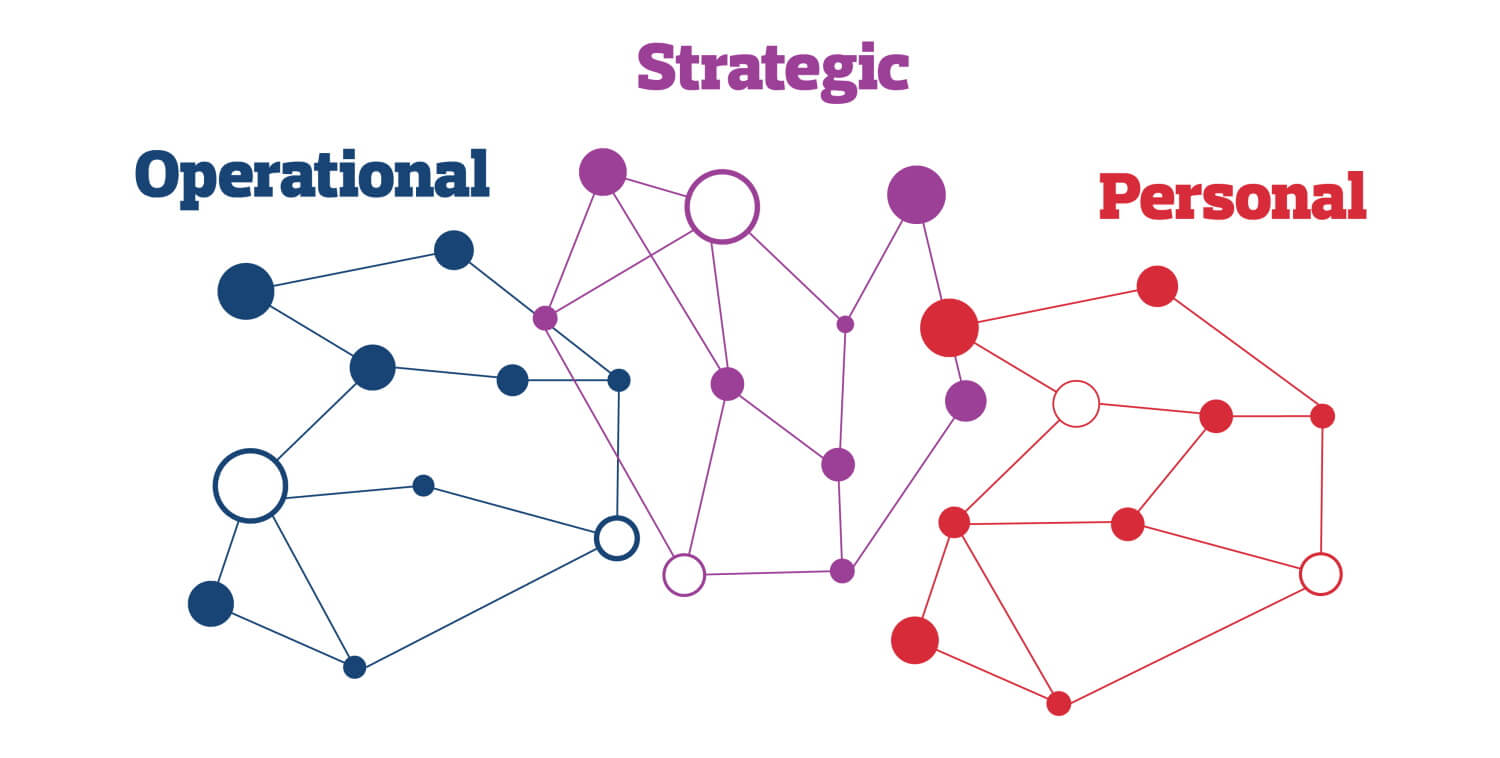
This network consists of individuals, relationships or associations formed to execute tasks, processes, or operations within a specific context such as individuals directly involved in the day-to-day running of the team, programme, or organisation.
Examples of operational connections include:
- Colleagues within the same department or team who work together to achieve objectives such as assistant coaches, medical staff, and other members of the wider inter-disciplinary team.
- Business partnerships established to enhance operational processes, such as outsourcing certain tasks to specialised companies or suppliers. An example could include an outside caterer, the company that maintains your facilities or the suppliers of your clothing and equipment.
- Professional networks formed to share resources, knowledge, and best practices related to specific fields of expertise such as a coaching association.
This network comprises of individuals who can provide strategic insights, guidance, and support that focus on long-term objectives, mutual growth, and competitive advantage and may include other coaches, coach developers, mentors, former players, sports psychologists, sports scientists, and industry experts. Building strong relationships within this network can help you gain valuable knowledge and perspective to enhance your coaching practice and achieve your goals.
Examples of strategic connections include:
- Networking relationships for advice on game tactics, participant development, injury prevention, and staying updated on the latest trends and innovations.
- Partnerships between organisations aiming to expand their market reach, share resources, or enter new markets collaboratively. Many coaches are now affiliated to franchises with a brand to help them promote and develop themselves such as ‘Soccer tots’, ‘5 Star Football’ or organisations that choose to gain their national governing body ‘charter status’.
- Partnerships between organisations to address societal challenges or promote economic development. An example of this is the Children’s Coaching Collaborative and the Sport for Development Coalition.
- Networking relationships with influential individuals or organisations to gain access to opportunities, expertise, or support strategic initiatives.
This network consists of family members, friends, and other personal connections who provide emotional support, encouragement, and balance outside of the coaching realm. While not directly related to the operational or strategic aspects of coaching, the personal network plays a vital role in helping you maintain your well-being, manage stress, and navigate challenges.
Examples of personal connections include:
- Friendships formed through common hobbies, experiences, and local community or social circles, where individuals provide emotional support and companionship.
- Mentor-mentee relationships built to guide personal and professional development through mentorship, coaching, and mutual learning.
- Family relationships that contribute to emotional well-being and a sense of belonging.
- Nurturing and managing these connections effectively can lead to enhanced productivity, growth, development and overall success in both your professional and personal lives.
What do you want from the connection?
Knowing what you want from a network helps you approach connections intentionally, ensuring that your efforts are focused, purposeful, and ultimately more successful.
Having a clear understanding of what you want allows you to:
- communicate effectively with potential connections, helping you articulate your goals, needs, and expectations, making it easier for others to assist you
- focus your networking efforts on individuals or groups who are most likely to help you achieve your goals, saving time and energy that might otherwise be wasted on irrelevant or unproductive connections
- identify opportunities to provide value to your connections as well. This fosters mutually beneficial relationships where both parties can support each other's goals
- seek out connections who can provide the specific help or expertise you need, increasing the likelihood of a successful collaboration
- identify connections whose goals align with yours, increasing the potential for meaningful and sustainable relationships
- help the individual or organisation understand what you expect from them and the boundaries you will work within, providing them with insight into what you will contribute to the relationship.
Building your network
Building your networks takes time and effort. The key to successful networking is to focus on the right people where all parties gain equally by putting in as much as they take out. Understanding yourself, where you are in your coaching journey, and what you can offer others will also influence who you look to build connections with and why.
Ways to build your networks:
- Social networks. Social platforms such as Facebook, X (formerly Twitter), Instagram, WhatsApp, and LinkedIn are great ways to connect with people, share ideas and ask questions. (Join the UK Coaching Club: ConnectedCoaches group on Facebook, a community of coaches from all sports and activities who are committed to helping and supporting one another. This is a great way to broaden your network.)
- Professional sports organisations.
- Conferences; attending workshops, committees, competitions and social events.
- Start your own networking group or community of practice. One of the best ways to build your network is to start your own group of like-minded individuals who are keen to share and develop together.

Effective networking tips
- Be collaborative: Networking isn’t about just benefiting yourself. Relationships are two-way, share information, add value to others, and give back. Remind yourself what you have to offer, not just what you need.
- Be a connector: Introduce people from your networks who can benefit from each other.
- Be approachable and authentic: Be who you say you are, as first impressions count and support the development of long-term relationships. Aim to build genuine connections, not just short-term transactional exchanges.
- Be curious: Show real interest and ask questions before talking about yourself. Asking thoughtful questions is a great way to put others at ease and demonstrate your listening skills. Genuine curiosity supports conversations to flow and helps build positive relationships.
- Be diverse: Reach out and connect with diverse people from different sports, levels of coaching, or experience. Only connecting with people who are like you restricts opportunities to think differently, challenge your perspective and keep your knowledge and experience pool narrow.
- Be committed: Once you have built relationships, put time and effort into sustaining them by staying in contact.
- Be balanced: Focus on quality over quantity. Concentrate on building quality connections that add genuine value to your coaching and those you offer support to. Avoid becoming a ‘business card’ collector. To be committed and maintain relationships takes time and energy, so remember to be realistic about the number of people in your network.
Crucial Conversations
If a conversation is hard, it's probably the one worth having.
Crucial conversations are an inevitable part of coaching, but what exactly is a crucial conversation, why do we need to have them, and how can we recognise them?

Crucial conversations involve situations where:
- the stakes are high (people involved can win or lose)
- emotions run strong (positively or negatively)
- people have varying opinions
- a person’s life is affected.
In coaching, there will be many times, different situations, and reasons when you will be involved in crucial conversations, such as challenging a participant’s behaviour, performance, selection or deselection, conflict with another group member, and injury, just to name a few.
They can be initiated either by yourself, participants, parents or carers, or other coaches, and can be planned conversations or happen when we least expect them to.
Crucial conversations are not the most comfortable conversations to have and often we:
- can fail to prepare for them effectively
- avoid or put them off, hoping that they resolve themselves (but in reality they don’t)
- communicate poorly
- are not ready for them when they happen unexpectedly.
Navigating crucial conversations requires practice and skill. Recognising when a crucial conversation is taking place is key in supporting you to manage your communication and response effectively.
Crucial conversations are often emotional and are likely to trigger a stress response including:
- physical signs (sweating, dry mouth, facial expressions)
- emotional signs (anger, sad, frustration)
- behavioural signs (raised voices, becoming quiet or withdrawn, agitated, aggression).
That can negatively affect your ability to communicate effectively.
It’s important to pay close attention to everything involved in communication during a crucial conversation, such as:
- your thoughts
- emotions
- choice of words
- tone of voice
- facial expression
- behaviours.
Your relationships with the people you coach, and their parents or carers can grow stronger or be diminished by how crucial conversations are dealt with.
Tips for crucial conversations

Get comfortable being uncomfortable: Difficult conversations are a normal part of coaching, and the more you have them the more confident you become in your ability to handle them effectively. Have them more often so they become a regular part of your coaching.

Prepare participants and parents/carers: Provide informal and formal feedback to participants on a regular and consistent basis; ensure they have a clear understanding of what is expected from them and what they can expect from you. So, it won’t be such a shock when further conversations take place.

Don’t put difficult conversations off: Putting off the inevitable will only make the situation worse and potentially damage your relationships with your participants, parents/carers, or other coaches.

Manage your emotions: If it’s a spontaneous conversation often we feel unprepared for it. Don’t take things personally, panic, or become defensive. If you need time to reflect and consider the points, ask for time to do this and ensure that you follow up.

Do the groundwork: If it’s a planned conversation, plan for it. You plan sessions to ensure a successful outcome, the same should be done for conversations and meetings. Why not practice with a colleague first?

Stay on track: It’s easy to get drawn into irrelevant issues or allow others to hijack the conversation. Make notes on the points you want to share and avoid being drawn into different points or issues.

Be consistent: Crucial conversations can be awkward and uncomfortable and can affect how you may normally communicate. Try to maintain your normal style of communication to avoid confusion and any future misunderstandings.

Show heart and empathise: Coaches inevitably need to have crucial conversations because they care, ensure that you show that through your communication. Crucial conversations are difficult for all involved particularly if the other party is receiving bad news, acknowledge this and be empathetic.

Listen: During crucial conversations, it’s important to really listen by demonstrating active and reflective listening. Acknowledging the other person’s perspective on the issue will ensure that they feel heard and understood by you.

Reflect: It’s important to reflect on crucial conversations that you have with participants, parents/carers, or other coaches in your team. Did the conversation go as planned? Did you achieve your initial outcome? Do you need to follow up the conversation? How did the conversation affect your relationships? Who do you need to inform about the conversation? What did you learn and what might you do differently next time?
Effective Communication
The effectiveness of communication is not defined by the communication but by the response.
Milton Erickson
Communication isn’t just what we say.
It’s the why, how and when we say it, the tone of our voice, our non-verbal language, and often what we don’t say.
Effective communication plays a crucial role in building and maintaining positive relationships. As a coach, it is essential to have excellent communication skills to succeed in your role. It is crucial to understand the reasons behind your communication, the various methods, and the challenges that come with it.
Successful coaches communicate effectively with various people, including participants, parents or carers, boards, committees, sponsors, the media and other members of the coaching team. This includes explaining technical and tactical aspects of the activity, the vision and direction of the programme, rationale and reasons for changes as well as developing a strong connection with people.
Communication in coaching serves a variety of purposes, ranging from providing crucial feedback to fostering meaningful connections:
- Feedback enables participants to refine their skills and strategies.
- Clear instructions set the stage for effective execution and practices.
- Questioning can stimulate critical thinking and promote deeper understanding.
- Modelling and demonstration offer visual cues for learning that enhance understanding.
- Communication fosters connection and builds trust, laying the foundation for strong coach-athlete relationships.
How we communicate is just as important as what and why we communicate:
- Verbal instructions convey explicit information.
- Non-verbal signals such as body language, gestures, and facial expressions often convey deeper meanings.
- Tone of voice carries emotion and emphasis, shaping the message's impact.
- The deliberate and strategic use of silence allows for reflection and thinking time.
- Recognising the appropriate timing for communication is crucial, ensuring messages are received at the optimal time and place.
- Understanding when not to speak is equally important, as silence can speak volumes in certain circumstances.
What irks people about communication? What gets in the way?
Many factors get in the way of effective communication, frustrating both coaches and participants:
- Vagueness and inconsistency in messaging can cause frustration and confusion that prevents understanding and development.
- Lack of clarity in instructions or feedback can lead to misinterpretation.
- Insensitivity to individual differences in learning approaches and preferences can make some participants feel left out and negatively affect their development.
- A lack of active listening, receptiveness and openness can damage the trust and connection between coaches and participants.
Other barriers to effective communication include:
- distractions, such as environmental noise can disrupt focus and attention
- language barriers may prevent understanding
- emotional barriers, including fear of judgment or criticism
- preconceived biases and assumptions may limit understanding and collaboration.
Types of miscommunication that damage relationships
Did you know that frustration and unfairness are the biggest deregulators of people’s emotions?
The Say-Do Gap
This is the difference between what someone says they will do and what actually happens. Even if there is a good reason for the difference, if it’s not communicated this can negatively impact relationships.
The Transmit-Receive Gap
This is the difference between what message someone intends to say and what is understood by others.
Moving Goalposts
What someone sets out to do, for example, agreed goals have changed or shifted. If the change or shift isn’t explained and why, this can lead to feelings of being disrespected and disengagement.
Hidden agenda
This happens when people hear inconsistent messaging which erodes credibility and trust. For example, a coach tells one participant that it’s ok to miss a training session but says the opposite to everyone else.
Effective communication requires practice, patience, empathy, and a commitment to fostering an inclusive and supportive communication environment. It is the ability to convey what we really mean in a way that is clearly understood by the receiver, bridging the communication gap.

Relationships
Learn about this theme of the Coach Learning Framework and discover its key pillars to develop and deepen your relationships to enhance your coaching
LEARN MORE
Coaching Conversations
Watch coaches share their lived experiences, offering real-life examples and strategies to help you immediately grasp the theme of ‘relationships’ and master the art of having crucial conversations
WATCH THE VIDEOS
Kickstarter
Download activities that invite you to reflect, consider, and try out new approaches that will help you form a strong connection with each person and understand their unique wants and needs
DOWNLOAD THE ACTIVITIESUK Coaching Club Premium Membership


