
Skill Acquisition Guide
 Article
 by UK Coaching
With this comprehensive guide, you'll discover the knowledge and tools to support you to apply skill acquisition principles to encourage long-term improvements in those you coach

Topics covered in this guide:
When watching a session of basketball practice, you notice the children have very different abilities. Some of the children are confident, look skilful and dominate the play, while others seem to be reserved and uncoordinated. Some even seem to deliberately avoid the action. What might you conclude?
Would your thinking change if you knew the following?
Children arrive at your training having had very different developmental journeys: the experiences or opportunities provided to them up to that point will be varied, as will their growth and development. Therefore, the level of skill they possess at that point will be varied.
Importantly, this snapshot in time does not predict future success. As a coach, you can facilitate the development of every participant.
Let’s look at the initial coaching scenario again, with a more detailed view. The most confident, skilful player has access to play space and older siblings who play football, basketball, and tag games with them every day. They are the oldest in the class. One of the less confident children is a competitive skier recovering from a recent injury. Another child lives at the top of an apartment building and is cared for by an elderly relative with no opportunities to be active outside of school. This child is also the youngest in the class and has a lack of confidence socially as well as a perceived lack of athletic ability.
The performances of these children at this session do not represent the possibilities of their future abilities. Indeed, all three children in this example could have different abilities in twelve months or three years. All three can become an elite athlete, a world-class coach, or a lifetime lover of playing sport. All three need to be nurtured.
As many as possible, as long as possible, in an as good environment as possible.
Mark O’Sullivan AIK: Allmänna Idrottsklubben
Solving problems rather than learning fixed answers
Think of skilful performance as the ability to solve problems rather than learn and repeat fixed answers. As a coach, think of your role as considering the question: ‘What problem do they need to solve?’
This will involve discovering:
- who they are
- what they need
- why they’re involved in their sporting environment
- how they currently interact with their sporting environment.
Knowing what problem needs to be solved will enable you to co-create practices with your participants, allowing them to explore how to find answers that work for them. This is an important aspect of great coaching!
It starts with planning your initial session design to support your observations of how your participants behave. It’s also important to remember that what they need in an individual session, now, will be very different to what they may need over months or years.
What game are you trying to win… the one on Saturday or the one in 1460 days?
The language of skill acquisition is changing as more knowledge from research and practice is gained. One key area is the term itself. Throughout most of the information in this section, skill development or skill adaptation will be used, as this more accurately describes the process of becoming skilful. We have tried to keep the language free of jargon, but some words are important as they don’t have equivalents and learning them will help you understand how to develop skill and discuss the various aspects with other coaches through a common language.
Skill Acquisition: the applied science of learning and getting better at skills, including moving, thinking, decision making and noticing things. Coaches need to know how people learn these skills, how to introduce and coach them effectively, how to plan practice sessions for development, and how to measure progress in learning and transfer into performance.
Perception-action skills: movement skills are described as perception-action skills because they always involve learning to gather information in the situation (about people – teammates, opponents, activities, and environments – time, space and the relationship the individual has to each of these) and moving or acting in response to achieve an outcome.
Co-design: designing practice, learning environments and activities in collaboration with the learners. This includes all aspects of the design, for example, what is the focus of the practice, why, the levels of challenge, and complexity. This will be built upon and developed throughout the session.
Action capabilities: the ability to successfully achieve a movement goal at a particular moment in time. Action capability includes perceptual skills, decision-making, coordination and capacity (strength, speed, power, flexibility).
Decision-making: the choices made in advance and/or as opportunities arise and change in the moment during practice and competition.
Intention: the outcome or skill that the individual is aiming to accomplish. Think of goals. A short-term goal could be to get a ball to a teammate, to win player of the match, to do what the coach says, or to not get injured.
Perception: ability to identify, pick up, understand, and use information (visual, auditory, tacit (implicit), proprioceptive, and olfactory).
Nonlinear Development
As individuals, we have different physical bodies that develop at different rates and different experiences that have been shaped by our past and will influence our future. We also have different motivations, intentions, goals, and aspirations. All these things have an impact on skill development.
From the moment a baby is born, it begins to recognise its environment and starts to develop perception-action skills very rapidly. Many basic movement coordination behaviours, patterns and perceptual abilities are rapidly established. These include identifying significant individuals (parents, carers, close family), seeking comfort, head turning to find food, suckling, stepping, and grasping.
During development, it is worth recognising the influence of language and culture.
For example, in some cultures:
- children may be encouraged to speak up and express their opinions freely, while in others, they may be taught to be more reserved and to listen more.
- the practice where infants are carried in slings or wraps by caregivers can influence the timing and manner in which a baby begins to crawl and walk, as they may have less independent floor time compared to babies in cultures where babywearing is less common. Also, cultural attitudes towards milestones like crawling and walking may vary, affecting the encouragement and support provided to infants as they progress in their motor development.
Throughout our lifespan, our coordination and perception abilities continue to change and develop as we interact with the environment, physically, emotionally, cognitively, and socially.
Most people easily learn complex skills like riding bicycles and driving cars. Many also become very skilful recreational participants in a range of sports and activities, and for a small number of people, these skills are eventually developed into exceptional athleticism and high performance.
We are all constantly changing. We might have gained some strength from our recent activities or training. We may have noticed things that we were previously unaware of, allowing us to read our practice and competition environment better to make decisions. We might be growing or have been injured. We might be tired, or just getting older.
Learning journeys are complex, and development is nonlinear. Small changes may result in huge differences in skill. Huge changes in approach may sometimes result in little or no differences in performance. Each moment could be the beginning of a new journey that leads to a different future.
Learning in development
Skill development is about learning to move skilfully. Learning happens as we become more skilful while we change and develop. Movement scientist Professor Karen Adolph calls this learning in development.
We do not simply acquire a skill or add something new to our existing repertoire as easily as pressing a button. Becoming skilful is a lifelong process of adaptation. To reflect this, many researchers and practitioners are using the term skill adaptation instead of skill acquisition.
The environment that was available yesterday may offer new opportunities today.
Adolph and Hoch
A number of characteristics (constraints) influence non-linear development and individual differences in learning.
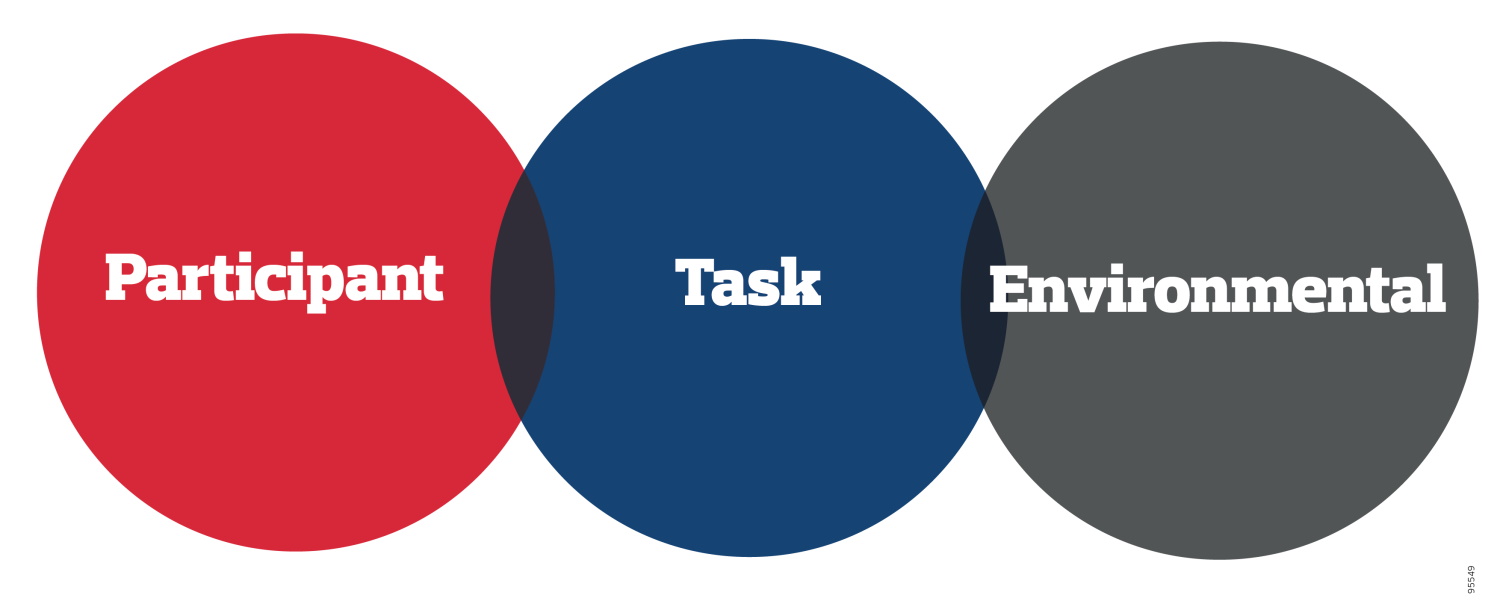
Some participant characteristics are stable, while some change rapidly.
These include:
- genetic differences such as body type, or maturation status
- current physicality, for example, height, weight, speed, flexibility, or developmental status
- previous experiences, including past activities, practice, or learning
- fatigue, hydration, or hunger
- focus of attention, for example, on perceptual information, internal (body movements) or external (objects, implements, targets, people), or the ability to be distracted
- cognitive skills, including emotional states, motivation, goals, intentions, or confidence
- temporary states, such as returning from injury, peri-menopausal symptoms, being pregnant, or returning to activity after a long absence.
These are the characteristics of the task and are shared only with those participating.
They include:
- rules, boundaries, markings, and surfaces
- equipment design and scaling of task equipment, aids and devices
- information from videos, models, and demonstrations
- instructional constraints including types of feedback and coaching methods
- clothing and footwear
- practice design (for example, task simplifications vs task deconstruction).
These characteristics are not specific to the task or activity.
They include:
- cultural expectations and attitudes, including race, age and gender
- social environment, peer groups, spectators, social media
- economic influences, such as access to learning support, venues, facilities and training
- physical landscape, including gravity, altitude, temperature, lighting, and access to environments such as urban sports venues, playing surfaces, surf breaks, and ski slopes
- interactions with and support from parents, peers and coaches.
The participant, task and environmental constraints are, in themselves, neither positive nor negative, but do they influence skill development over multiple time scales? There are times when these changes are more rapid and noticeable.
During these times, it is important to support your participants to focus on skill adaptation, recalibration, and motivation. They are having to adapt to, and become skilful with, a changing version of themselves, the task and the environment!
Click on the tabs below to consider the changes that occur at various stages of life:
Children are growing and changing constantly. There are times of major growth spurts (often referred to as peak height velocity (PHV)).
They have one in early childhood as a toddler and the most well-known takes place during adolescence, usually between 11 (+/- 2) years for girls and 12 (+/- 2) years for boys. For girls*, their menstrual cycle will begin during this time and continue until menopause.
*Those people who have female genitals, have gone through puberty as a female and have (or had) a menstrual cycle.
There is less research and focus on changes during and after pregnancy. We know that pregnant women change but can recalibrate their movement (perception-action skills), showing that they skilfully adapt to changes in their abilities, size and shape.
Changes and adaptions after childbirth also require recalibration. Women continue to train and compete after having children, with many women demonstrating that they can continue to excel after having children (such as high-profile athletes, Jess Ennis and Serena Williams).
During menopause (usually between 45-55, defined as not having a period for two years before the age of 50, and one year over the age of 50), which may start in a participant’s prime, women tend to lose muscle and bone density. Many also gain abdominal fat. Some lose confidence in their abilities during this stage of transition.
All these things influence perception-action calibration and can have a detrimental impact on the confidence to stay active at a time when it is vitally important for overall health.
Injuries usually require adaptations in our perceptual movement systems in both the short and/ or long term. Injuries that lead to permanent changes will require more substantial adaptations.
When we have an injury, we compensate with our bodies, adapting to manage the injury so that we can still function. As such, many participants have continued to play at a competitive level after suffering significant injuries including knee ligament (anterior cruciate ligament ACL/ medial cruciate ligament MCL) tears and spinal fusions.
It is important to recognise that all people are constantly changing and developing. Recognising and appreciating non-linear development will help us to design practices that support individuals to search for solutions that are adaptable, rather than repeating the same solution.
We are looking to develop stable performance outcomes over multiple time scales. This is especially important before, during and after times of rapid or pronounced change.
Tips to help you support your participants:
- Motivation is the most essential ingredient for skill development because learning only happens if your participants continue to be engaged.
- The interplay of personal, task and environmental characteristics will influence the developmental pathway of everyone. Take the time to understand these and the implications for those that you coach.
- Because everyone develops differently, and has different past experiences, goals, and aspirations, it’s important to recognise that performance at one moment in time is not an indication of future potential.
- Understanding the non-linear nature of the learning process will help you to create practice activities and environments that support skill development over multiple sessions and time frames. Skill is the ability to replicate successful outcomes rather than the replication of techniques.
- During periods of change, great coaches reassure those they coach, re-evaluate goals if needed, and focus on supporting recalibration and motivation.
Practice Design for the Individual
Your players are only as good as the problems they engage with.
Danny Newcombe
Take a few minutes to think about all the elements that go into your session plan design.
You are likely to have included lots of things about:
- the people you are coaching: understanding the person, their goals, age, and experience, as well as the number that attend the session
- the venue: number of pitches, markings and goals, playing surfaces, space, and weather if you are outside
- things about the sport: specific equipment and activities.
Did you include ‘how people learn’ and structuring your session to support learning?
There are two main schools of thought about how we can move and how we learn to move. There are some big differences and some important similarities. There is a simple analogy of the two main theories and the differences between them below. Then we’ll focus on the similarities and how we can use our understanding of learning to design great coaching practice.
Click on the tabs below to find out more.
Theories of learning (and the associated coaching practice) based on information processing view learning as the process of creating mental models (representations) and motor programmes inside our brains (heads). This is similar to developing computer programmes. Imagine a computer programmer can find where a programme is inside your computer. It exists as a specific entity and can be edited, updated, moved to different storage spaces, or even deleted.
Learning from an information processing perspective is about making programmes to interpret perceptual information and programmes to move your muscles along with all the executive functions you might need to find, adapt, and run the programmes. Programmes are stored, retrieved, and adapted based on the task demands.
This means that the focus of learning is on what is happening inside the person’s head as they develop these internal representations and programmes. Schmidt’s Generalized Motor Programme (GMP) theory and Schema Theory are examples of an information processing-based learning theory. Cognitive constructivism and computational constructivism are more aligned to information processing, however social constructivism (Vygotsky) places the interaction of others as a key part of the social learning mechanism.
Theories of learning (and the associated coaching practice) based on ecological dynamics view learning as developing perception-action coupling and coordination patterns that harness our bodies’ intrinsic dynamics (emergent organisation). The best analogy for this is that it is more like a radio. When you listen to your favourite radio station, you know that the music you are listening to is not stored inside your radio. You can’t ask a radio programmer to find the music in your radio and edit, update, move or delete it.
The radio set can pick up signals and play the music without creating internal models or having to store anything. To become more effective, the radio can be tuned (and have more effective aerials for example) to be more sensitive, pick up more frequencies, cover wider ranges, and distances. Developing perception-action coupling is about adjusting to information through your body and brain as they become more effective receptors due to changes in action capabilities.
This means that the focus of learning is on the interactions (the connections) of the person doing an activity in an environment. Non-linear pedagogy is an essential cornerstone of ecological dynamics.
Practice design to support learning
Both views of movement learning (and control) have some very important similarities that can guide your practice design.
1) Learning is supported by optimal levels of challenge
This is not physical exertion, but the participant’s intentions, what they are paying attention to, and what decisions they are making. When you design your practice, pay attention to who is making the decisions. These include decisions about what to pay attention to (perceptual information) and decisions about what to do (actions made to achieve an outcome).
This means that you cannot know what every participant’s optimal level of effort is. So how can we meet their individual needs for optimal challenge in our practice design?
2) Learning is not what we see at the end of a practice session
Just because it is taught, doesn’t mean they have learnt it.
How performance looks at the end of a practice session is not a good indication of whether the skills will be retained or transferred to competition / performance.
If the practice has been isolated and repetitive in design, and the coach is making the decisions, there is less likely to be a positive learning transfer into the next session and or competition.
Messy sessions with lots of participant decision-making and variability within the activities are usually better for learning.
3) Learning only happens with reliable feedback (and information)
We learn by adjusting our behaviour to the results that we get. In the past, we have been taught that feedback is about things like knowledge of results, knowledge of performance, and when and how to give feedback as a coach. This can be very coach-focused, and the coach is making all the judgements and decisions.
Instead of relying on you as the coach, it is useful to think about how you can design your practice activities so that the participants are getting reliable feedback independently through the activities.
Consider opportunities in your session for participant feedback, using buddy coaching with your participants, 'ask' before 'tell,' and the use of open questions. If a participant doesn't know the answer, use their raised awareness from the question and allow them to go back and work out the answer.
Error correction is the role of the participant.
Rob Gray
4) Learning is a process and happens over multiple timescales
To assess learning, we need to pay attention to changes over different timescales and not a single moment.
Remember that learning is complex and non-linear. Sometimes we might need to focus on short-term motivation and sometimes on long-term development. Motivation is the most important element for long-term skill development.
Modifying and Adapting the Environment
This pillar considers how you can adjust your practice design to maximise learning and how to tailor practice design to reflect the participant’s environment and phase of skill development.
You can’t adapt to an environment that you don’t inhabit.
Professor Keith Davids
Periodisation of skills training (PoST)
If you are coaching participants who compete or participants who have a particular performance goal, you will need to consider periodisation of skills training. There will be times when your skill development is more focused on coordination training, adaptability, optimising efficiency and stabilising performance, or adaptation to a specific environment.
The main elements that you can adjust are:
- the amount of variability and complexity
- the perceived safety of the environment, by the participants, in training and competitions.
- how much your training is like competition (representative).
Representative learning is important from both perspectives (information processing and ecological) of skill development because we are not becoming skilful on our own, it is in the context of an activity or task, in an environment and with other people.
The information that is available to us during learning needs to be the information that we need (specific information) rather than information that is incidental to skilled performance. This might be specific to a moment within an activity, to a particular performance environment, or other participants (fellow team members or opponents).
There are a lot of different opinions and perspectives about football players practising dribbling around cones. The idea is that cones do not behave like opponents, so participants are not going to learn to adapt to the behaviour of real opponents. However, if we only practice using a real competition environment, like a football match, participants may not even get a chance to touch a ball, let alone practise dribbling.
This means that we need to think about how and why we might increase and decrease representative practice design, like a dial that takes us from one end of a continuum to another.
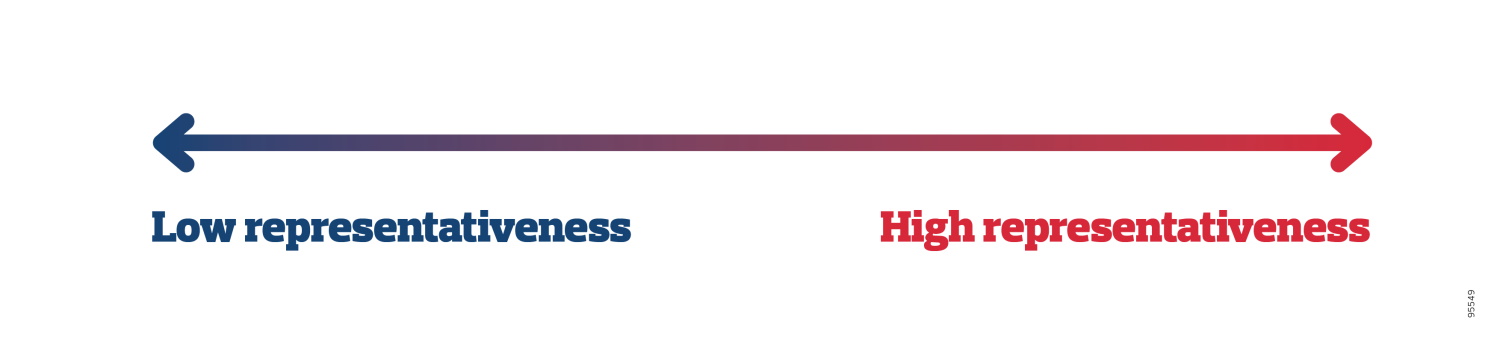
- Dribbling around cones - Small-sided games - Full game.
- Climbing frame - Artificial climbing wall - Natural rock outcrop or ice face.
Effective learning is active and effortful. It requires paying attention and making decisions. Research has shown that repetitive (blocked and massed) practice (when the participant is doing the same thing repeatedly) often looks better at the end of a practice session but results in poor learning.
Learning is measured as how well they can still do what they practised after a gap (distributed) or in the competition (random movements and decisions that occur within the competition).
It is worth noting that blocked and massed are not the same, but the important part is that they both entail practice that is just repeating the same movement.
However, if you are coaching a beginner and they are making lots of mistakes or doing it differently each time, then it is not blocked (it’s not the same pattern or programme). It is much more complex than ‘blocked is bad, random is good’.
In movement, there is not one correct answer or solution, as even a slight change in starting position leads to the recruitment of different muscle groups (without bringing things like neurons, ligaments, tendons, and facia into the mix). Sport and physical activity have an element of unpredictability, and no movement is ever exactly the same. The key is to ask yourself if your participants are at the optimal level of challenge and focusing on something relevant to solving the movement problem they are working on.
Instead of thinking about practice structure as just doing things like using spaced, interleaved, random, massed, distributed, variable or blocked activities, think about errors, variability, and stability. Find a level just outside what they can currently do, in their ugly zone, where it is a bit messy.
Practice environments have a big influence on learning. Becoming adaptive and skilful requires an environment that has both safety and uncertainty.
The Safe-Uncertainty Model can help you identify how you and your participants perceive your practice and competition environments.

You can adapt elements of your sessions to increase and decrease representativeness, variability and complexity, and perceived safety. Explore how to measure and adjust these in your practice and competitive environments.
Related Resources

Skill Acquisition
Learn about this theme of the Coach Learning Framework and discover its key pillars to help you apply skill acquisition principles to develop long-term improvements in participant performance
LEARN MORE
Kickstarter
Download activities that invite you to reflect, consider, and try out new approaches to help you adapt, refine and adjust your practice to support skill acquisition in your participants
DOWNLOAD THE ACTIVITIES
Coaching Conversations
Watch coaches share their lived experiences, offering real-life examples and strategies to help you immediately grasp the theme of ‘skill acquisition’ and understand the principles of non-linear development
WATCH THE VIDEOSUK Coaching Club Premium Membership


