
Developing Play in Your Coaching Sessions
 Article
 Want to make the shift to include more play-centred coaching in your session, but unsure where to start or how the challenge will be received? Think of this less as a guide and more as a conversation. One that starts with a simple idea: when participants play with purpose, remarkable things happen.

Using play as a tool to create a playful experience does not necessarily call for playfulness in the same way as one doesn’t need to be a comedian to tell a joke.
Tom O'Leary
Understanding the barriers first
Before considering change, it is helpful to first understand why coaches often resist a play-based approach.
Unstructured play is messy, often chaotic, and coaches may feel a loss of control in the session, a loss of purpose as the leader and exposed to others observing that they are not ‘coaching’.
One view is that parents, carers, other coaches, programme leads and clubs don’t see the benefits and outcomes of play. This can lead to decisions being judged on a traditional view of coach-led practice, results and ‘performance’ over participant enjoyment, learning through experience and high-quality development opportunities.
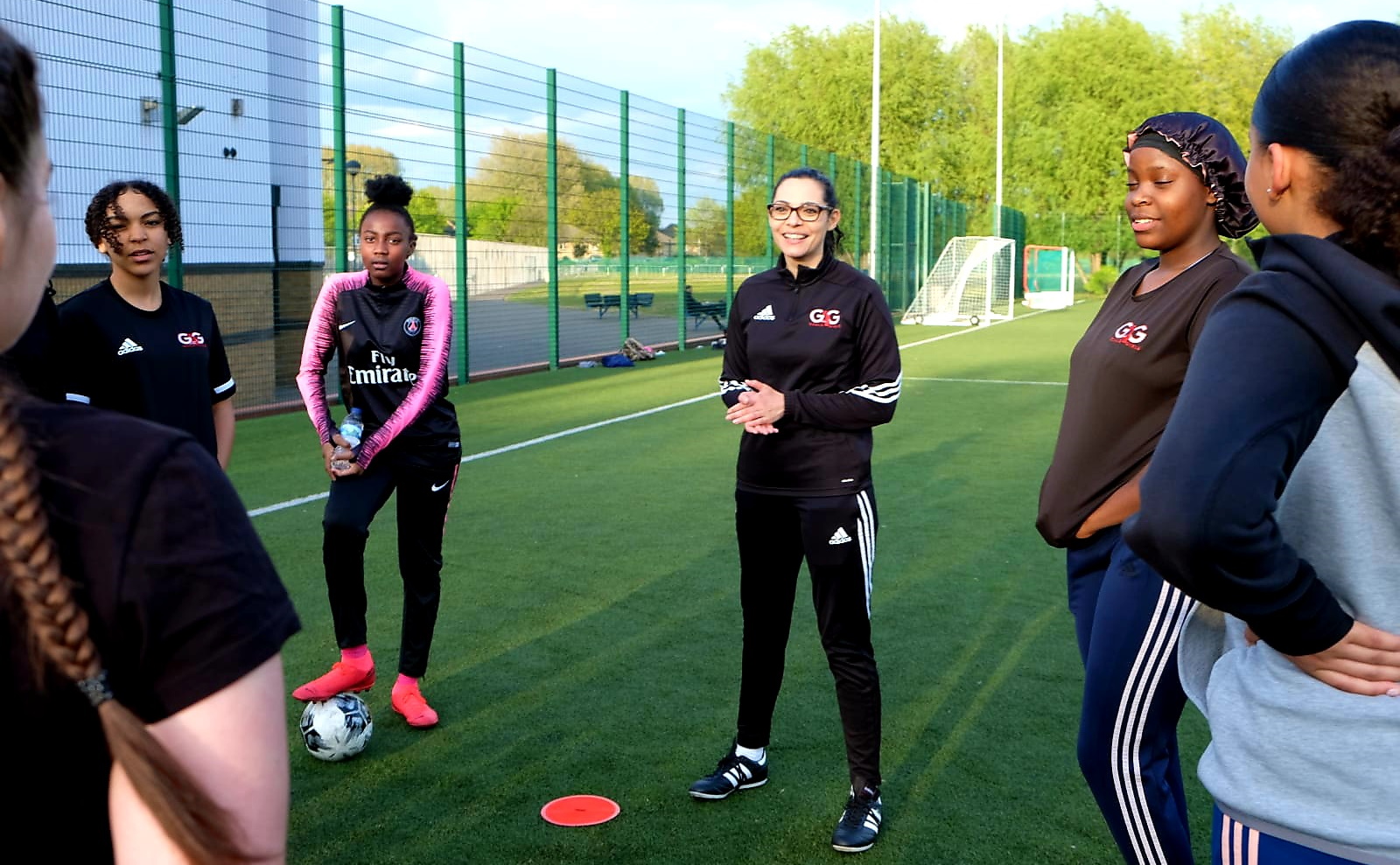
The perception is that a busy, organised, cone-filled, and often regimented session is more productive, and the participants are working harder.
This is often reinforced by our own journey as a coach.
The experiences we received as participants decades ago through isolated, repetitive practice may feel safe and familiar. This is often reinforced by other coaches within our environment, who we see as more knowledgeable others and had the same or similar experiences.
Our coach education may have taken place years ago and focused on introduction drills and skill progressions in isolation. Think kicking to a partner to introduce striking a ball, instead of a play-based game designed to create more opportunities to strike a ball in different situations and scenarios, as each moment in the game is unique.
Strategies to make the shift

Lead with evidence not beliefs
When speaking with other coaches, go beyond ‘play is important’ and highlight the benefits of a constraints-led approach and game-based learning to skill development. Both can create opportunities that are directly transferable to the competition and game environment.
Where’s the motivation? Think about your sessions. Nobody arrives and asks, “Can we do that drill or practice from two weeks ago?” But they do ask for a game.
Skill development is learning, and we remember and recall things that are memorable. Using fun and enjoyment directly links to remembering and recalling. This also helps with retention. If participants don’t enjoy sessions, they won’t come back and you’re left with nobody to develop. A regular play-based approach helps reduce dropout.
When speaking to those ‘looking in’ at your sessions, take confidence from the fact that many professional coaches working in academies and professional sport use play within their programmes. It’s often the golden thread through their development curriculum.
This makes you a more effective, learning-centred coach, meeting the needs of the individuals you coach. You bring the energy to the sessions, and the participants mirror this, stay in the moment and enjoy the sessions. This doesn’t make them any less important.
Use coaching language
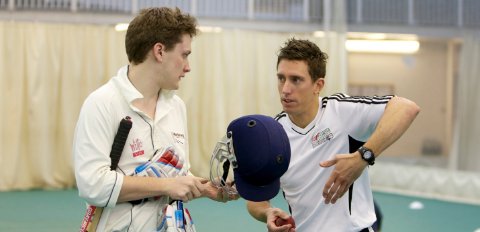
If the word ‘play’ is seen as uncomfortable or triggers resistance from parents and other coaches, tweak your language. Use these phrases to emphasise the coaching science and learning development.
- Game-based practice
- Constraints-led approach
- Decision-making practice
- Decision-making under fatigue
- Small-sided games
- Pressure training
- Participant-centred coaching
These terms and language hold the same principles but are within established coaching development frameworks, making them easier for others to accept, embrace and implement.
Start with small-sided games as a Trojan horse
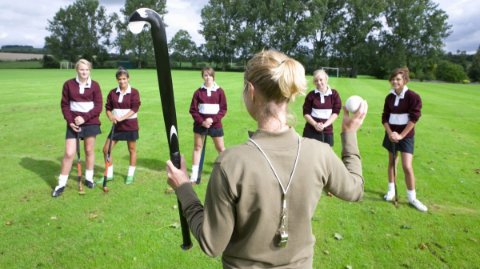
Small-sided games are the easiest starting point for play because they look like ‘sport’. They are a great way to start the session, and you gain immediate engagement with the participants.
There is a lot of research by sports governing bodies on how small-sided games provide skill development and physiological benefits through more touches, opportunities to make decisions, and greater intensity. These can be used as measurable outcomes with other coaches and parents. They are also quick to set up, ensure the session moves quickly and increase time on task.
Introducing a small-sided game to replace one practice in your session is the first step to success. Remember to design the game to achieve the focus you want to work on. This allows you to shape the participants’ thinking and helps when you step in for intervention, as it focuses your questions, feedback and corrections.

Coaching Tip
Ask parents watching to simply count the number of involvements their child has. This can be done with a pen and paper, the use of click counters or the introduction of a simple app which allows them to ‘code’ the involvements. This includes the number of touches, decisions, involvements, and support play.
Run a coach-development session
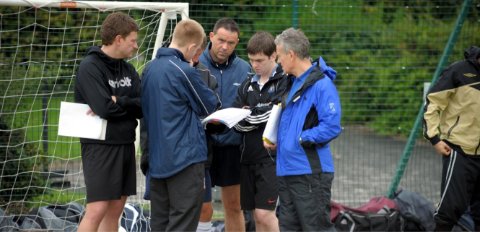
Allow coaches to participate in play-based practice and experience it themselves. It’s a powerful learning experience as they feel the energy, engagement, focus and learning with their own brain and body.
Experiential learning allows you to shape their understanding through questions.
- What did you notice?
- What problems were you solving?
- How involved were you in the activity?
- What did you learn?

Challenging the myth of ‘time on task’
It’s a simple question to ask: how much time is each participant actually engaged in meaningful activity?
Often in a drill-based session, time is lost in setting up, transitions between activities, multiple explanations and lines of participants waiting their turn.
Individual engagement time can be as low as 20–30%. A well-designed play-based session can take this above 80%.
Coaching Tip
Reframe productivity. A session that looks neat and organised but has low engagement time is less effective than a messy-looking one that means every individual is involved, problem-solving and actively learning.
Coach as learning designer
This is a powerful way to reframe your role as a coach. Shift your role and responsibility from controlling a session to designing an environment where learning happens.
Purposeful play, games-based practice and constraints-led coaching require more thought, more planning and more game intelligence (technical and tactical thinking) from a coach, not less.
Manipulate space, rules, participant numbers, equipment, and time to produce specific learning outcomes. This is a higher-order coaching skill that we see in great coaches.

Engage parents as allies
Coaches often feel pressure from parents and carers who may see structured drills and multiple interventions as quality coaching. If they understand and value play-based approaches, the pressure and expectations are reversed.
Consider hosting a parent and carer’s information evening to explain the philosophy, evidence and your approach. Reinforce the importance of fun, enjoyment and engagement in retention and reducing dropout.
Be prepared to use data to help you. Read UK Coaching Population Study 2024 Report: Participants for insight to support participants’ views and perceptions. Helping to shape their understanding of what to look for in a quality session beyond superficial organisation is crucial. Use parents and carers who have been with you for some time as advocates and buddies to explain the importance to newer ones.
When parents start asking, “Why isn’t there more game time?” rather than “Why aren’t there more drills?”, the culture shifts.

Use participant feedback as a mirror
Participants, especially youth and adults, vote with their feet and their energy. Reflect on engagement levels during different session activities and designs.
Does attendance change when sessions have a different theme or focus?
Is a games night more fun and enjoyable than the structured team run?
Observe the emotional tone of sessions. How do participants arrive? Do they arrive excited or reluctant? Running to the session? Keen to get into the game? Standing around talking?
Ask individuals what they enjoy in sessions and what they would like more of, rather than what you think they need or assume they enjoy.
Informal participant feedback can be a powerful reflective tool, so make time for this in your sessions.
You can avoid peer pressure by asking participants to close their eyes and score the session out of five with their fingers or give a thumbs up, middle or down. They could tick happy or sad faces on a whiteboard as they leave the gym or fill a check-in form after each phase.
Adjust this based on the age and experience of your participants. Consider the level of commitment expected from them, number of training sessions and competition, and tools you have available. If you ask for feedback, be prepared to act upon it.
Celebrate process over outcome
Consciously shift what gets recognised and celebrated in your group, team and organisation.
- Highlight participants who show high levels of attendance and enjoyment
- Share stories of creative, play-based sessions on club channels
- Connect play to parent and carer updates, rather than just performance outcomes
- Highlight and recognise long-term learning and progression over short-term results and success. Seek out moments that occur in competition that have transferred from purposeful play
- Maintain a coaching culture where coach identity is tied to development, retention and growth, not just results and trophies
A practical approach to increasing play in your sessions
This follows a graduated approach which helps build your confidence, comfort and competence in using a play-based approach
Stage one (3-4 weeks): Introduce a game into your warm-up as the participants arrive. It’s okay to have the same game for a few weeks as they become familiar with the game and approach.
Stage Two (1-2 weeks): Introduce one small-sided game per session, replacing one isolated drill. Think how you could take the same ‘focus’ for the drill and create a game to develop it.
Stage Three (1-2 weeks): Experiment with modifying rules or constraints within games to target specific skills which may be technical or tactical.
Stage Four (3-4 weeks): Include a period of unstructured “free play” in each session and allow the participants to explore and evolve their thinking.
Your role is to observe and notice what the participants naturally do and offer support. It’s okay if this feels messy, even uncomfortable for the participants. After all, they are not used to this freedom and opportunity. Keep the time short to begin with and gradually increase it over the weeks. You will gain lots of ideas that you can bring into your session design.
Stage Five (4+ weeks): Reflect with your participants, ask individuals to contribute and co-create purposeful play within your sessions.

Remember: Play is not the opposite of learning. Play is an effective coaching approach and mechanism for learning.

Takeaways
Play is not a reward for hard work, or something you fit in at the end of a session if they are good or you have time. It’s a powerful coaching tool for engaging participants’ brains, keeping them engaged, making faster decisions, taking risks, and learning in the moment.
- Reframe ‘play’ as a complex coaching tool rather than a break from serious work
- Play has the opportunity to unlock learning
- Play has something in the background: energy and excitement – the buzz. Participants are absorbed in what they are doing
- Play has a high level of transfer to competition. More freedom, more decisions, more problem-solving, more situations
Also in this series
Purposeful Play Coaching Skills
Discover the coaching behaviours that bring purposeful play to life. From learning design to questioning and flexibility, learn how to create engaging environments that support deeper learning and development.
RESOURCE
Understanding Purposeful Play
Find out what purposeful play really means and why it matters. Hear from Andrew Telfer, Gill Erskine and Gareth Williams as they share how play supports learning, wellbeing and long-term development across all ages.
RESOURCE