
Introduction to Purposeful Play
 Article
 Play is an elusive and tricky term to define. It means many things to many people. One person may think of a playground, a kick around in the park, for others a competitive game or seeing youngsters climbing a tree.

The idea of fun or happiness is much more complicated than anybody would have guessed when they scratched the surface.
Joe Killian
One thing is clear. Children develop and learn a host of physical, social and cognitive skills through play. Interactions with others influence how they communicate, learn new skills and manage their emotions. Play provides a superb platform for social-emotional development in children and young people.
The challenge in an ever-changing world, full of good intentions, is that children are now bombarded with structured activities and sessions, many of which remove the intended benefits of play.
Most people agree that play is important, yet the opportunity for play is disappearing!
There is a need for coaches, as uncomfortable as it may seem, to create space in sessions for unstructured, creative play. How do you allow your participants to explore, be creative and engage in play?
Play checklist
- Joy
- Active engagement
- Social interactions
- Opportunities to adapt, change and improve
- Cocreation with your participants
- Variety
- Creativity
The benefits are not limited to children. Play is also important for adults. One thing is certain; every adult has been a child, and sport and physical activity have the opportunity to unlock everyone’s playful side.
Play offers opportunities to create developmentally appropriate activities and coach connected skills that you can tweak. Think of it as the foundation of holistic development.
As a coach, play gives you opportunities to manipulate the activity, environment, your own behaviours to focus on interrelated components of motor skills, cognitive development, and social and emotional development. It’s an approach that embraces the principles of learning, developing the whole person rather than aspects in isolation.
Play is unique in how events within it unfold spontaneously. Changes in the time and space mean decisions occur, excitement builds, the ‘world expands’ and learning occurs.
Watch and hear from three coaches on why the inclusion of play is important to their coaching

How often do you include play in your coaching sessions? Where could you add more opportunities?
Are your sessions Nutritious?
Amanda Gummer, an expert in play and child development at the Good Play Guide, offers a handy way to consider a ‘balanced diet’ of play using the Balance Play Pyramid.
- ‘Super foods’ are active, social, imaginative, unstructured and include free play.
- ‘High in sugar, salt and fat stuff’ are more passive, in isolation and sensory.
Just like a balanced diet, balanced play needs to be planned and considered.
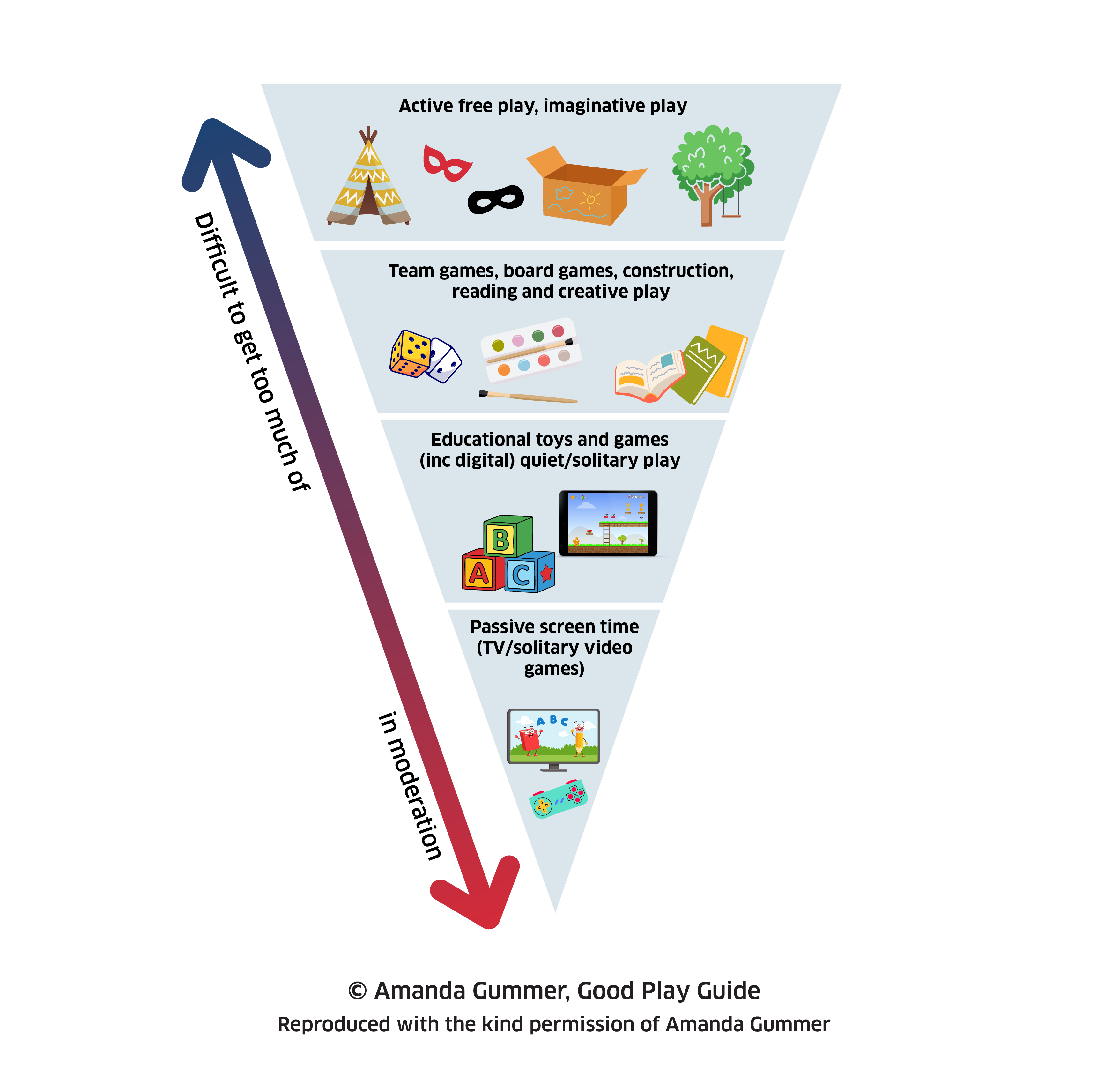

What are the potential ‘gaps’ or overuse of ‘High in sugar, salt and fat stuff’ in your participants activity schedule?
What is purposeful play?
Purposeful play is the intentional use of playful activities to develop exploration, creativity and enjoyment. It also supports learning and development, plus restorative and wellbeing functions. The key difference between adult and childhood play is that adults often feel a need for permission and framing to engage in it.
For adults, purposeful play can remove a feeling of guilt about play being perceived as lacking a target. Framing play as an intentional process makes it more culturally acceptable and provides an important space to maximise the benefits and opportunities on offer.
The feeling of intentional and purposeful play, a deliberate act rather than casual and accidental, means play becomes habit-forming and sustainable.
Amanda Gummer's definition of purposeful play is:
Goal-oriented play is conducted with a view to achieving or doing something. This could include playing to relax, playing to win a game, playing to develop, or learning through play. This definition is considered powerful for challenging coaches to reflect on their objectives, such as whether the goal is relaxation, winning, or development.
Amanda Gummer
The “Purposeful” Element
- Encourages the creation of habits. Treating play as a deliberate practice and activity, rather than accidental leisure, makes it sustainable
- Matters for adults because it removes the guilt of ‘play’ time
- Frames play as intentional and makes it culturally acceptable
- Maximises the benefits. Allowing a choice of play types aligned to an individual’s preference and needs (such as creative, social, physical, imaginative) amplifies the impact and effect for them
Benefits of Play (if we need a reason!)
Play is hard wired into everyone. Participation provides a dopamine hit, a feeling of satisfaction and a sense of reward. We might describe it as a buzz, a moment of joy or the “yes” moment when we learn something new.
Play stimulates the brain and helps create new neural connections. It’s a powerful stimulant, supporting the brain to develop and adapt throughout our lives. Play keeps us young!
Play is our natural stress reliever, helping to lower cortisol and manage fear responses. It activates the prefrontal cortex, which improves emotional regulation and executive function. This area is the brain’s management system, responsible for planning, problem-solving and focusing attention.
Laughter is the best medicine, and our body responds in many positive ways when we smile and laugh. Reducing stress, increasing our immune system to fight inflections and improving our blood flow. The release of endorphins helps our muscles relax, releases tension, improves our mood and acts as pain relief.
Think of the moment when you introduce ‘play’ into a session.
“We are going to play a game.”
“Let’s start by playing a game.”
The very words evoke an emotion within participants. You’ll likely see this in their faces, body language, voices and actions.
Neurons that fire together wire together.
Suzanne Brown
Participating in play provides physical, social and cognitive benefits for children and adults.
Active play improves coordination, strength, cardiovascular health and improves the immune system.
Play is one of the fastest ways to build trust and develop a bonding between adults. Shared laughter and experiences release oxytocin, which strengthens social bonds.
Play is a great leveller in society for adults, removing social hierarchies and enabling open communication.
Using a spectrum is often the simplest way to understand play. It sits on a continuum based on two factors. Initiation and direction. Who initiates the experience and who directs it.
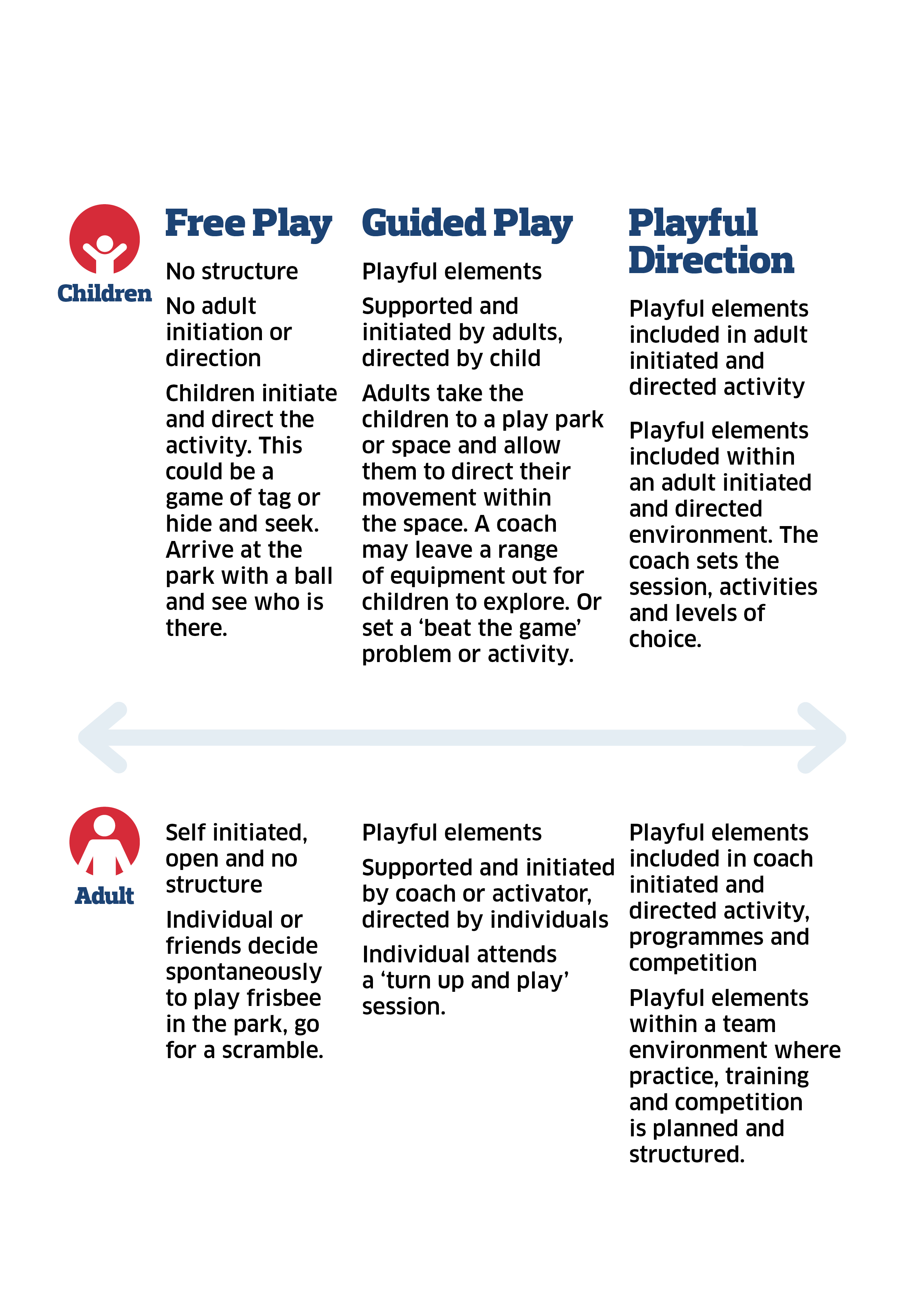
Sage on a stage vs guide on a side
The key skill for a coach is knowing when to shift between coach-centred learning and participant-centred learning. Lev Vygotsky describes this as the Zone of Proximal Development (ZPD): the zone when working on an activity in which an individual can’t succeed without support from a more ‘knowledgeable other’, in this case the coach.
The roles we play!
Stuart Brown, the founder of National Institute for Play, identified the eight role personalities of play, which begin in childhood. Based on personal motivation and passion, recognising and unlocking your play profile helps adults identify their reasons and drivers for play and enables them to integrate play into their adult life.
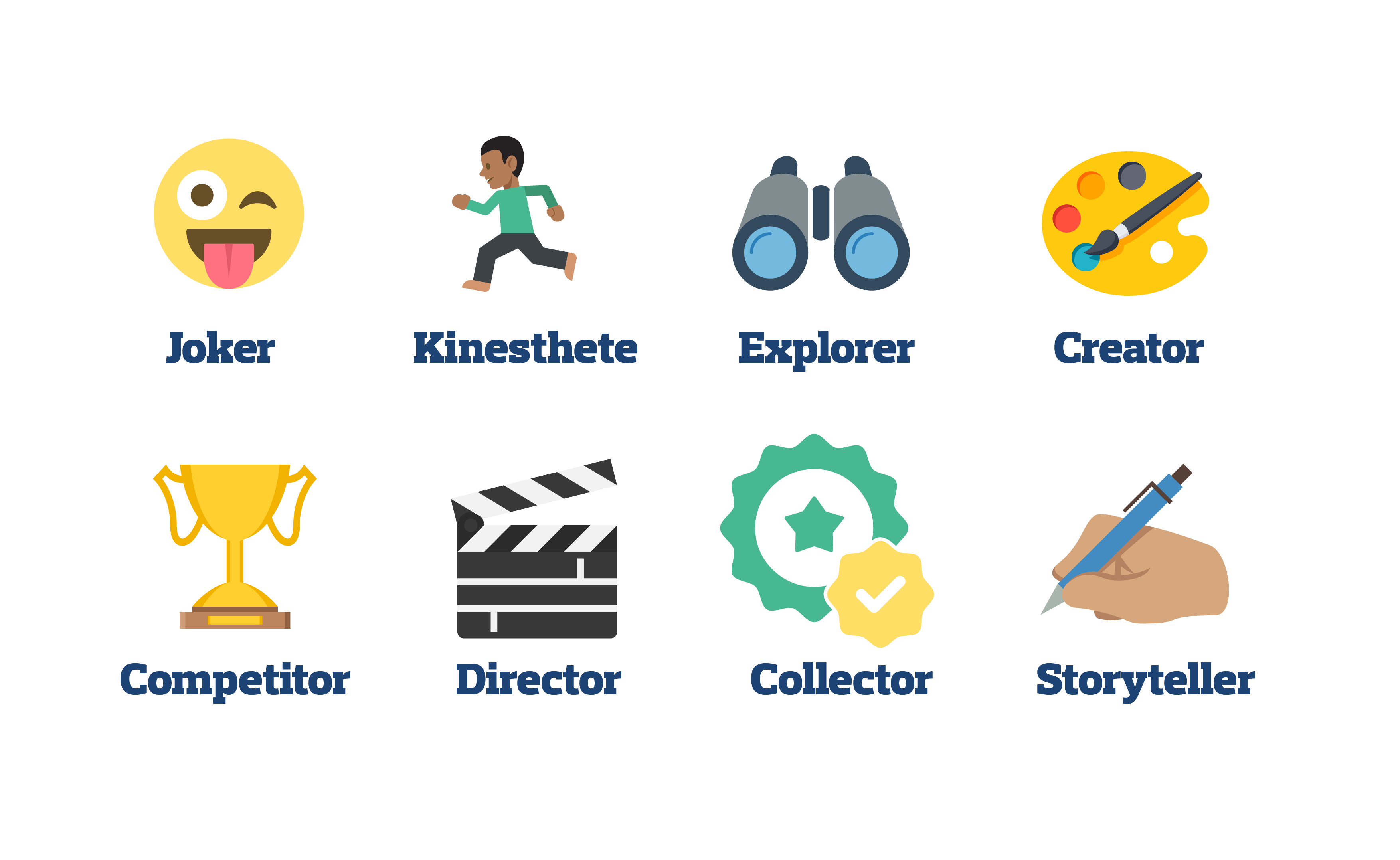
Plays for the nonsense, humour, pure fun of it and being the group ‘clown’.
Has a love of moving and movement-based activities.
Is curious and wants to experience new things.
Finds the joy in making things and being creative.
Thrives on competition, games with rules and winning.
Gets a buzz from organising, leading and storytelling.
Is driven by gathering awards like progress badges.
Connects through stories, tapping into imaginative play.
Benefits of play through the lifecycle
Benefits of establishing play in early years
Establishing play in the early years creates a foundation for learning, growth, and enjoyment by making activity self-motivating and promoting good habits. Play also supports the development of social networks, boosts confidence, aids communication, supports imagination, and helps children understand their place in the world. For mental health, play allows individuals to relax and move away from the pressure of perfectionism.
Benefits of play in childhood
For children, it is an essential stage in their development and growth. The space and opportunity where they nurture motor, cognitive, social and emotional skills. Play is where children and teenagers learn how to learn. From setbacks to problems, curiosity to creativity, play is central to these opportunities.
Opportunities for play are disappearing. Busy schedules, structured days, family situations, actual and perceived risk of being outside unsupervised and the increase of technology can all play a role.
And let’s not forget the increase of structured activities through ‘tots’ programmes which fix the time, space and activity for parents, while often removing the everyday opportunities and experiences to engage in the unstructured, flexible, self-creating and iterative process of exploring and finding solutions from play.
Gareth Williams is a primary school PE teacher and the founder of play_folke, an activity group for adults centred on play. The group has regular attendance from teenagers and adults in their mid-life through to septuagenarians.
Benefits of purposeful play in adults
Purposeful play has a positive impact on psychological health and well-being, reducing anxiety. It helps participants build resilience and recovery strategies from setbacks in a low-risk environment. It’s a safe space to develop connection and build trust with other adults; a place to meet, connect and feel a sense of belonging. For many participants, it’s an opportunity to develop new skills and competency, through movement, competition and play.
Sometimes people (adults) need to give themselves permission to have a good time and play.
Andrew Telfer Nature Moves
For adults, play offers the opportunity for choice, meeting different life demands, from recreational, social and competitive experiences to connection, creativity and physical well-being. Its intentional use can help create and maintain habits, through deliberate practice rather than casual or accidental leisure.
Stuart Brown suggests that the power of play or the absence of play can have a significant impact on adults.
- Rigidity in thinking
- Higher rates of depression
- Poorer social relationships
- Reduced creativity
Nature Moves is a group of people 65-85 years young who gather weekly to participate outdoors in a range of activities and play. One participant described the sessions by saying they “think of it as a second childhood”.
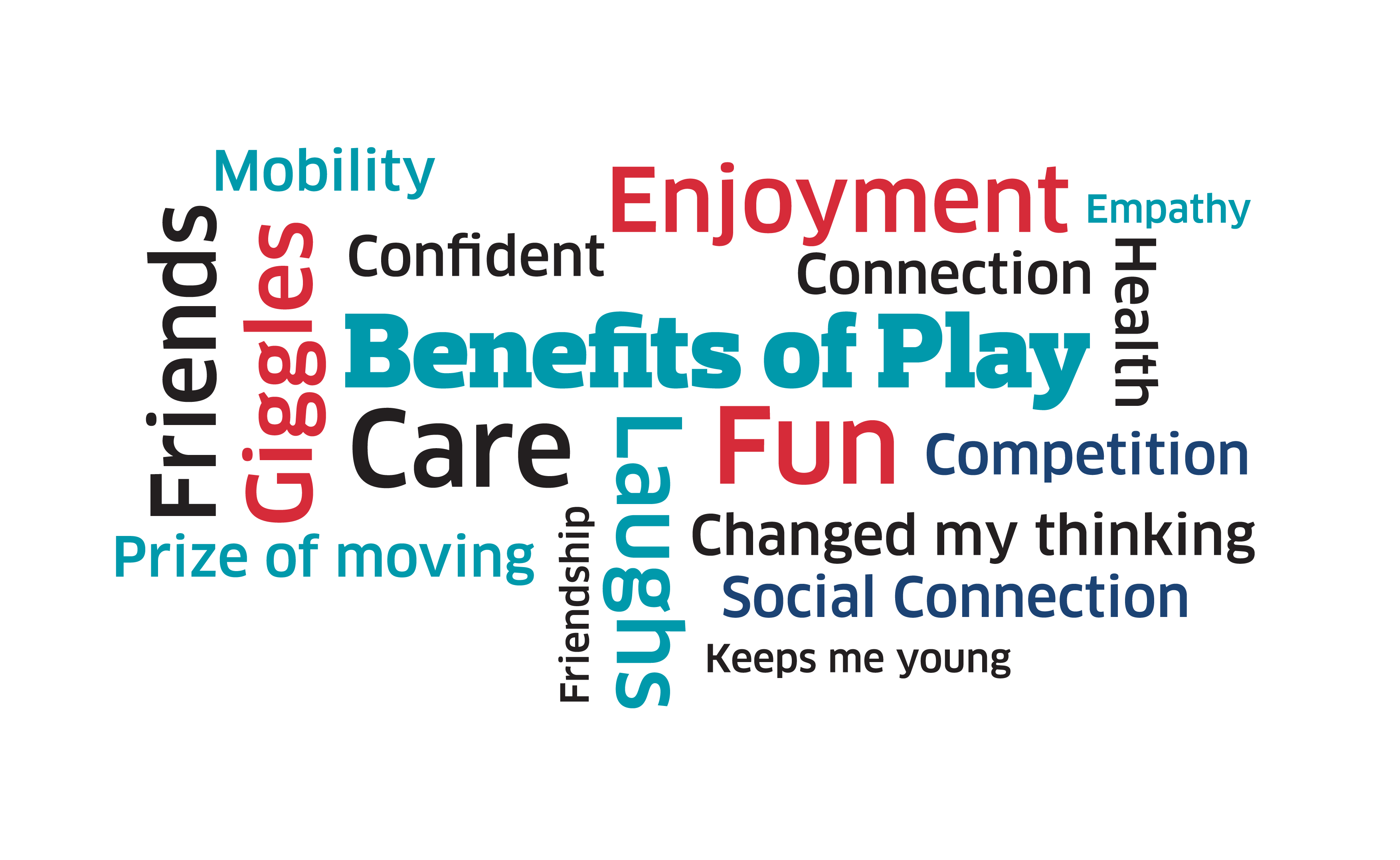
Play encourages smiles and laughter and creates our very own ‘happy drug’ through the release of endorphins. The participants that attend the play_folke sessions agree. When we spoke to them and asked why they came to the sessions and what they gained from attending, the messages were clear…
“Have a giggle”
“Let your hair down and have a bit of fun”
“It’s a laugh”
“I am buzzing, just look at the smiles”
“Smiles and connection”
One participant went further...
“We have adult jobs, with adult pressures, adult responsibilities, adult relationships, adult expectations. When I come here, there is no pressure. The competition is low stakes and it’s light-hearted. I can have fun, be child-like, mess around. I never miss a session. We had a break in December before Christmas, and I was desperate to be back in January.”

What small tweaks and changes that benefit well-being, behaviour and learning can you make to your sessions to increase the opportunities for purposeful play?
The science is clear. Play is not a luxury for adults. It is a biological necessity with measurable cognitive, emotional, social, and physical benefits. The “purposeful” framing simply gives adults the permission and structure they need to reclaim something their brains never stopped needing.
Purposeful play and sports
Sports and physical activity are arguably the most natural and structured form of purposeful play for adults. They provide the format (rules, goals, competition) that gives adults permission to play, while supporting the neurological and psychological benefits we’ve outlined.
Sports can combine several benefits in a single space or moment in time through great coaching.
- Intrinsic motivation features in play, as individuals participate through enjoyment, not external reward
- A balance of skill and challenge allows participants to be lost in the moment, a feeling psychologist Mihaly Csikszentmihalyi termed flow state. This is the total absorption in an activity, featuring deep satisfaction and optimum or peak performance
- Sport personifies play, engaging the body’s biological and cognitive systems, including the release of hormones
- Social connection with others in the group, teammates, opponents, coaches, and spectators. Opportunities arise to make social bonds during and around the sport or physical activity
- Uncertainty is the very essence of sport. The outcome of every game or competition is genuinely unknown, which keeps individuals alert, focused and engaged in a way other activities can’t
- Game situations allow for stress inoculation, increasing adrenaline and cortisol levels in a safe context. Through repeat exposure and controlled stress responses, participants build capacity to handle real-world stress more effectively.
- Movement-based play stimulates the cerebellum part of the brain, supporting motor skills and connecting to cognitive and emotional processing. Through play, individuals develop their thinking, decision-making, problem-solving and emotional regulation
- Team activities help participants build empathy and social attunement, the awareness of and sensitivity to the needs of others and their emotional states. This fosters deeper social connections and trust.
How many opportunities are there for social connection within your sessions and programme? Formal, informal, deliberate, casual, coach-led, participant-created?
Applying purposeful play principles to sport
Most adults approach sport through an outcome lens. What do they want to achieve? It might be increased fitness levels, weight loss, winning, social connection. Purposeful play reframes the primary purpose as taking joy from the experience itself. Individuals who are intrinsically motivated to participate engage in sport longer, perform better under pressure, and enjoy greater psychological benefits.

Coaching Moment: Ask your participants, are you playing to feel something, or only to achieve something?
It is easy to focus on repetitive coaching practices. The science of purposeful play supports the use of a constraints-led and games-based practice approach to coaching. Modifying and varying rules, playing spaces, equipment and conditions creates situations and problems that individuals and teams need to explore creatively to find solutions. This approach develops:
- Accelerated skill acquisition
- Creative decision-making and problem-solving
- Transferrable skills in different situations
- Intrinsic motivation
Coaching Moment: Create opportunities in your sessions for participants to cocreate the activities or design and adapt the rules and games.
Modified versions of an activity are a direct application of purposeful play, increasing:
- The number of opportunities to ‘do’ per person
- How often individuals make decisions
- Unpredictability, creativity and problem-solving demands on participants
- Fun and engagement
Coaching Moment: Consider the bullet points above. How many times do individuals have an opportunity in your sessions?
Across grassroots and community sports and activities, especially during teenage and adult years, there is a risk of turning sport back into ‘work’. This is increasingly now a factor in primary school age groups too.
Obsession with results, stats, metrics, Strava times, rankings, movement form or body composition gets to the point where the joy and play elements disappear.
Coaching Moment: How can you add novelty back into your sessions? Play in different positions? Introduce different sports and activities? Prioritise the social opportunities and experiences over the ‘performance’ outcomes? Organise a club night of games and activities, mixing participants into different teams and groups based on experience, levels, and age-groups if safe and appropriate.
Play suppresses the stress response (cortisol), enabling sport to be an effective psychological and well-being tool.
Individuals who retain a playful relationship with their sport sustain participation throughout life, are less likely to drop sports through burnout, and state they have greater life satisfaction connected to their sporting experiences.
Coaching Moment: Talk to your participants and consider when they have ‘hot spots’ in their life. How can you manipulate sessions and phases to support periods of high pressure? This could be during examination periods, using well thought-out competition as a break and change from physical preparation or emphasising to participants the benefits of being in the moment and embracing the game as a form of mindfulness.
The coaches share how they evolve play within their sessions
Takeaways
- Revisit your purpose as a coach
- Speak to the people you coach to understand their goals and reasons they participate
- Rekindle enjoyment in your sessions
- Create opportunities for creativity
- Find opportunities to deepen social connection and bonds
- Reduce performance anxiety through play
- Play is an effective approach to sustain long-term participation.
Hear from the coaches as they offer practical tips and advice on including purposeful play in your next session.
Also in this series
Purposeful Play Coaching Skills
Discover the coaching behaviours that bring purposeful play to life. From learning design to questioning and flexibility, learn how to create engaging environments that support deeper learning and development.
RESOURCE
Developing Play in Your Sessions
Ready to play? See practical ways to introduce fun into your sessions and overcome common barriers. This guide will help you design engaging, participant-centred experiences that drive development and, crucially, enjoyment.
RESOURCE