
Understanding the Individual Guide
 Article
 by UK Coaching
With this comprehensive guide, you'll gain an understanding of your participant's motivations, character and personality and how best to engage them in your sessions

Hot Topic Guide

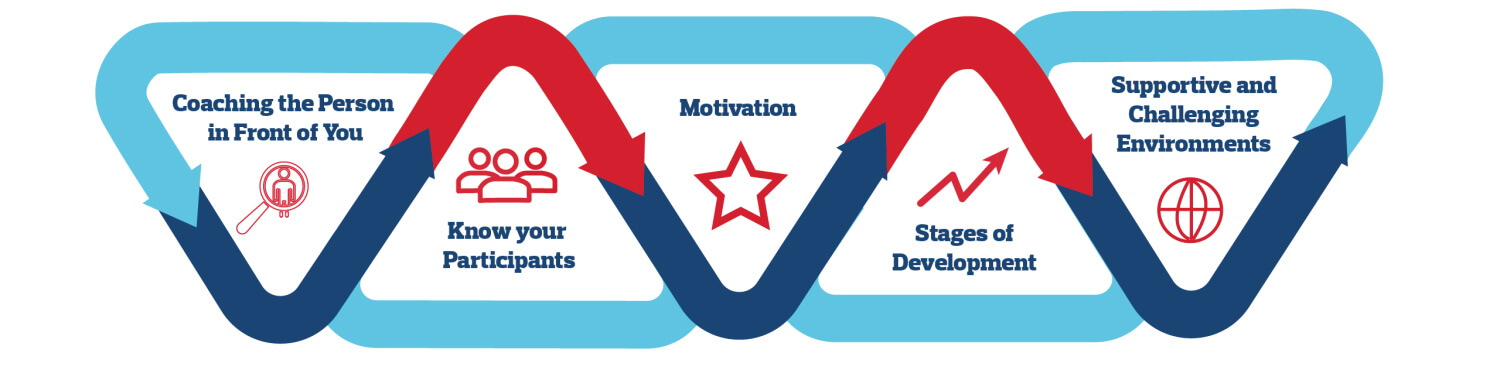
Topics covered in this guide:
There are so many things that can help you to engage with the individuals that you coach. Let’s start to consider these.
Think of the people you coach as a ‘mystery’ to explore, rather than a puzzle to solve. Sherlock Holmes was exceptional at asking great questions, observing, and noticing.
As you start to engage and connect with your participants you will build a picture, begin to notice how they act and react to situations, and build a connection with them.
Consider how you can gain information about your participants:
- Public traits are shared openly by the person and include basic observations that reveal something about the person.
- Personal traits are those characteristics that are revealed through deeper and purposeful conversations to ‘open the door’ and reveal insight. These are things you learn by asking great open questions, listening carefully, and observing responses in conversations, as well as through interactions with others and their interests.
- Psychological traits emerge over time as you engage with the individual and begin to connect. You may have heard the term psychological safety; when a person feels safe enough within the environment with others that they can be themselves and open up. This will include attitudes, how they see themselves, how they see and view others and deeper thoughts (often genuine, rather than surface level). These come to light when they disclose or share things with you.
Coaching the Person in Front of You
Do you really understand the people you coach; your participants, and the people you coach with?
Through insight and experience, UK Coaching has identified three principles to help you coach the person in front of you:
- Understand the people you coach.
- Connect with the people you coach.
- Create an environment that allows the people you coach to thrive in everything they do.

First, let’s clarify what we mean. Participants arrive at the session and as coaches, we must meet them where they are at. Whether this is their first, they’ve attended 21 times, or they’ve been to over 100 sessions, it’s important to understand how they show up and provide an experience that is appropriate for them in that moment.
Later in the guide, you will explore motivation and how you can support their energy and drive, providing a handrail and guidance through the ups and downs of participating.
Coaching the person in front of you works on several simple concepts, involving coaching the person as an individual, adapting to how they ‘show up,’ and creating an environment that they will enjoy and want to stay within.
Effective coaching is much more than the clichéd picture of people in tracksuits shouting instructions from the sidelines. Good coaching is about connecting with people, understanding their needs, and helping them to do something that they might struggle to do by themselves.
Coaching Plan for England 2016
Let’s explore great ways that you can develop and coach these principles in your sessions. Before we do, you will become aware that they are connected and not separate, and that understanding the person will enable you to flex and adapt to create a greater connection and space that they feel valued to be in. These provide the foundations to allow them to thrive.
When things become challenging and they may be struggling, striving, or surviving rather than thriving, the connection you have, and the relationships, communication and interactions based on knowing the individual will all play an important part in navigating the journey together.
Understand the people you coach
Let’s start with how they show up and the things that may influence this. Using a Bus Stop analogy, everyone arrives at the destination of your session, but we don’t know which bus stop they got on and the journey they have travelled.
How was their day? What has happened since your last session? What is their energy level as they arrive? The start of the session is a great way to check in and understand their emotions, energy level, behaviours and physical appearance. Have they just come from another practice session or competition? Are they carrying an injury? Have they eaten before training? Trained earlier that day? These are all small things that impact on how they turn up at your session, and will influence their motivation, effort, and energy in the session.
These factors should influence how you engage, interact, and deliver the session.
Noticing is a key skill in coaching. Are you purposeful and intentional in your noticing? Not just during the sessions and activities. Do you take the time to notice people? Do you create opportunities to do this as people arrive? Their interactions with others, how they arrive, body language, and even the volume of their voices can give clues on how they are turning up.
What do you see, hear, and become curious about? Do you ask questions to check for understanding, rather than make assumptions?
Coach Story:
A coach is running a community session, and a large number of the participants are not there for the start. They begin the warm-up when 16 of the group arrive, covered in mud, and it soon becomes obvious, to the coach, that they had already been involved in a game before the practice session.
The participants subsequently shared that they had been playing each other in a school cup competition that had run into extra time. They had shown commitment to attend practice, but we were fatigued, muddy and low on energy.
The session plan involved a number of games that were of high intensity. Seeing the participants arrive, initially recognising and then confirming they had already played a very physical game, the coach changed the session to be lower in intensity, increased recovery times through water breaks, didn’t rush the transitions and included highly enjoyable activities they knew the participants enjoyed previously. Meeting the individuals where they were at.
Everyone is a blend of their experiences, life events, early childhood experiences, interactions with others and the environments they live in. They shape their view of the world and how they act and react in situations. Guess what, they also influence you as a coach, how you coach and filter what you think is important!
An important consideration as a coach is how you view your participants, and how their behaviours and actions align with yours, including whether they ‘fit’ or match up to you. How does this influence, affect and impact your interactions with them? Being aware that you may see people differently is the first step in making sure that you are conscious of this and don’t allow it to impact anyone’s experience, engagement and enjoyment of your coaching sessions.
As a coach you have a duty to care for your participants, ensuring that they are safe and cared for and that their well-being is supported. Noticing plays a crucial role in safeguarding, and recognising the signs, a change in behaviour, emotions, physical appearance, and general character may be a signal that things have changed.
If you have concerns for any participant within your sessions you should follow your organisation's reporting and recording procedures by reporting your concerns to your safeguarding or welfare officer, NGB lead or police.
Top Quiz!
Can you answer the questions below from the group you coach?
- Who is the comedian?
- Who is always early?
- Who is the forgetful one?
- Who checks in three times before a session or competition?
- Who is the coffee aficionado?
- Who plays a musical instrument?
- Who craves ‘sugar’?
- Who loves to bake?
- Who has green fingers?
- Who burns everything in the kitchen?
- Who travels straight from work/school?
- Who is a carer?
The questions are not that important, but they do encourage you to think about how well you know the people not just the ‘participants’ in your group.
This is more than a snapshot: it needs to be built upon, revisited, and layered. More of this when we explore connection.
Motivation is the focus and level of effort that an individual puts into an activity. This can be influenced through internal thoughts and processes, as well as external factors. These are referred to as intrinsic and extrinsic motivations. Whilst an individual owns their motivation, two important aspects can significantly contribute to higher levels of motivation and positive experiences.
A great place to start is the following three questions:
- Why do you come to the sessions?
- What is important to you?
- What would you like to achieve?
It’s a good idea to coach through a needs supportive approach. This involves recognising that your coaching style, language tone and coaching behaviours can all have a positive (or negative) impact and can support a participant’s intrinsic drive, feeling of satisfaction and basic psychological needs, sometimes referred to as self-determination theory (SDT).
SDT provides the conditions through needs supportive coaching to support the participant's experience of autonomy, competence, and relatedness, which increases engagement in activities, and promotes participants to take responsibility for decisions and choices and the further development of motivation.
This approach helps to improve performance and stickability when things become challenging and assists creative approaches.
The Magic Ratio 5:1
This has been found to have a positive effect on learning and relationships and involves having five positive interactions to one negative interaction.
When interacting with participants and providing feedback, this is an important consideration. Interactions include:
- a friendly welcome
- social conversation
- specific praise
- positive feedback
- a knowing nod of appreciation
- a smile
- a high-five.
All these things act to build confidence and engagement in the activity (which also reduces disruption and time off task) and strengthens relationships. Negative interactions include negative feedback, sarcasm, criticism, a lack of acknowledgement, being told off, challenged publicly.
Motivational climate is the environment that you create within your coaching sessions. It’s important to recognise that all individuals (including the participants) involved in the environment can influence this, including parents/carers.
A mastery approach highlights, recognises, and rewards the importance of tasks that focus on personal development and improvement over ego-focused activities such as outcome-focused (winning) and comparison over others (ranking in the group).
You create, with participants, parents or carers, and the coaching team, the climate through creating process and task goals within the activities, sessions, and programme and realistic performance evaluation and perceived ability from the individual, supported by their network and participant behaviours.
This is all influenced by coach behaviours, including by encouraging persistence on tasks when the challenge is high, a passion for long-term development, enjoying the process and journey to mastery, and freedom to choose and make their own choices.
This in turn creates a feeling of competence, confidence that they can perform and the belief that they will be successful in the activities, practice, and competition.
Small behaviours like a check-in at the beginning of the session, a thumbs up, appreciation that they have come to the session and asking them about something outside of sport and physical activity that they have shared all add to the five. Be intentional about your coaching interactions and behaviours. This could be as simple as asking how their exams went!
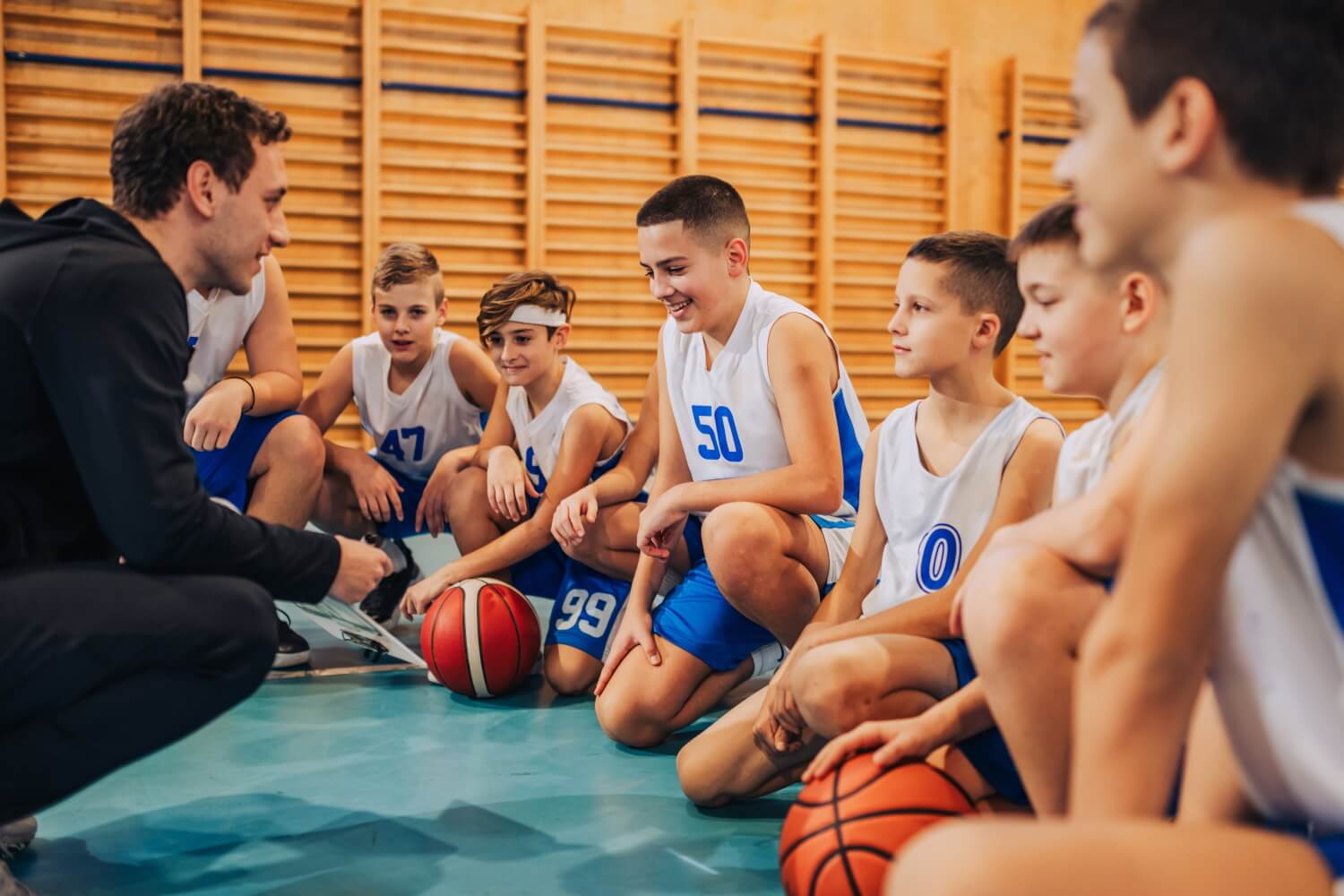
Connect with the people you coach
When we develop a relationship with people, we are looking to develop rapport and we can think of this as connection, commonality, and clues.
What does this look like in your coaching?
Connection is created through being authentic and demonstrating empathy to individuals.
Being authentic is simply being yourself with skill. This means bringing your personality, and values and being honest with yourself with others, while being mindful of your responsibility as a coach. This requires you to make decisions about what and how you should share personal details about yourself.
Empathy goes beyond communication and requires you to challenge your perceptions and be curious in making connections, without appearing to be nosy (self-interest) and to be able to vocalise the emotions you are seeing from a person. Don’t fall into the trap of comparing or sharing your experiences. Play back what you are seeing and hearing, including the emotions.
‘I can see you are frustrated.’
‘I hear the anger in your voice.’
‘I can see that you’re upset, and the game meant a lot to you.’
The tone you use and the facial expressions and gestures you use are essential when demonstrating empathy. Firstly, they need to be aligned. Someone saying they care, when doing something else, lets them know you don’t care! Think about when you are talking and sharing something important to you with someone and they look away. How does that make you feel? Listened to? Valued? Cared for? A time waster? Of lesser value?
Match your tone with the individuals and use your response to demonstrate to them that you understand how they are feeling. Let the person know how their words are affecting you by using facial expressions, body language, posture, and other nonverbal cues.
Commonality can be achieved through shared experiences, similar lived experiences and finding common ground.
Finding commonality involves taking the time to find out more about the person and what they enjoy, creating the base for future conversations beyond the sport or physical activity. The sessions are a good starting point, after all that’s something you have in common.
You could ask:
- Where do you live?
- What team(s) do you support?
- Which school do you go to?
- What other sports or physical activities do you participate in?
Finding things in common helps initially establish and then deepen the connection we have with people, and this can be very normal things, such as having children the same or a similar age, growing up in the same neighbourhood, liking the same television programmes or following the same TikTok influencer.
Matching the person's actions when you first meet them can help develop a feeling of connection. This is subtle and needs to not be done in a way that makes the person feel subconscious or realise you are copying them. Lean forward into them as they lean forward to speak, sit, or stand at the same level, and use the same gestures and the same words.
Don’t forget about shared experiences. Creating a space for your participants to co-create sessions, design activities, and have a voice in their development needs creates a shared experience and builds connection.
Coaches must respect and embrace the cultural differences of individuals when working with diverse groups of people. Understanding and asking to see a better understanding of racial, cultural, religious, gender, and sexual identities can lead to the strengthening of the relationship and rapport.
Clues links very closely to noticing and helps you ‘read between the lines’ and go beyond the said word. Active and effective listening is the ability to not only listen to the words and messages within them, but also the tone of voice, timing, speed of talking, facial gestures and body language and situation. Are emotions high, what has happened? Why is this so important? Context is often king in how people are feeling. The ability to listen and observe in a non-judgemental or hierarchical way builds connection and mutual understanding.
A sense of belonging
Connection can be developed through a sense of community, the culture you create within your sessions and the people you coach, such as a culture of helping one another, and taking time out to recognise and celebrate an individual’s achievements.
Through session design and coach behaviours, you can facilitate spaces and opportunities for participants to connect. Whether through social spaces and facilitated conversations or activity design they support, encourage them to lean into each other and champion achievements.
People often talk about how an experience or group made them feel, such as ‘I just felt welcome, that I really belonged here, and the people ‘get’ me.’ This has two important outcomes; it makes the sessions sticky and people want to keep coming back and have a sense of commitment and loyalty to the group and individuals within it.
Secondly, this safe space provides a feeling of increased confidence, self-belief, social capital within the group and a higher sense of accomplishment.
Coach Story:
During an international coaching exchange, a group of coaches attended the diving camp for the Chinese national team. Various groups were working within the session, some working with coaches, a number on the deck side, and others in the pool.
The session had been going on for over an hour when a hush came over the pool. One diver was making their way to the 10-metre board, and everyone stopped to watch. They had been practising a new dive with additional twists and somersaults and this was their first attempt at the full dive. The atmosphere and energy could be felt in the pool and as they completed the dive everyone in the training group applauded, whooped, and cheered. Then training continued.
One of the British coaches asked whether this was special, and the coaches explained that it wasn’t, and that while everyone is competing for a place on the team, anyone attempting something ‘new’ is respected and recognised for their achievement. They went on to explain that even if the dive had been unsuccessful the group would still celebrate and that anyone at any time could ‘step up’ during a session.
Create an environment in which people thrive
Thriving is where well-being, development and performance meet at the same time. Participants feel that their emotional needs are met, that they are motivated and engaged and have social support from their coach, peers and family. This is achieved through a supportive environment, effective coaching approaches and behaviours, a balanced approach to physical and mental well-being and appropriate challenge.
It's important to remember that this will ebb and flow and what works for one person will be a challenge for another. There are factors outside of the coaching session that will also affect how someone feels and the resources they feel they have to cope with the demands placed upon them.
There will be situations and periods of time where the balance moves, and an individual is no longer thriving. While this is normal, spending long periods where a participant is not thriving is not a positive ‘space’ to be in.
- Surviving occurs when the quest for higher levels of performance and achieving high levels of performance leads to growth and development at the expense of participant well-being.
- Flourishing occurs when participants experience high levels of well-being and high levels of development, which is not principally performance focused.
- Prospering occurs when performance and well-being come together, with a reduction of focus on growth and development.
As a coach tunes into your participants, look for signs of distress and consider how you can reduce and minimise stressors and demands on the individual within your sessions.
Aim to create an environment that allows the people you coach the opportunity to thrive in everything they do.
You need to consider how connection and a thriving environment are also the keys to retention in sport and physical activity, and how through understanding participants better, you can be mindful of their overall well-being and truly provide your duty to care.
- Be consistent: sessions are always on and always accessible.
- Empower and provide opportunities for ownership: "for the community by the community".
- Never judge a book by its cover: take time to get to know the individual rather than relying on the first impression.
- Recognise that you don’t know it all and are happy to consult and change to be flexible to needs and abilities.
- Acknowledge that it’s a journey and not about you: this may be a starting point for participants, and you want to act as a stepping stone to whatever is next.
- Recognise that if you show that you care, people will care what you know.
Know your Participants
First seek to understand, before being understood.
Stephen R Covey
Getting to know the whole person, not just the participant or performer, is crucial. As you gain a deeper understanding of the person and their identity, you can support their wants and needs better and guide them on their journey of development.
Comparing the complexities of people and the factors that influence them to an onion, the more layers you can peel away, the better you can understand and connect with the person.
Let’s look at an example: you coach a U14 rugby team at the local sports club. What does this tell us? They will all be boys, attend school (or education), live relatively locally to the club, and presumably enjoy rugby. These basic generalisations can help you first connect with and understand the people you now need to find out more about.
Let us explore further:
Consider:
- Do they know others in the team?
- How long have they been playing rugby?
- Do they play at school?
- Do they play other sports?
- How do they get to training?
Now go a little deeper:
- Where do they live?
- Who do they live with?
- Which school do they go to?
- Do they have older brothers and sisters?
- Do they play sports?
- What do they enjoy most in the sessions?
- If they could pick anything to develop and work on, what would it be?
- How well do you know their home and family situation?
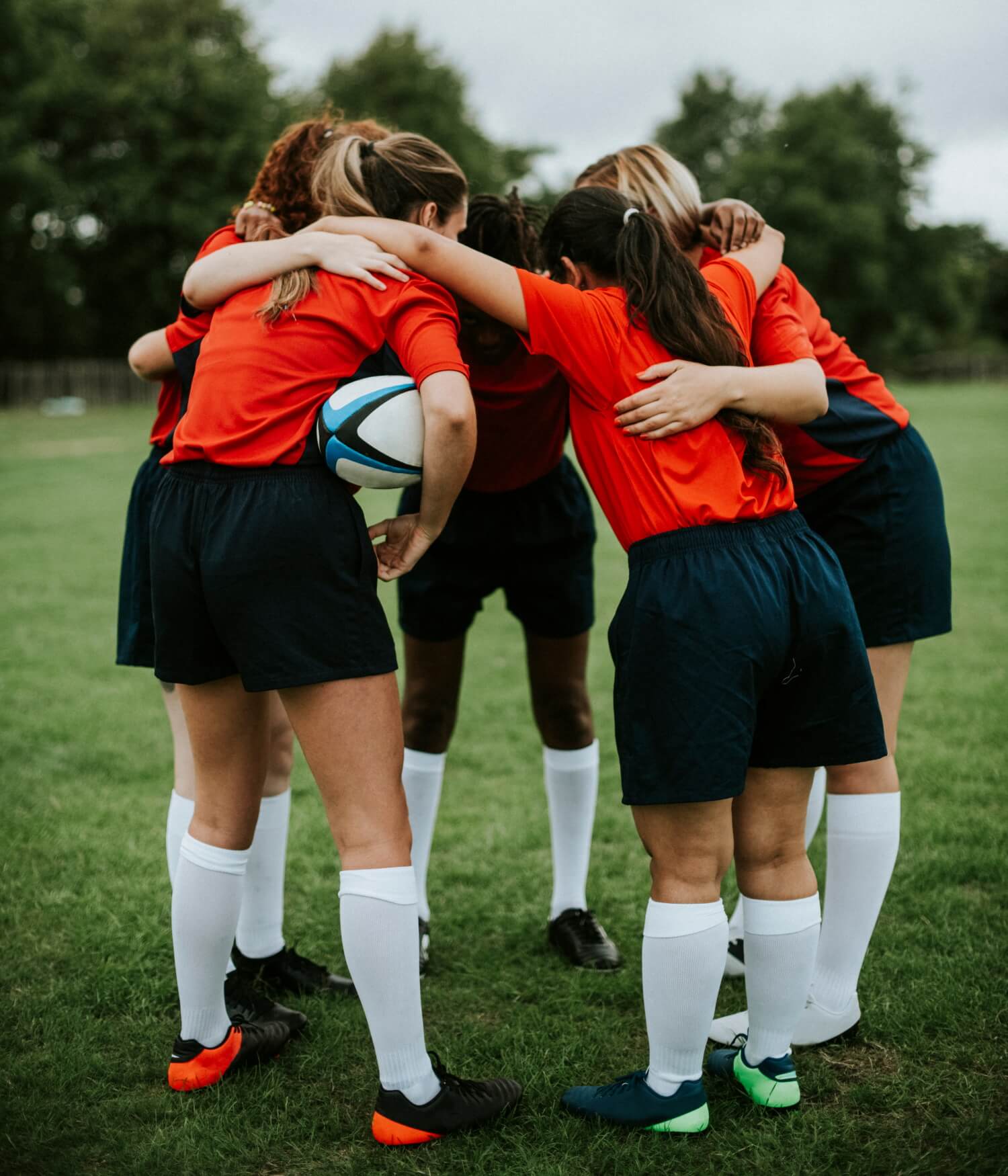
Now that you have some understanding, you can start to build a deeper picture and consider how this influences their decisions, choices, motivations and how they view the world.
Now you can ask yourself:
- What brings them joy?
- When are they at their most motivated?
- What drives them?
- What are their super strengths?
- Who is their biggest inspiration?
- What role models do they have?
- What are their values?
- How did they develop these?
- How do they like to receive feedback?
- How do they like to be praised?
The answers to these questions can be sought over time, as you connect and work with the person. It's more than a quick-fire round and the opportunities to find these out, explore them further, and discuss them, evolve over time.
Build rapport through regular conversations, and by showing a genuine interest and ‘noticing’ during informal situations. Some of the ‘answers’ will come as you watch your participants in the session. For instance, consider what you may glean at ‘drop off.’ You could learn about how they travel, who drops them off at the session, or whether they make their own way.
Similarly, in the session you can discover how they respond and act to challenges, different activities, and grouping situations, providing you with the opportunity to support and do more of the things they respond well to.
Tips to help you get to know your participants
- Make time to say hello and meet all your participants as they arrive. Taking the time to say ‘hi’ and ask about their day will help engage them, and you will be amazed at how much you will learn about how they are ‘showing up.’
- Be curious and patient, but not pushy. Allow the conversations to emerge over time.
- Be authentic. Share a little about you (appropriate information). Creating a connection and having something in common is a great starting point for a conversation.
- Create time in your sessions for informal conversations. This may be at the start of the session, during water breaks, while you’re having a post-session drink in the café or at a drop-in space before the session.
- People will open up and share based on the trust and the connection they feel with you. This may be quick to form with some individuals and take much longer with others. Some people may prefer to open up and share with another coach, and that’s fine.
Remember! The reason for wanting to know the person is to help you better understand the individual and their wants and needs so that you can ensure that they have a better experience. The person wants to feel valued, listened to and cared for.
Motivation
Motivation comes from the word ‘motive,’ which means needs, wants, desires, or drives within the individuals. Our motivation is what stimulates us into action and provides our focus and willingness to drive forward and achieve our goals.
From our motivation, we initiate several thinking processes that help us identify our direction, guide us on our journey, create action and help us to set goals. Occasionally we will be motivated by an action to move away from something negative (a stronger motivator than something positive).
It is through these wants, needs and drivers that we develop behaviours to achieve the actions and our ultimate goal. These will include emotional, social, cognitive, and biological reactions to stimulate our behaviour.
People participate in sport and physical activity for many reasons, including to mix with friends, have fun, keep fit, meet new people, talk to like-minded people, compete, progress and develop, in aid of long-term aspirations (talent pathway) or simply because their friends are going, and they want to ‘tag along.’
The motivations and reasons are as wide and varied as the individuals. Taking the time to understand who they are will enhance your relationship and help you to better support and meet their needs. In setting participants up for success from the beginning, your group, sessions, and organisation should be clear on the outcomes and aims to help them select the right setting for them.
Self-determination theory
The ability to make our own decisions and choices and to feel in control of our own lives is a crucial aspect of psychological health and well-being. This is termed self-determination (often referred to as self-determination theory (SDT), from the intrinsic motivation family) and has a massive impact on people’s motivation.
When we feel in control, our intrinsic drivers take over. We are more likely to engage in the activity, take action and follow through when we feel that we affect the outcome.
To thrive and be self-determined, a person needs to feel:
- competent
- connected (relatedness)
- that they have autonomy.

Our role as a coach is to ensure that our participants sustain the motivation necessary to develop and grow by meeting their basic psychological needs.
Competence: People need to feel good about themselves, achieve mastery of techniques and tasks or activities and learn new and different skills. When people feel that they have the skills necessary to succeed, they are more likely to take actions that will help them develop, grow, and achieve their goals.
Connection: People need to feel related to the people, place and environment and derive a sense of connection and belonging with the people that they are with.
Autonomy: People need to feel in control of their own decisions, choices, behaviours, and goals. Having a sense of being able to take personal direct action that results in a positive and proactive change plays a significant part in helping people feel self-determined.
Nurturing self-determination
Whilst people naturally lean towards growth and self-determination, it does require continual support and nurturing. The environment, social circles, and friendship groups that we are within play a considerable role in promoting this. Every relationship and interaction we have can help or hinder our development, well-being, or personal growth.
Coaches play a significant role in developing and sustaining this, as does the coaching environment that you create.
Key points:
- Offering positive encouragement and feedback on a person's performance on a task increases intrinsic motivation. Positive feedback encourages people to feel more competent and fuels their drive for further development. Provide feedback that is task-based and challenging but within reach to develop competence.
- Recognise that people’s motivations and behaviours are complex, change over time, and are often not driven by a single source. A participant may train harder in pre-season as they are extrinsically motivated to be seen and selected by the coaches (gain approval), as well as being intrinsically motivated by the desire and satisfaction in developing their skills.
- Foster self-determination. It can be the catalyst for people to excel.
- People who feel they are competent and confident that they can reach a goal cope with challenges better and are driven to achieve.
- Feeling that you have excelled is an important step in developing mastery. Small and frequent wins, over large and less frequent wins, are more beneficial.
- Feeling connected and a sense of belonging is vital in the development of self-determination.
- Avoid the over-emphasis on winning, promotion and selection, as avoiding excessive external rewards for actions people already enjoy can help improve internal motivation.
- Provide choice in sessions, allow participants to make decisions and choices within the activities, session, and programme.
- Explain the ‘why’ to activities and tasks. Having a clear rationale and the limits within this helps build understanding. This allows them to have a sense of where they are going and their development journey.
- Avoid coach behaviours that stifle the individual, criticise the person (constructive feedback is very different) and offer rewards that are based on outcome or comparison.
- Put the person before performance and ask for and value individuals’ perspectives and views. Seek to understand their emotions and feelings, accepting these as genuine and valid and show concern.
- Provide opportunities for individuals to explore, make their own decisions, and choices and be independent. Recognise and reward creative approaches and occasions when the participants show initiative.
- Be aware of coaching behaviours and actions that promote and encourage ego-based and comparison-based behaviours.
Coach Story:
Providing choice can seem very challenging for a coach, as can handing over the structure of the session to the participants at first. The participants need a framework or scaffolding in the session, and this is the skill of the coach to provide the appropriate level of freedom and choice.
Examples include:
- In the warm-up, playing a game, and asking participants which of ‘X,’ ‘Y’ or ‘Z’ would they like to play. (These would be games they have previously played and experienced.)
- Playing a game and allowing the participants to change one rule.
- Allowing participants to apply the ‘point’ scoring value in the game.
- Structuring activities that allow participants to select within a range, such as stating that there are three activities, and asking participants to select the area they feel they will gain the most development from.
- Offer an open choice with a limit, such as three activities in the session. Participants can choose two in the time you have.
- Setting up three stations and asking participants to select the one they want to work at tonight.
- Asking participants what area of your game/technique/sport they would like to work on.
- Creating, with support, individual development plans for participants.
The activities and tasks above have varying levels of choice, some for an individual, and others for groups, and some for a shorter period of time, and others for a session. Finally, some are shaped by previous experiences and others are very open by design.
Stage of Development
Essential to creating a positive experience for an individual is to meet their personal needs, and central to this is understanding their stage of development. Several factors influence this, including personal (biological, psychological, social) and environmental.
Let’s start by exploring experience. A participant may be new to a sport or physical activity and have spent less time participating and engaging in the activity.
While some may have had access to a wide range of sports and physical activities that have helped them to develop a wider range of physical movements and are physically literate (confident and competent), another person may have had fewer opportunities or played only a few sports.
Simply put, not every participant has the same experiences and arrives at your sessions with the same knowledge. Importantly, consider their ‘training age,’ which is the number of years that a participant has been committed to regular and serious training in a specific sport or physical activity.
Consider the factors that can influence participation and experiences in sport and physical activity, such as:
- parents’ or carers’ attitudes and sporting experiences
- primary school and secondary school PE curriculum and after school opportunities
- access to sporting opportunities (location, money, demand)
- peers and their hobbies.
Even where someone is born plays a part in the experiences that they have, a study that explored the impact of birthplace found that the size of the town or city, travel networks and population can influence access to facilities, whether they play within their own age group or play up an age, take part in wider age bands or progress to senior sport quicker, as well as the number of sports and physical activities that they play.
If they live near a facility (think sailing club, Velodrome, rock outcrop, or open countryside), the opportunity to participate in activities is easier and more accessible. A medium-sized town will have facilities and a good transport network yet won’t be so big that travel is difficult and time-consuming. This in turn offers a wider range of sports.
With a smaller population, people will have the opportunity to play multiple sports and activities and may play in more than one age group.
The Relative Age Effect
For youth and young adult (18-23) participants, growth and maturation will potentially have a significant impact as young people reach puberty and their bodies change. It’s easy to see the physiological changes in height and weight, but changes are also happening within the brain and hormonal changes (physical and emotional) occur during puberty. These also influence their social, emotional, and cognitive development.
Those born relatively late in a year (think competition age band or school year) can also be at a disadvantage based on a selection phenomenon called the ‘Relative Age Effect’ (RAE).
Those born later in the year are relatively younger than their peers (think about how those born in August of a school year, termed ‘Summer Babies’ in education, are 11 months younger than their friends in the same year group born in September). They may be later maturing and as a result potentially miss out on playing time, selection opportunities and with this (potentially) better coaching, access to better facilities, better competition and wider developmental support.
The opposite can be said for those selected who are born early in the year, as their self-esteem, opportunities, and confidence are increased. They feel valued as they have been identified.
There are some sports or physical activities where later maturing participants are at an advantage, such as gymnastics, which is an early specialisation sport, and diving.
But there are also challenges to early selection, based on physical maturation and prowess when individuals have been praised for their physical abilities and haven’t developed in other areas. As others ‘catch up’ physically, their advantage is lost, they may be deselected and have reduced opportunities.
If this has been encouraged and supported by others and their ‘sporting success’ is seen as a key part of their identity and success, the individual can:
- find the challenge and changes too great
- become withdrawn
- have a reduced level of confidence
- even leave the activity altogether.

Supportive and Challenging Environments
The environment that you coach within is not a vacuum. Several factors influence and affect the environment, including cultural and societal factors such as the sport’s governing body rules and regulations; think age bands, time playing, seasons and competition rules. It’s also important to consider the culture that you live in, the traditions of the sport, and local and regional expectations.
Now consider this may affect the individuals that you coach.

Earlier we explored the importance of knowing the person, coaching the person in front of you and adapting and developing your coaching practice to meet their individual needs. All these factors will influence how your participants show up at your sessions, whether it is their first, tenth, or hundredth session.
Creating a safe environment is the priority: a place where the participants feel protected and want to attend. The keys are creating a connection, knowing the person, and making time for them to feel cared for and socially engaged.
Once a safe environment is created for the individual, you can enable them to thrive.
Thriving
The environment that you create, develop and maintain should focus on and be specific to the individual. You need to create an environment that provides a combination of well-being, growth, and the opportunity to perform. When a participant's (or our) needs are met, and they are on task, have a clear purpose, have a positive outlook, and participate with vigour and ‘flying,’ it is termed thriving.
The development journey is not linear and as such, several dynamic factors will influence this. Thriving is one end of a continuum with surviving at the other and simply ‘getting by’ in the middle.
Thriving will be different for each person, and their background, motivation, and experiences will influence this. In a dynamic environment, there will be triggers that influence these and a change may occur; as they transition environments, change coaches, and move into adulthood, life influences will all impact on their ability to thrive.
Some participants will rise to the challenge and look forward to the pressure of competition, while others thrive on receiving praise, through being encouraged and congratulated on their achievements. It can’t be a ‘one size’ fits all approach. As we discussed earlier, knowing the individual and coaching the person in front of you will help you to find the right balance for each person. For people to thrive, you need to consider the whole person… as a person, participant, and performer.
What does thriving look like?
Whilst you should always aim for participants to thrive, you need to understand that this is not possible. There are other environments (home, education, other sports) that impact outside of your coaching, making this more complex. There will be times when your participants are ‘getting by’ or surviving, times when they are feeling threatened and times of uncertainty such as when transitioning or returning from injury, or during performance slumps.
These are times when you must ensure that the support that they need is available.
As a coach, you need to create an environment that enables participants to develop the skills and qualities they need to get the most from their sessions. A participant who is confident, organised, resilient and can communicate has the key skills to navigate the journey.
A question of balance!
To develop people in your environment, you need to consider the challenge and support that you provide. It's about doing it RIGHT!
- Right challenge.
- Right support.
- Right time.
Many factors influence what an individual requires and when, including:
- their experience and skill level
- their confidence level
- how difficult the task is
- how familiar they are with the activity
- external factors, including the environment
- opposition/rivals.

You learn by solving problems. Understanding when to step in and support, and when to step back and watch the learning happen, is the art of coaching.
Creating a level of difficulty that requires effort and practice to achieve is essential but stepping in too quickly, and solving the problem for your participants can have as much of a negative impact as no support.
Remember! We are all individuals and what is a positive experience for one person may be too much for another. Adjusting the level of challenge and support to meet the individual’s needs is crucial and this may change from session to session.
Related Resources

Understanding The Individual
Learn about this theme of the Coach Learning Framework and discover its key pillars to help you support the people you coach with personalised coaching techniques that meet their needs
LEARN MORE
Coaching Conversations
Watch coaches share their lived experiences, offering real-life examples and strategies to help you immediately grasp the theme of ‘understanding the individual’ and enhance your ability to connect with and understand your participants
WATCH THE VIDEOS
Kickstarter
Download activities that invite you to reflect, consider, and try out new approaches to understand what drives the people you coach to enable you to maximise their experience
DOWNLOAD THE ACTIVITIESUK Coaching Club Premium Membership


